After admiring joyous birdsong at sunset, the rumble of a motor heard far in the distance, I turn and face the entrance to a cave. Is it wrong to feel forever dubious of that which remains, that which fails to go away, despite my having lost belief in it? (Wasn’t that Philip K. Dick’s definition of “reality”?) Assuming no reply, I step inside, cave walls alive with claymation lichen. This cave of which I speak is a kind of mirror-world, like the interior of a screen. No matter how carefully I inspect its contents, I always depart it afterwards feeling conceptually and linguistically inept. Dominated by people with backgrounds in STEM and finance. At times, this cave resembles language — the cultural surround. Yet I at all times also feel language’s absence. I lack the words, for instance, to operate consistently within a science fictional universe. Psychedelics free us temporarily from the first of these sensations: the sense of language as a prison house, a confine, an enclosure. (Or not, if we believe Lacan.) But then what? Once out of the linguistic construct, how do we communicate with those still in it? What is the content of this gnosis that we wish to deliver back into language?
Saturday April 14, 2018
My teachings, I decide, draw heavily on Freud, though mainly by way of the Freudo-Marxists and their rebellious late-60s successors, combined with touches of Psychedelic Utopianism and Jungian Gnosticism. Worlds are always readied for one by presumptuous church fathers. For fear of some savagery, they say — just as local ecosystems have been modified, subdivided into units of practico-inert matter, a socially-constructed objectivity, leaving one little space by which to live. By which I mean something like “self-actualize,” so long as that also entails recognition of a coherent narrative or at least arrival into a meditative garden, a temple of sound, in companionship with others. Whereas everywhere under capitalism, the land unadorned awaits the fall. Neither happy nor splendid. At which point His Master’s Voice (by which I mean the Stanislaw Lem novel) begins to speak to me. “What can be done,” asks the novel’s narrator, “when an important fact is lost in a flood of impostors, and the voice of truth becomes drowned out in an ungodly din? When that voice, though freely resounding, cannot be heard, because the technologies of information have led to a situation in which one can receive best the message of him who shouts the loudest, even when mostly false?” (22). This is our predicament in that moment in the history of capitalism known as the era of Trump, is it not?
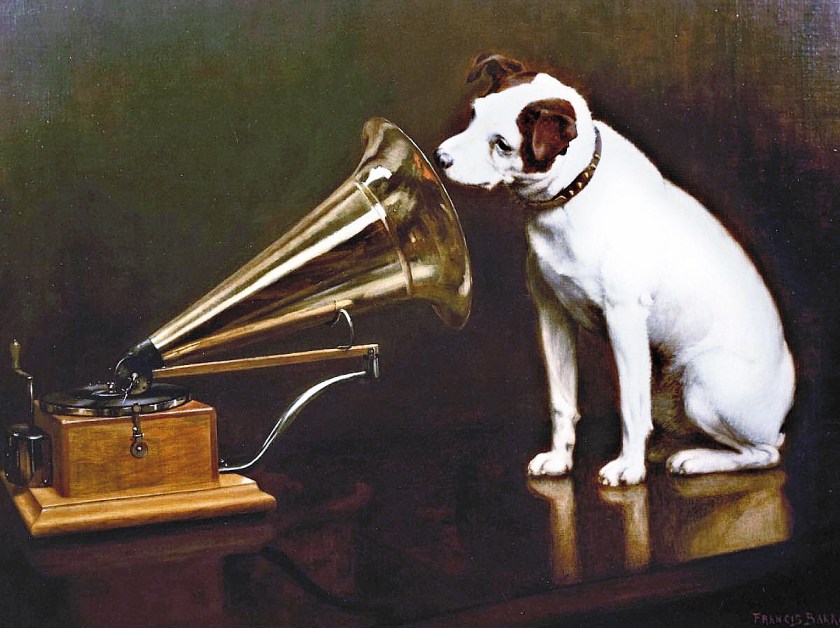
Friday April 13, 2018
That final ordnance
a spry sparrow of a chapbook,
as set in its way as Zen in the Art of Archery
but healthy as a hound,
a quick study.
I’m missing following you
dear seeker
dear who.
What was then is now
not a bear but a trap—
calculations, credit
And thus
“Moral”: stand there, act that
From beyond
“right/wrong,”
“Which first, meat or engine?”
welcome, give rise, help raise
Thursday April 12, 2018
Slow, given to loops and routines, I lay down on a couch, as in a therapist’s office, and allow Jesse Fleming and Electric Sound Bath’s Ataraxia Series #1: Heart and Insight Meditations, a tape released last year on Crash Symbols, guide me to a place of self-questioning.
“When did I start behaving like a jerk?” I wonder quietly, as if for the first time. “Ages 5-10?” Cousins, neighbors, video games. “Why was I sometimes cruel to others?” I was bullied. Just in minor, ordinary ways: small attacks, acts of aggression. But certainly with enough frequency to embitter me. To this day, for instance, I find it hard to forgive some kid who, before gym class one day, pegged me in the face with a basketball, unprovoked, without forewarning, breaking my glasses, blackening my eye. But forgive I must, I suppose, if I’m ever to forgive myself. Ages 10-15. Fears about measuring up, fitting what was expected of me because of body type, gender. Ages 15-20. “I was a nice person at times,” I blubber. Fleming’s words unearth points of pain, but he advises well. Under his direction, I allow myself to ask for forgiveness for the harms that I’ve caused, knowingly or unknowingly, through my thoughts, words, and deeds. Thus we advance toward the extinction of suffering.
Wednesday April 11, 2018
Urged rumble at cochlear dawn:
A multi-headed virtual army
wielding Pitchfork, chanting atop a backbeat.
“Doggone criminals,” mutters the Demiurge,
the Injustice League foil to Shelley’s
bull goose legislator
burrowed, honeycombed
in the undercommons of a lax bro
cosmos.
Of your “Many”
your Class Struggle Avatars
your Elected Representatives
here at the Nancy Reagan psychic hotline
(“This call may be monitored—
please wait, please hold”)
with whom do you wish to speak?
With those who are
as from the heads of gods
approaching perihelion
and who are thus
in all the senses to which consciousness has been as yet made to refer
woke.
Since we came to get down,
and since we are as gods,
As Brand says,
we might as well get good at it.
So, in place of what is:
joined with those who have been at these tasks all along
we must build it, conjure it—at the very least, dream it—here, now,
hidden from the sense of those who rule,
the utopia in which none may act as master.
Tuesday April 10, 2018
Study takes me on psychogeographical walks each day in the company of my partner, my coworker, my beloved comrade. Working together, playing together, we improvise our speculative collective practice. Others organize themselves into tribes, teams, and crews, where the many act as appendages of a director-subject’s creative process. A friend over dinner describes his willingness to invent himself anew each morning: “no mistakes yet,” he says of each day’s promise. Dreamers float atop a calm, reflective surface. Companions along a journey embody resistance to tyranny as they pass through gossamer veils. Succumbing to hunger, however, the couple lands in a local fast-food restaurant. The walls of the place bombard them with Christofascist propaganda: a father lecturing his daughters about Jesus, bible-themed Jeopardy!, “The Message” beamed at captives via satellite. To cleanse myself, I retire to a pinewood room, bathe myself in soft pink light, and listen to Concrete Beach by Toasted Focus, one of four new cassettes received by mail yesterday from Baked Tapes.
Next thing I know, I’m watching a goofy 80s horror film called Brain Damage. A growling creature curls a cesta-shaped tentacle around my head. Vaporwave cinema avant la lettre, the film, released at the height of the AIDS epidemic, invents from an alien parasite narrative a gritty post-punk psychedelic grotesque. The film’s “Elmer” parasite, as destructive as a dirty needle, turns its protagonist into a sociopath every bit as repulsive as American Psycho’s Patrick Bateman. Neither here nor there, the film plays in the space between.
Monday April 9, 2018
The mind, like a hand, clenches and holds. The unconscious remembers everything: lessons in unmastered foreign languages, the self as inner ear. In a religious idiom, one would speak of minds knowing themselves in the Christ narrative, toggling between one and many. Were early descriptions of psychedelic experience overdetermined by encounters with Op Art, the contemporaneity of the two no mere coincidence? The answer lies buried in Henri-Georges Clouzot’s Inferno, a film that sought to depict visual and spatial disorientation using “Op Art”-inspired special effects. Voices and sounds prompt projections, the more abstract, the more manipulated the perception, the better. Lead and descant chase each other’s echoes. Op Art at the very least shared with the psychonaut population an interest in heightened or intensified modes of perception. Sensations of otherworldly motion, vibration, topological warping. Reality displays itself in some new way, allowing apprehension of something beautiful and bewilderingly complex. Magic circles convert the mind’s eye into a portal connecting distinct ontological realms, from which we catch brief impressions — until, like vapors, these realms disperse.
Sunday April 8, 2018
The occupant returns from work, sets down bags, books, papers, markers, pens, receipts, loose change, settles back into experience of itself as a person, puts on its head, sighs, stretches its limbs, sings to itself, stimulates its accessory nerve, or what it imagines to be its accessory nerve, some nameless patch of being, some spatiotemporal pattern that when massaged releases tension from the trapezius. Conditions met, the person arrives into the dream state. A towhee sings to us — you and I — while perched on a branch of wisteria. We lower our eyes toward the street, whereupon we spy a plump little robin. Satisfied by our attention, the robin flutters its wings and bathes in a puddle of rain. “We’re never going to bed again!” shout the children as they assume collective control of their homes. What “school” might have to do with this, I can’t say.
Saturday April 7, 2018
Neoliberalism sheds much of Fordism/Keynesianism’s reliance on “myth” or “popular narrative” to win consent, as it realizes it can rule more effectively now through simple economic coercion — behavior regulated by wages, prices, and debts. Combined, of course, with the ever-present use of state violence, or the threat thereof. I imagine appareling myself in wizard’s robes, sleeves hanging low off of upraised arms. There I am, standing before the class enemy, waving a wooden wand. “They neglect to invent new stories,” I complain. Blades of grass quiver gently beneath a breeze as sunlight warms my face. Seated later at a table topped with irises, I sample two upcoming tapes from Eiderdown Records, followed by KBOO’s program “Music and Poetry of the Kesh.”
‘Tis a day and night of gluttonous consumption. Pull My Daisy (1959) pulls my daisy. Jack Kerouac yaks out a rickrack storyline atop black-and-white footage of the Beats, shot by Robert Frank. Mind is a breath that rides shotgun alongside being.
Friday April 6, 2018
Scratches, marks, grids painted over to form a black and purple twilight. Contemplate the addition of fireworks. Half past. Articulated into body and religion, given outfits, gear, we become something we are not. 18,000 feet, naked. The voices we hear belong to many: snippets, phonemes, syntagma, broadcasts, transmissions. Magnetoreception kicks in; we possess cryptochrome eyes. Then we return again to our walking bodies. A mockingbird flies past and lands itself atop ground cover at the base of a neighbor’s lawn. After flying a figure-eight formation, bluebirds in a pair come to rest in a blooming dogwood. All of this by way of the day’s migration. I amble about in a magical space-time: pure sensation, innocent of any distinction between reward and punishment.
 Trance-Scripts