Be generous: unfurl word-scripts into trusting patterns. Travel the life-world as a sunlight sunbright Sunshine Superman. Practice breathwork on the streets. No need to feel lost there on the sidewalks. Wander for a bit with a gray wooden wand pilfered from a mound of twigs. Ahead of me: Small Batch. Behind me: the looming edifice of the First Baptist Church. On the ground beside me, near a tree where I stand: a plate of uneaten beans. And beside the beans, a board game: The Game of Life. Turning left, I relax into a park bench to absorb the implications of an allegory: an emblematic architecture. In the left panel of the landscape-as-triptych: a glass office tower capped with the number 5. And in the air above it: a rocket ship. In the middle panel, a smaller rocket ship, there too in the sky, though this time above the church. And on the right, in the third of our panels, local high-rise housing project, the Crystal Towers. ‘Tis past the latter that we go en route to Dada’s House. Let us find our path and walk it.
Tag: Emblems
Thursday March 25, 2021
Time: an odd phenomenon in light of the way it communicates, deposits emblems, plays hide-and-seek with consciousness. “Let Your Dreams Set Sail” says one such emblem, printed on the wall above the bed in which I’ve slept of late. A box on the ground displays the Paramount logo, a mountain pointed toward an outer sphere, like a Bucky dome lined with stars. Outside the sphere pokes SpongeBob SquarePants: the Flammarion engraving rejoined or reversed.
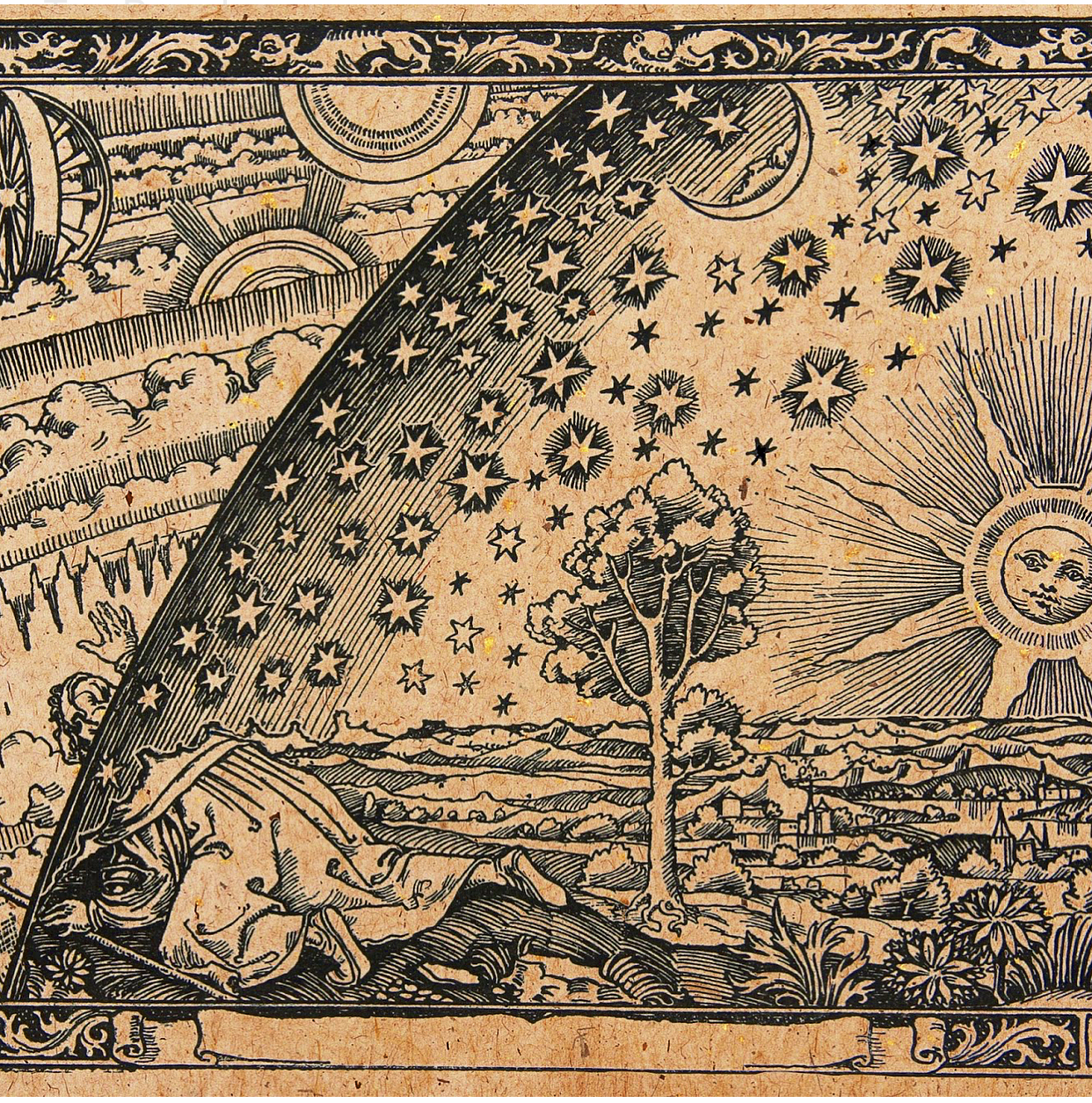
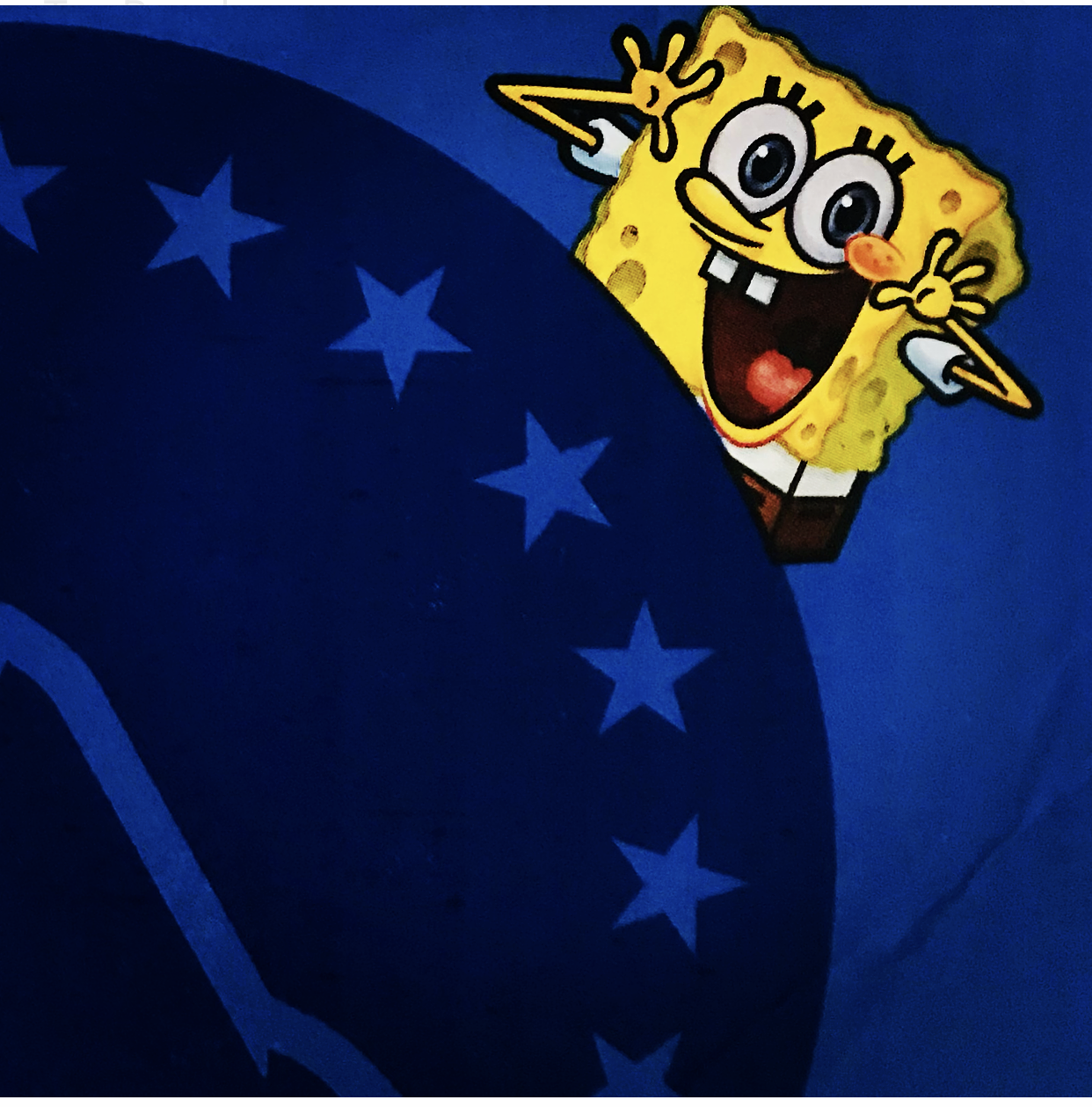
SpongeBob disrupts the first sphere’s fourth wall, smiles at consciousness, injects among solemnity a spirit of mirth set free to roam the cosmos. He, too, partakes of the image’s directionality, the vertical ascent narrative involving spaceships: the thing toward which the parts of the emblem incline. Let us imagine among these ships of possibility that which is prophecied in the mythology of the Dog Star — black anti-slave ships, lines of flight like Marcus Garvey’s Black Star Line. Nathaniel Mackey fuses these symbolisms in his poem “Dogon Eclipse.” The poem ends “as if by then I’d / been thru / Hell / and back.” As if the “I” of the poem were Orpheus, the poet of ancient Greece, founder of the Orphic mysteries. Orphics revered Dionysus. He, too, is said to have descended into the underworld and to have returned. Through his poem, Mackey initiates those who read. So sayeth Michael S. Harper in his preface to Eroding Witness: “These poems are about prophecy and initiation.” Poems like “Dogon Eclipse” hint at mysteries; they transmit a secret knowledge. Other poems in the collection conjure loas from Voodoo and Vodou. Loas are the “mystères,” “the invisibles.” They act as intermediaries between worlds.
 Trance-Scripts