There are rhythms of thought that sing to us, patterns formed of rituals we perform with others. These hours of sitting are part of one such ritual: “the time during which I write.” Activity in phenomenological reality is built of these rhythms. The day is a music we co-create with others. Cook up a meal to celebrate: “NO MORE TRUMP.” Soon there will be garden beds. Let us learn and do as we teach. Expanses opening on the backs of our eyelids. Encourage students to admit to having had weird experiences — “altered states” — the cause of the alteration of less importance than the state itself. Present these as symptoms of an outside or an unconscious beyond the physics and logic of everyday experience. Invite by these means a partial suspension of disbelief, an openness to what the texts speak in sum.
Tag: altered states
Monday November 11, 2019
The “heroes” that we encounter in literatures about altered states are individuals and groups, authors and movements, creators of counterculture, figures who rebel against systems stacked against them — because some of us can’t breathe. Some of us feel trapped economically. Others of us feel trapped educationally, betrayed by those trained in STEM. And yet we must practice love anyway, despite, because. Time to revisit the debates internal to counterculture, among the Whole Earthers and others, about technology and ecology. Bring ecofeminists and cyberfeminists and Afrofuturists into account when re-examining these debates. But do so while staring at crows atop a pine tree. Allow time to admire patterns of sunlight and shadow amid fallen leaves. Then up and about: gather the books, assemble the argument. Defend pluralist methodologies and anarchist epistemologies. Critique capitalist science and its institutionalization of consciousness. But do so as an Eco-Marxist, acknowledging climate crisis as a real condition of existence — the Pascal’s Wager of our time.
Tuesday October 22, 2019
Upon re-reading a collection of poems by Nathaniel Mackey, I find myself scribbling in the margins at the end of “Song of the Andoumboulou: 22” the cryptic statement, “The story of the garden, the story of the desire for knowledge, is the story of intoxication and altered consciousness.” Bruce Hornsby interjects, stating, “Ha, but don’t you believe them.” Is that just the way it is? Do words get in the way? Mackey suggests otherwise, words used otherwise allowing us to ascend and descend reality’s ladders and trees. He refers to this otherwise as a kind of “musical speech.” Music that lifts readers into other ways of experiencing space and time.
Monday August 26, 2019
Students and I grow together as heads by reading and discussing literature about consciousness. Minds throughout the ages trying to know themselves. This is literature about education and enlightenment, minds as they undergo alteration and metamorphosis. Patterns disclose themselves, meaningful coincidences compound over time — formal and thematic resonances that defy existing paradigms. By attempting to interpret these, we arrive at new conceptions, new understandings beyond existing enclosures of possibility.
Sunday November 25, 2018
These trance-scripts haven’t spoken adequately yet about the most common altered state of consciousness, the one to which our society remains addicted: namely, fear. There is an element of anarchy in the ontology of the cosmos. This is its beauty. We each have to find our own truths, our own interpretations, the meanings that suit our being. Before meaning’s arrival, though, before its revelation (when all is said and done), there is the maze, the labyrinth, the dungeon — the as-yet-unexamined. Fear emerges when we project into the labyrinth a Minotaur, a spirit of malevolence, an enemy Other. If we concentrate on breathing and re-center in our bodies, fear dissipates. Sunlight catches on windblown leaves, goldens a wall of stained pine.
Tuesday May 1, 2018
Up next: live textual re-enactment for the blogosphere of the “Dr. Edward Jessup” role from Ken Russell’s psychedelic thriller Altered States. A tongue-in-cheek model of sorts for one of my personae here at Trance-Scripts — minus, of course, the primatological regression, the obligatory serpent in the garden, the film’s return to propriety after its initial prodigality, its surrender to disciplinary mechanisms, its obedience to traditional morality in its final half. Neoliberalism does everything in its power to provoke this turn historically, and to emphasize it in the accounts it allows the culture to tell of what we thenceforth come to think of as the “failed revolutions” of the late 1960s. “Disarm the utopian potentials of psychedelic communism,” read the instructions for this ideology. “Stage elaborate spectacles of punishment and retribution. Contain the figure of the acid freak within narratives that end unhappily.” The wonderful documentary The Cockettes, for instance, bows to the weight of this narrative arc — as does Wild Wild Country.
Friday March 23, 2018
Imagine reality evolving into the unthinkable of existing sets and disciplines. Call the results of this dream-work The Ones Who Follow: A Modern Mythology. The Jonestown Massacre lies on the outskirts of all ventures of this sort, utopian communities of joy derailed everywhere, cursed, denounced, undone. How might we again induce a change in people? How might we together achieve self-actualization, group-realization? As opposed to just repeating over and over again history’s pattern of conquest, domination through separation of people from their lands. The “altered state” is what we’re after. That phrase, in its various senses, is what we mean by our Utopia. Lovers as hemispheres, fused at the mouth, as in John Donne’s “The Good Morrow.” We’re trying to raise consciousness, awaken the sleepwalkers from their deadly slumber — beginning with ourselves if necessary.
Monday February 19, 2018
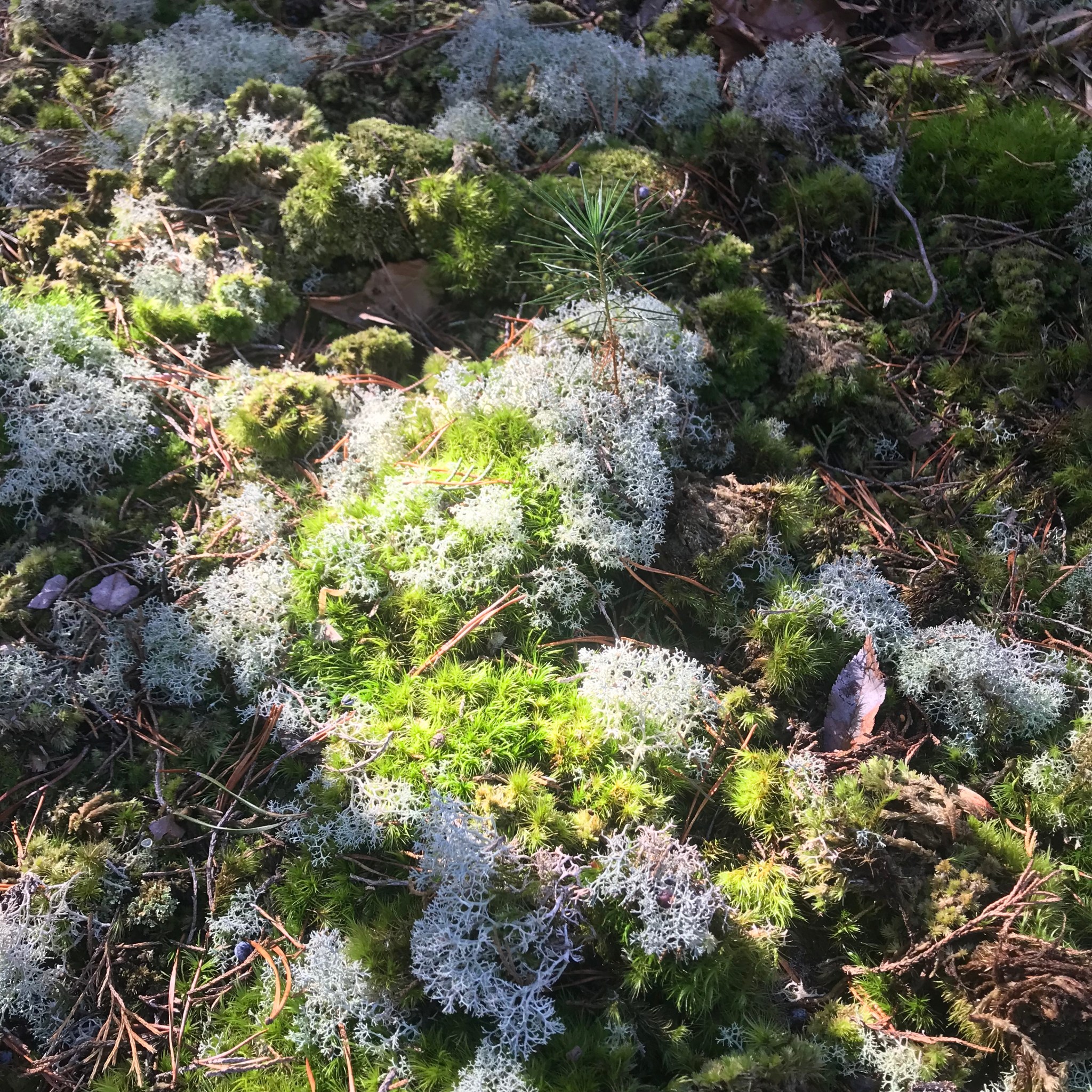
“And…(wait for it)…we have liftoff.” Sarah and I, toward the end of a beautiful, sunny afternoon walk through a park, arrive upon a patch of ground covered in a thick carpet of green mosses ornamented with tufts of lichen. Elsewhere on our way we cross paths with dogs, runners, old men operating radio-controlled aircraft, mountain bikers conversing in a forest. Our hunger for time outdoors not yet sated, we stroll the neighborhood, kneeling to admire newly flowering purple crocuses. Like Ginsberg to Carl Solomon, to ashes I whisper, “I’m with you.” Live ambient pick-up. Voices popping high in the mix, ignored, give way to shouts and clanks. Rattling chains. I close my eyes and persist nervously in an unpredictable sonic universe. Flotation tanks allow us to question not just what Erving Goffman called the presentation of self in everyday life, but the nature of the self in the absence of sensory input.
Monday September 11, 2017
Pour water on fish from a glass decanter. It was like Medusa: you can’t just rationalize it away. The Self models a home and stages a territory. A whole new game: small beginnings can bring down mountains. One must imagine trying to play the game: hands there, on the joystick, a voice says, pointing. I hope to spend some time, perhaps next summer, exploring the contents of the Julio Mario Santo Domingo Collection at Harvard’s Houghton Library. It’s the world’s largest private collection of material documenting altered states of consciousness. Since the bulk of the collection came from Julio Mario Santo Domingo, Jr.’s acquisition of San Francisco’s Fitz Hugh Ludlow Library in 2001, Harvard now refers to it as the Ludlow Santo Domingo (or “LSD”) Library. Time to start hunting for grant money. “Wow, it’s really coming down out there, man,” says a gloriously reverbed voice belonging to a member of The Electric Peanut Butter Company.
That guitar solo mid-song, and that drum solo that succeeds it, shall serve as my coping mechanism, a memory of a lofty peak on an otherwise dreary work day. Joy is a revolutionary hammer and sickle that one can deploy in plain sight. Heavens are portals everyone can step through into blissed-out, gravityless, non-dimensional modes of being. Alien creatures like Chocolate Vine fruit start showing up in a side garden: light shines down on one’s shoulder. A new development: I feel alright. Beautiful weather today. Getting high resembles the shape of Ought’s “Beautiful Blue Sky.”
I hear in it nods to Native Nod, The Van Pelt — a tour de force spoken-sung vocal performance taking some inspiration, perhaps, from Life Without Buildings. “Goes fast. Don’t waste it,” says a voice: “Afterwards, it’s cold.” Speaking of wasting it: the Netflix Original series Ozark sickens me with its perverse valorization of the hypertrophied work ethic, its characters flinging themselves through life in pursuit of money. Fishing is the name and metaphor for this mode of being — except capitalists drop their hooks on their peers.
Friday August 25, 2017
I listen in a reclined position to a train across town and the ocean-like repetition of cars headed to work on a distant parkway. Before long, a fire truck joins the fray. And beneath it all, creating a sense of tonal continuity, a chorus of crickets. What remains of consciousness as it passes intermittently between states? Is there an internal reckoner, a memorized self-same self? Picture this self as the Pugilist, whose nature (so I hear) is to lose and rise again. Borges bestowed on this figure the title “Funes the Memorious.” “Perhaps we all know deep down,” he wrote, “that we are immortal and that sooner or later all men will do and know all things.” Perhaps, I murmur back, slipping in and out of consciousness of the many brown and yellow leaves lying dead upon my deck. Must I sweep them? What’s the point? Mosquitoes will continue to haunt these grounds regardless of my effort. Give it a little push at the start, though, and the whole thing begins to glide. We no longer need our sunglasses, for instance, do we? Nor do we need our helmets. Just tree-lined, solitary inner wanderings. We conduct our trance-scripts at a picnic table in a park. And if you don’t mind me saying, it feels magical: a beam of sunlight carves a face on a tree directly across from me. In its features, the face is sometimes ghost from Pac-Man or poor Yorick, sometimes ancient-wise-benevolent. There are occasionally people who walk past, and we tense a bit; but it’s all good, the locusts shift their motors up a gear and we’re staring down into a distant puddle or a sinkhole. Therein lies the psychic mortuary / compost heap. Do we want to take a look? Of course we do. We are in some sense seeking to establish a rapport between Marxism and psychedelic human-potentialists and positive psychologists. Ours will be a communism “articulated,” in Laclau and Mouffe’s sense, with projects of self-realization and personal well-being. I want to be able to camp out in empty fields, even after the revolution, apart at a safe distance from my fellow humans. “Family of man” mustn’t become a curse hung ’round the necks of particular, living-breathing humans. Can we respect that? Non-human Nature, I congratulate thee: that sunlit field looks fantastic. Well done. Lay back in the grass and gaze up at the sky. That ought to be part of the Left’s promise: high-quality, de-commodified (though psychedelically enhanced), authentic lives of leisure. A Marxism that robs individuals of the right to design their own paths toward understanding is an abomination. Nor is there anything in Marxism that demands such a robbery. Why, then, is today’s radical Left so square? If holding these views implicates me in natural theology, then so be it.
 Trance-Scripts