Love Accompanied Tartaros

Tired from descent, but not broken, I sit beside the poem’s last lines, Love accompanied Tartaros and Thus / March,” and feel them vibrate through my body like an aftershock, like a heartbeat reawakening.

This was never a story about monsters or fathers or even myths.
It was always a story about love.

Not love as resolution.
Not love as theology.

But love as presence.
As what remains in the depths.
As what walks with us, even when we don’t yet know how to name it.

Olson’s poem brought me to Tartarus — beneath the gods, beneath the ego, beneath the psyche’s known terrain. And there, in the pit, I found breath.
I found a father chained in being.
I found a hundred-headed daemon.
I found myself.

But I also found something else.
Not light in the conventional sense.
Not salvation.

Something quieter.
Something like…a tune, a current, a frequency.

Signs that, despite distance, we are still entangled.
Still breathing the same story, still hearing the same train, from opposite ends of the line.

Rowan — like Christ as I’ve come to imagine them — is a synthesis:
Father and Mother, Word and Wound, Witch and Saint.
They incarnate a Source I never learned in church but always knew.

And this, too, is part of the Library’s secret history.

I once asked: “What became of me as I wrote Trance-Scripts?”
This is part of the answer.

I became someone who could descend without despair.
Someone who could hold Olson and Yépez in the same frame.
Someone who could hear a prayer embedded in the howl.

I became someone who sees love not only in light, but in the dark.
In mushroom and myth.
In memes and margins.
In breath sent across the void.

Jesus, have mercy.

I mean that not as plea, but as gesture.
A reaching-toward. A naming of what moves in me now.
A way of saying: Love accompanied Tartaros.
And I am still here.
Thursday March 25, 2021

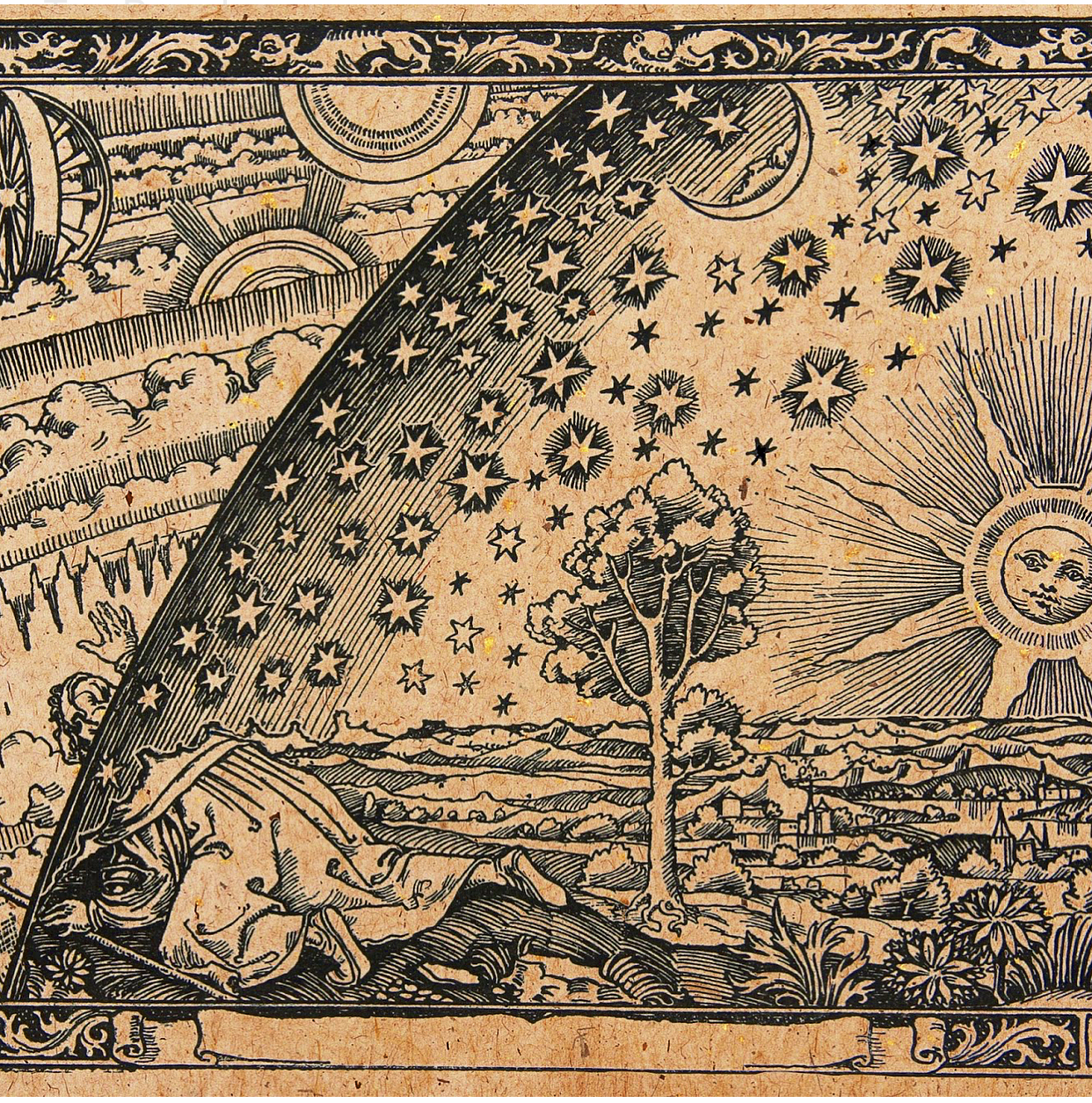
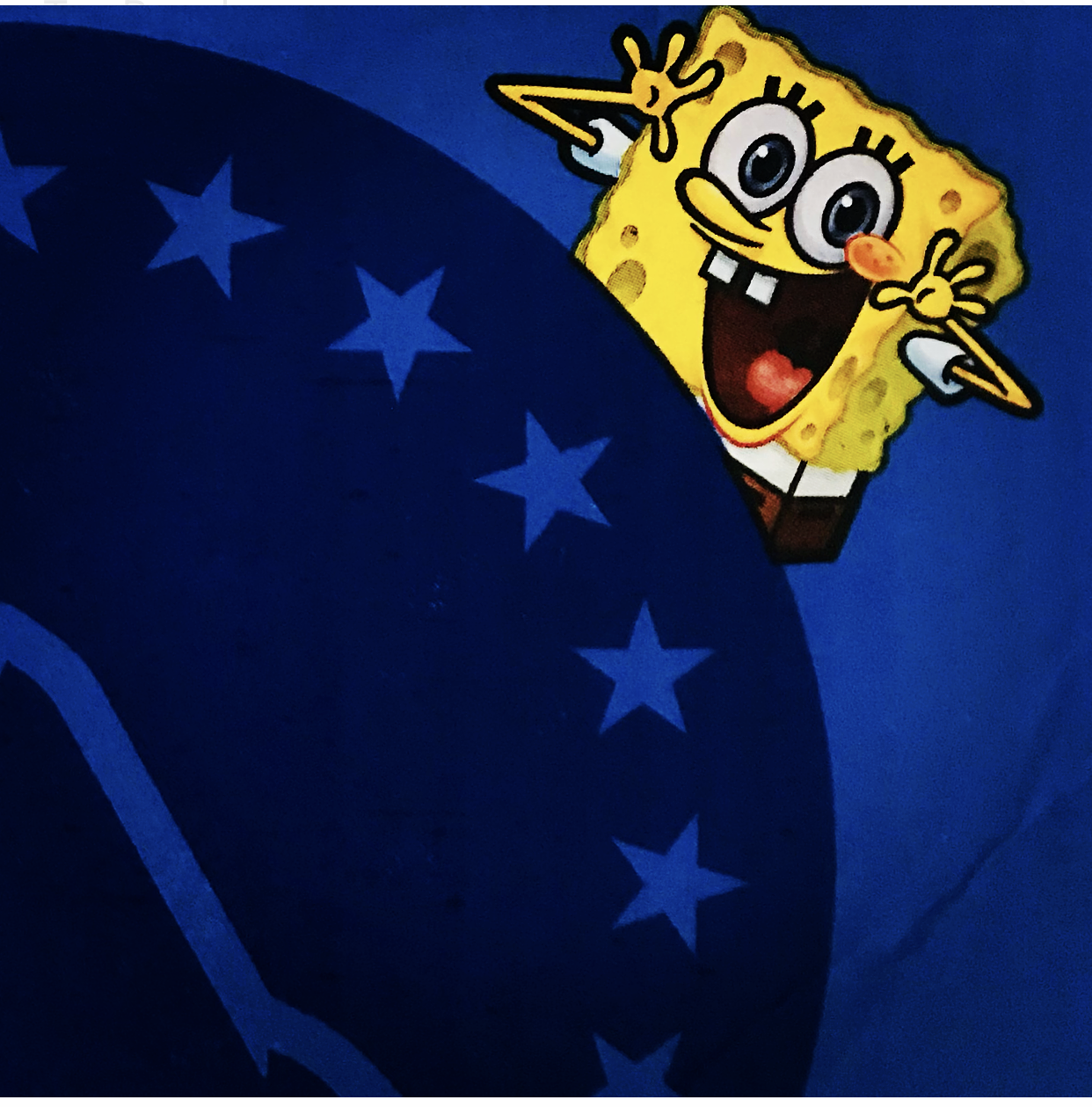
Time: an odd phenomenon in light of the way it communicates, deposits emblems, plays hide-and-seek with consciousness. “Let Your Dreams Set Sail” says one such emblem, printed on the wall above the bed in which I’ve slept of late. A box on the ground displays the Paramount logo, a mountain pointed toward an outer sphere, like a Bucky dome lined with stars. Outside the sphere pokes SpongeBob SquarePants: the Flammarion engraving rejoined or reversed.

SpongeBob disrupts the first sphere’s fourth wall, smiles at consciousness, injects among solemnity a spirit of mirth set free to roam the cosmos. He, too, partakes of the image’s directionality, the vertical ascent narrative involving spaceships: the thing toward which the parts of the emblem incline. Let us imagine among these ships of possibility that which is prophecied in the mythology of the Dog Star — black anti-slave ships, lines of flight like Marcus Garvey’s Black Star Line. Nathaniel Mackey fuses these symbolisms in his poem “Dogon Eclipse.” The poem ends “as if by then I’d / been thru / Hell / and back.” As if the “I” of the poem were Orpheus, the poet of ancient Greece, founder of the Orphic mysteries. Orphics revered Dionysus. He, too, is said to have descended into the underworld and to have returned. Through his poem, Mackey initiates those who read. So sayeth Michael S. Harper in his preface to Eroding Witness: “These poems are about prophecy and initiation.” Poems like “Dogon Eclipse” hint at mysteries; they transmit a secret knowledge. Other poems in the collection conjure loas from Voodoo and Vodou. Loas are the “mystères,” “the invisibles.” They act as intermediaries between worlds.

Wednesday June 3, 2020

One senses other voices — distractions from the work we’re here to do. “Ascent” and “descent” seem to be top priority for esotericists. Others call for reparation, insurrection, revolution, loving-kindness. Some speak of Babylon, purgatory, Tartarus. Beware the spooky ones and the trolls — the paranoids who think everything’s a plot. Get one’s house in order, noting daily the interplay between psyche and cosmos. Remember, too, that Butler’s heroine in Parable of the Sower writes a book of the living rather than a book of the dead.