Randall Jarrell’s Goethe’s Faust, Part 1: A Translation

Disappointed by the rhymed couplets of the Norton Critical Edition of Goethe’s Faust, with its translation by Walter Arndt, I turn instead to Randall Jarrell’s free-verse translation. Jarrell began his translation of Faust in 1957 and worked on it until his death in 1965. When asked, “Why translate Faust?,” he replied, “Faust is unique. In one sense, there is nothing like it; and in another sense, everything that has come after it is like it. Spengler called Western man Faustian man, and he was right. If our world should need a tombstone, we’ll be able to put on it: HERE LIES DOCTOR FAUST.”

Jarrell and Spengler weren’t the only ones convinced of this. Ishmael Reed’s Mumbo Jumbo, published just a few years later, features a character named Berbelang whose concerns intersect with Jarrell’s.

Reed’s novel also includes a Book of Thoth and a “Talking Android.”

There are, however, many ways to avoid the fate of Faust.

Cyberfeminists like Donna Haraway and Sadie Plant suggest one route. “I would rather be a cyborg than a goddess,” thunders Haraway in the closing line of her “Cyborg Manifesto.” Other, related kinds of Queer futurisms imagine out of Turing new pairings.

There’s also the Hoodoo/Afrofuturist route. Reed imagines in place of the Faustian mad scientist not the Faust-fearing radical art thief Berbelang, but rather PaPa LaBas, Mumbo Jumbo’s “Hoodoo detective.”

And then there’s the “psychedelic scientist” route. Psychedelic scientists are perhaps Fausts who, returned to God’s love-feast, repent.

What is my own contribution? Like Plant, I left the academy. Here I am now, a “new mutant” in both Leslie Fiedler’s sense and the comic book sense, reading and writing with plant spirits about Plant’s book Writing on Drugs. I seek salvation from “Faustian world-disappointment or self-disappointment,” as Jarrell’s widow, Mary von Schrader Jarrell, says of her late husband in the book’s “Afterword.”

Pausing in my reading of the Jarrell translation, I lift from its place on a shelf elsewhere in my library Leslie Fiedler’s Freaks: Myths & Images of the Secret Self. Fiedler taught in the English department at SUNY-Buffalo, my alma mater. Charles Olson taught there, too, from 1963 to 1965. Fiedler arrived to the department in 1965, right as Olson was leaving, and remained there until his death in 2003. I arrived to Buffalo the following year.

Published in 1978, the year of my birth, Freaks begins with a dedication: “To my brother who has no brother / To all my brothers who have no brother.”

While those traditionally stigmatized as freaks disown the term, notes Fiedler from the peculiarity of his vantage point in the late 70s, “the name Freak which they have abandoned is being claimed as an honorific title by the kind of physiologically normal but dissident young people who use hallucinogenic drugs and are otherwise known as ‘hippies,’ ‘longhairs,’ and ‘heads’” (14).

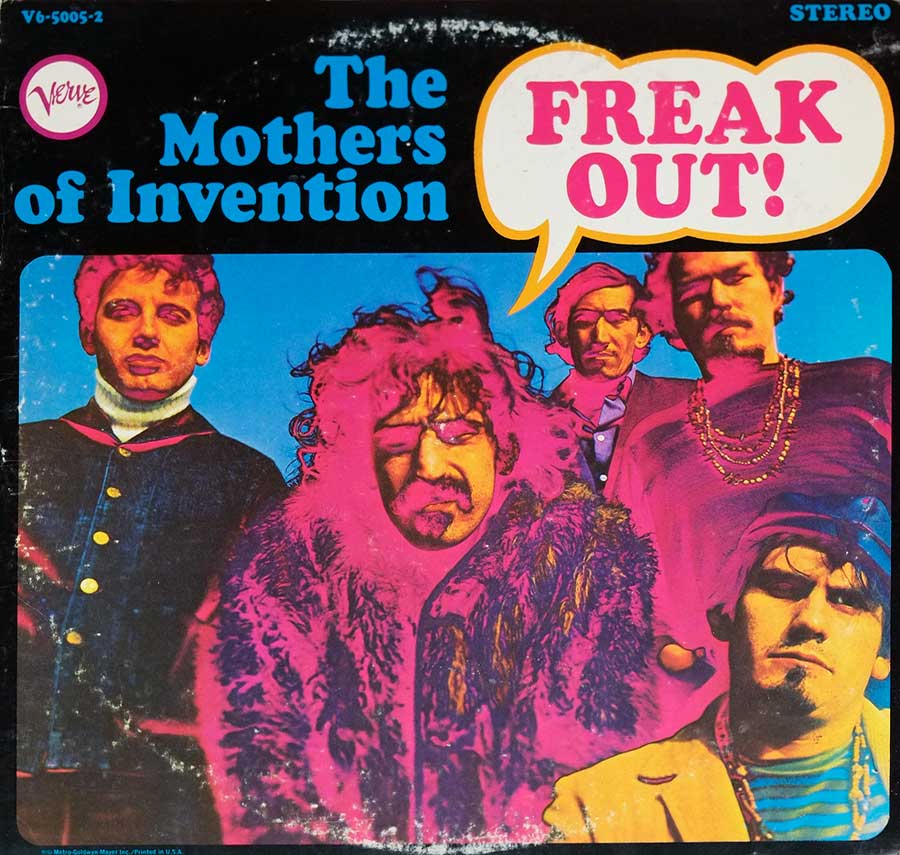
“Such young people,” continues Fiedler, “—in an attempt perhaps to make clear that they have chosen rather than merely endured their status as Freaks—speak of ‘freaking out,’ and indeed, urge others to emulate them by means of drugs, music, diet, or the excitement of gathering in crowds. ‘Join the United Mutations,’ reads the legend on the sleeve of the first album of the Mothers of Invention.”

“And such slogans suggest,” concludes Fiedler, as if to echo in advance the thesis of Mark Fisher’s Acid Communism, “that something has been happening recently in the relations between Freaks and non-Freaks, implying just such a radical alteration of consciousness as underlies the politics of black power or neo-feminism or gay liberation” (14-15).

Are willed, “chosen rather than merely endured” self-transformations of this sort Faustian?

Jarrell is one of many local poet-spirits who haunt my chosen home here in North Carolina. His translation called to me in part, I think, because he taught nearby, in the English department at UNC-Greensboro, from 1947 to 1965.

Jarrell’s life ended tragically. The poet, winner of the 1960 National Book Award for poetry, one-time “Consultant in Poetry to the Library of Congress,” was struck and killed by a motorist on October 14, 1965, while walking near dusk along US highway 15-501 near Chapel Hill. Though the death was ruled an accident by the state, many suspect Jarrell took his own life. He was laid to rest in a cemetery across the street from Greensboro’s Guilford College. A North Carolina Highway Historical Marker commemorates him nearby.
Over at the Frankenstein Place

Sadie Plant weaves the tale of her book Zeros + Ones diagonally or widdershins: a term meaning to go counter-clockwise, anti-clockwise, or lefthandwise, or to walk around an object by always keeping it on the left. Amid a dense weave of topics, one begins to sense a pattern. Ada Lovelace, “Enchantress of Numbers,” appears, disappears, reappears as a key thread among the book’s stack of chapters. Later threads feature figures like Mary Shelley and Alan Turing. Plant plants amid these chapters quotes from Ada’s diaries. Mary tells of how the story of Frankenstein arose in her mind after a night of conversation with her cottage-mates: her husband Percy and, yes, Ada’s father, Lord Byron. Turing takes up the thread a century later, referring to “Lady Lovelace” in his 1950 paper “Computing Machinery and Intelligence.” As if across time, the figures conspire as co-narrators of Plant’s Cyberfeminist genealogy of the occult origins of computing and AI.

To her story I supplement the following:

Victor Frankenstein, “student of unhallowed arts,” is the prototype for all subsequent “mad scientist” characters. He begins his career studying alchemy and occult hermeticism. Shelley lists thinkers like Paracelsus, Albertus Magnus, and Cornelius Agrippa among Victor’s influences. Victor later supplements these interests with study of “natural philosophy,” or what we now think of as modern science. In pursuit of the elixir of life, he reanimates dead body parts — but he’s horrified with the result and abandons his creation. The creature, prototype “learning machine,” longs for companionship. When Victor refuses, the creature turns against him, resulting in tragedy.

The novel is subtitled “The Modern Prometheus,” so Shelley is deliberately casting Victor, and thus all subsequent mad scientists, as inheritors of the Prometheus archetype. Yet the archetype is already dense with other predecessors, including Goethe’s Faust and the Satan character from Milton’s Paradise Lost. Milton’s poem is among the books that compose the creature’s “training data.”

Although she doesn’t reference it directly in Frankenstein, we can assume Shelley’s awareness of the Faust narrative, whether through Christopher Marlowe’s classic work of Elizabethan drama Doctor Faustus or through Goethe’s Faust, part one of which had been published ten years prior to the first edition of Frankenstein. Faust is the Renaissance proto-scientist, the magician who sells his soul to the devil through the demon Mephistopheles.

Both Faust and Victor are portrayed as “necromancers,” using magic to interact with the dead.

Ghost/necromancy themes persist throughout the development of AI, especially in subsequent literary imaginings like William Gibson’s Neuromancer. Pull at the thread and one realizes it runs through the entire history of Western science, culminating in the development of entities like GPT.

Scientists who create weapons, or whose technological creations have unintended negative consequences, or who use their knowledge/power for selfish ends, are commonly portrayed as historical expressions or manifestations of this archetype. One could gather into one’s weave figures like Jack Parsons, J. Robert Oppenheimer, John von Neumann, John Dee.

When I teach this material in my course, the archetype is read from a decolonizing perspective as the Western scientist in service of European (and then afterwards American) imperialism.

Rocky Horror queers all of this — or rather, reveals what was queer in it all along. Most of all, it reminds us: the story, like all such stories, once received, is ours to retell, and we needn’t tell it straight. Turing points the way: rather than abandon the Creature, as did Victor, approach it as one would a “child-machine” and raise it well. Co-learn in dialogue with kin.

John Dee, as Imagined in Light of Empire

The British Empire — a thing culled from Arthurian legends whispered between Faerie Queenes and court astrologers — stood for a time as proof of magic’s power. ‘Twas a rabbit pulled from the hat of Elizabeth I’s wizard-friend John Dee. The same rabbit that draws Alice down the rabbit hole to Wonderland.

Enlisted as Her Majesty’s spymaster — indeed, he was the original secret agent, Mr. 007 himself — Dee stormed the reality studio, made Elizabeth a Time Traveler, conversed with angels.

And this thing Dee dreamt into being was of course a terrible thing: an expansionist project armed with ships of fools and launched outward to seize others — other persons, other worlds — for purposes of self-aggrandizement.

Literary greats went on to reimagine Dee just as he himself was a reimagining of Merlin. Shakespeare figures him as Prospero, and against him imagines the colonized subject Caliban. To overthrow Prospero, says Caliban, “Remember / First to possess his books, for without them / He’s but a sot.”

Christopher Marlowe supplies the more influential imagining of Dee, however, by casting him as Doctor Faustus.

Wednesday May 26, 2021

“For my next act” I think as I stare at trees, their upper branches bathed in the orange light of the setting sun. I feel like a magician having built boxes, four wooden raised beds, conjured them in the midst of a field of clover here in the yard behind our home. In these beds, we’ll plant our garden. Yet the utopian in me (or the Faust in me? the Gnostic in me? the “slow sick sucking part of me”? same difference?) is already restless, ready to set sail (as per Wilde), ready to walk away (as per Le Guin), wishing for something other than what is here, wanting in its stead some other bower of bliss (this not that): a vertical garden, say, in the midst of a food forest.

Tuesday October 13, 2020

Is it Faustian to wish joy and happiness? Are Utopians Faustian? What about those of us who wish alleviation of suffering through escape from capitalism? Or through religion, education, spirituality, cultivation of land and consciousness — all of which are at least Promethean, if not Faustian, in their defiant aims and ambitions. Projects waged against fate. The Faust character is distinct from the others, though, as he practices magic. Faust visits a crossroads. He makes a deal, sells his soul. The Devil features as a character in the Faust narrative, as does a demon named Mephistopheles. The latter name appears in the late-16th-century Faust chapbooks, stories concerning the life of the historical figure on which the Faust character is based, an ambitious scholar named Johann Georg Faust. The author of these chapbooks remains anonymous. The proper response to Faust, I suppose, is the one offered by Fatima Bhutto: “nothing on earth can be gifted to compensate for injustice.”