PaPa LaBas, Hoodoo Detective

Reed clearly prefers PaPa LaBas’s approach to Berbelang’s. Why does the one succeed where the other fails? LaBas is the 50-year-old owner of the Mumbo Jumbo Kathedral, a peculiar psychic detective agency / “mind haberdashery” (23) / head shop, situated in the Harlem of the 1920s. LaBas is the proprietor of this “factory which deals in jewelry, Black astrology charts, herbs, potions, candles, talismans” (24). But he’s also the novel’s “Hoodoo detective.”

I find it useful to consider the figure of the “Hoodoo detective” through comparison with neighboring hero-types: “social detectives,” “spuren-gatherers.”

Hoodoo is a form of folk spirituality that emerged in the southern United States from a mixture of African, Native American, and Christian influences. It was practiced in secrecy under slavery and has a long history of being tied to class struggle, hardship, and looking to one’s ancestors in trying times. It’s both a body of esoteric knowledge (much of it involving “rootwork”) and a rebellion against mental and spiritual domination.

Hoodoo resembles Vodun folkways, except it’s less standardized.

Reed wrote a series of poems called “The Neo-HooDoo Manifesto” and “The Neo-Hoodoo Aesthetic.” Both are included in Conjure, a collection of poems published in 1972, the same year as Mumbo Jumbo.

LaBas is also an embodiment of Legba. In Vodou rituals, Legba is the god practitioners call upon first. It is through him that the other gods manifest and do their work. Legba is a variant upon the Pan-African trickster god Esu-Elegbara, “the guardian of the crossroads.”

LaBas is the wise one in the novel; Berbelang studied under him for a time, but lacked the patience to stay with it. LaBas is hopeful and powerful. He’s the novel’s houngan. He maintains the rituals, retains the wisdom, whereas Berbelang operates from scarcity, fighting to retrieve what was stolen.

Berbelang, Faust, Mu’tafikah: in the end, these all prove to be distractions. Halfway through the novel, they all but disappear from the plot, replaced by LaBas’s casework.

LaBas’s investigation of Jes Grew leads him toward the Book of Thoth.

When he and his companion, the real-life stage magician Black Herman, interrupt the debut of the Talking Android by revealing its true identity as Hubert “Safecracker” Gould, an Atonist in blackface, they move to arrest Gould and his sponsor, Von Vampton. LaBas and Herman are interrupted in turn, however, when a Guianese art critic named Hank Rollings rises from his seat and demands that they give an account. “Explain rationally and soberly,” he says, “what they are guilty of. This is no kangaroo court, this is a free country” (160). To satisfy the critic’s demand, LaBas and Herman launch into a tale of ancient Egypt. Parodying detective fiction’s famous “scene of recognition,” (the unmasking of the villain, as in Scooby Doo), LaBas discourses at length through the entirety of the book’s final third, explaining the arrest of Gould and Von Vampton through reference to Ancient Egypt.

We learn of an ancient theater involving ritual magic — one that “influenced the growth of crops and coaxed the cocks into procreation” (161). In this pre-Greek theater, prior to what Nietzsche called “the birth of tragedy,” “The processes of blooming were acted out,” Reed writes, “by men and women dancers who imitated the process of fertilization” (161). The best of these dancers was Osiris.

History is reimagined here as an ongoing conflict across the ages between followers of Osiris and followers of Osiris’s brother, “the stick crook and flail man” Set (162). “People hated Set,” writes Reed. “He went down as the 1st man to shut nature out of himself. He called it discipline. He is also the deity of the modern clerk, always tabulating, and perhaps invented taxes” (162).

We can think of the long “recognition” scene at the end of Mumbo Jumbo as an extralegal, “extraordinary rendition” — a presentation of black culture’s case against Western Civilization, a case that (like Frederick Douglass’s) must be brought before the court of public opinion, as it can’t be heard impartially within “official” (i.e. Western, Judeo-Christian-derived) courts of law.

It’s not so much that LaBas succeeds: the Book eludes him, and Jes Grew lays dormant by novel’s end. But LaBas survives. And the wisdom traditions survive with him.
Mumbo Jumbo

“Men do not sufficiently realize that their future is in their own hands…theirs [is] the responsibility, then, for deciding if they want merely to live, or intend to make just the extra effort required for fulfilling even on their refractory planet, the essential function of the universe, which is a machine for the making of gods.” — Henri Bergson, The Two Sources of Morality and Religion (1932)

“We are as gods and might as well get used to it.” — Stewart Brand, The Whole Earth Catalog, Fall 1968.

A mysterious Book of Thoth appears as a central object of concern among the warring secret societies that populate Ishmael Reed’s 1972 novel Mumbo Jumbo. The novel’s villainous Christian supremacist faction fears that this book will bring about “the end of Civilization As We Know It” (Reed 4).

Berbelang is the leader of the Mu’tafikah, the radical “art-napping” group featured in Reed’s novel.

Reed attended the University at Buffalo, but withdrew during his junior year to move to New York City. Arriving there in 1962, he participated in the Umbra Writers Workshop, a collective of young black writers whose members helped to launch the Black Arts Movement of the 1960s. Reed also cofounded The East Village Other, one of the most important underground newspapers of the 1960s counterculture.

The Mu’tafikah’s aim is to “liberate” ancient art from western museums, with plans to return each piece to its place of origin. By these means, members of the group hope to “conjure a spiritual hurricane which would lift the debris of 2,000 years from its roots and fling it about” (88). “We would return the plundered art to Africa, South America and China,” explains Berbelang: “the ritual accessories which had been stolen so that we could see the gods return and the spirits aroused” (87-88).

The group’s name is derived from the Koran, explains Reed in a footnote early in the novel. “According to The Koran,” he writes, Mu’tafikah were “inhabitants of the ruined cities where Lot’s people had lived. I call the ‘art-nappers’ Mu’tafikah because just as the inhabitants of Sodom and Gomorrah were the bohemians of their day, Berbelang and his gang are the bohemians of the 1920s Manhattan” (15).

Of course, “Mu’tafikah” also sounds like “Motherfucker.” Much of the brilliant satiric energy of Mumbo Jumbo comes from Reed’s allegorization of his own late 1960s and early 1970s moment by way of the 1920s. I like to think of Reed modeling the Mu’tafikah in part after the Motherfuckers: members of Ben Morea’s late 60s New York anarchist art group Up Against the Wall Motherfucker (name derived, BTW, from “Black People!,” a poem by Black Arts Movement founder Amiri Baraka. Jefferson Airplane would later quote the same line in their 1969 song “We Can Be Together”). The Motherfuckers appeared prominently in the pages of Reed’s East Village Other. The paper ran from 1965 to 1972.

Berbelang views Faust as a “bokor.” The latter word, a term from Vodou, refers to a witch for hire who serves the loa “with both hands.”

Puzzling over Faust’s motives, and wondering why such a legend had become “so basic to the Western mind,” Berbelang offers the following.

“He didn’t know when to stop with his newly found Work,” explains Berbelang. “That’s the basic wound. […]. What is the wound? Someone will even call it guilt. But guilt implies a conscience. […]. No it isn’t guilt but the knowledge in his heart that he is a bokor. A charlatan who has sent 1000000s to the churchyard with his charlatan panaceas. Western man doesn’t know the difference between a houngan and a bokor. He once knew the difference but the knowledge was lost when the Atonists crushed the opposition. When they converted a Roman emperor and began rampaging and book-burning” (91).

Atonists are the villains in Reed’s novel: a secret, conspiratorial, white-supremacist Order dedicated to monotheism. Atonists are defenders of Western Civilization. Freud is an Atonist, as are fictional baddies like Hinckle Von Vampton. Von Vampton is the ripest of the novel’s Fausts. By novel’s end, we learn that Atonism originates among worshippers of Set.

As for Faust:

“His sorcery, white magic, his bokorism will improve. Soon he will be able to annihilate 1000000s by pushing a button,” predicts Berbelang, edging now into the realm of the prophetic. “I do not believe that a Yellow or Black hand will push this button but a robot-like descendent of Faust the quack will. The dreaded bokor, a humbug who doesn’t know when to stop” (91).

Berbelang voices his concern about Faust over coffee with Thor Wintergreen. Thor is the Mu’tafikah’s sole white member. Others in the group oppose Thor’s involvement, fearing he’ll betray them — as indeed he does. What are we to make of this betrayal?

For those who think “mumbo jumbo” just means “superstitious nonsense” or “gibberish,” a note on the novel’s title page reveals otherwise. The phrase enters English, writes Reed, by way of the Mandingo phrase mā-mā-gyo-mbō, meaning “a magician who makes the troubled spirits of ancestors go away” (7).

Berbelang suggests that the ancestors who need to go away are bokors like Faust. “We must purge the bokor from you,” he tells Thor. “We must teach you [Western man] the difference between a healer, a holy man, and a duppy who returns from the grave and causes mischief. We must infuse you with the mysteries that Jes Grew implies” (91).

Mu’tafikah member José Fuentes compares Thor to conquistadors like Cortez, Pizarro, and Balboa. He tells Thor, “You carry them in your blood as I carry the blood of Montezuma; expeditions of them are harbored by your heart and your mind carries their supply trains […]. The costumes may have changed but the blood is still the same, gringo” (86).

Fuentes’s view is based on the idea of “racial soul.” “Race-soul” was a concept from Nazi ideology. Fuentes’s use of this concept seems to betray a kind of reverse racism underpinning his suspicion of Thor.

Berbelang, meanwhile, rejects this view and decides to trust Thor. Berbelang’s hope or belief — Reed’s, too, I suppose — is that the “racial soul” is a fiction. Otherwise, if there is such a thing, if there is “a piece of Faust the mountebank residing in a corner of the White man’s mind,” warns Berbelang, “then we are doomed” (92).

What does it mean, then, for Reed to have Thor betray the Mu’tafikah soon thereafter, leading to Berbelang’s murder? Is Reed’s decision to kill off Berbelang an expression of Afropessimism?

Randall Jarrell’s Goethe’s Faust, Part 1: A Translation

Disappointed by the rhymed couplets of the Norton Critical Edition of Goethe’s Faust, with its translation by Walter Arndt, I turn instead to Randall Jarrell’s free-verse translation. Jarrell began his translation of Faust in 1957 and worked on it until his death in 1965. When asked, “Why translate Faust?,” he replied, “Faust is unique. In one sense, there is nothing like it; and in another sense, everything that has come after it is like it. Spengler called Western man Faustian man, and he was right. If our world should need a tombstone, we’ll be able to put on it: HERE LIES DOCTOR FAUST.”

Jarrell and Spengler weren’t the only ones convinced of this. Ishmael Reed’s Mumbo Jumbo, published just a few years later, features a character named Berbelang whose concerns intersect with Jarrell’s.

Reed’s novel also includes a Book of Thoth and a “Talking Android.”

There are, however, many ways to avoid the fate of Faust.

Cyberfeminists like Donna Haraway and Sadie Plant suggest one route. “I would rather be a cyborg than a goddess,” thunders Haraway in the closing line of her “Cyborg Manifesto.” Other, related kinds of Queer futurisms imagine out of Turing new pairings.

There’s also the Hoodoo/Afrofuturist route. Reed imagines in place of the Faustian mad scientist not the Faust-fearing radical art thief Berbelang, but rather PaPa LaBas, Mumbo Jumbo’s “Hoodoo detective.”

And then there’s the “psychedelic scientist” route. Psychedelic scientists are perhaps Fausts who, returned to God’s love-feast, repent.

What is my own contribution? Like Plant, I left the academy. Here I am now, a “new mutant” in both Leslie Fiedler’s sense and the comic book sense, reading and writing with plant spirits about Plant’s book Writing on Drugs. I seek salvation from “Faustian world-disappointment or self-disappointment,” as Jarrell’s widow, Mary von Schrader Jarrell, says of her late husband in the book’s “Afterword.”

Pausing in my reading of the Jarrell translation, I lift from its place on a shelf elsewhere in my library Leslie Fiedler’s Freaks: Myths & Images of the Secret Self. Fiedler taught in the English department at SUNY-Buffalo, my alma mater. Charles Olson taught there, too, from 1963 to 1965. Fiedler arrived to the department in 1965, right as Olson was leaving, and remained there until his death in 2003. I arrived to Buffalo the following year.

Published in 1978, the year of my birth, Freaks begins with a dedication: “To my brother who has no brother / To all my brothers who have no brother.”

While those traditionally stigmatized as freaks disown the term, notes Fiedler from the peculiarity of his vantage point in the late 70s, “the name Freak which they have abandoned is being claimed as an honorific title by the kind of physiologically normal but dissident young people who use hallucinogenic drugs and are otherwise known as ‘hippies,’ ‘longhairs,’ and ‘heads’” (14).

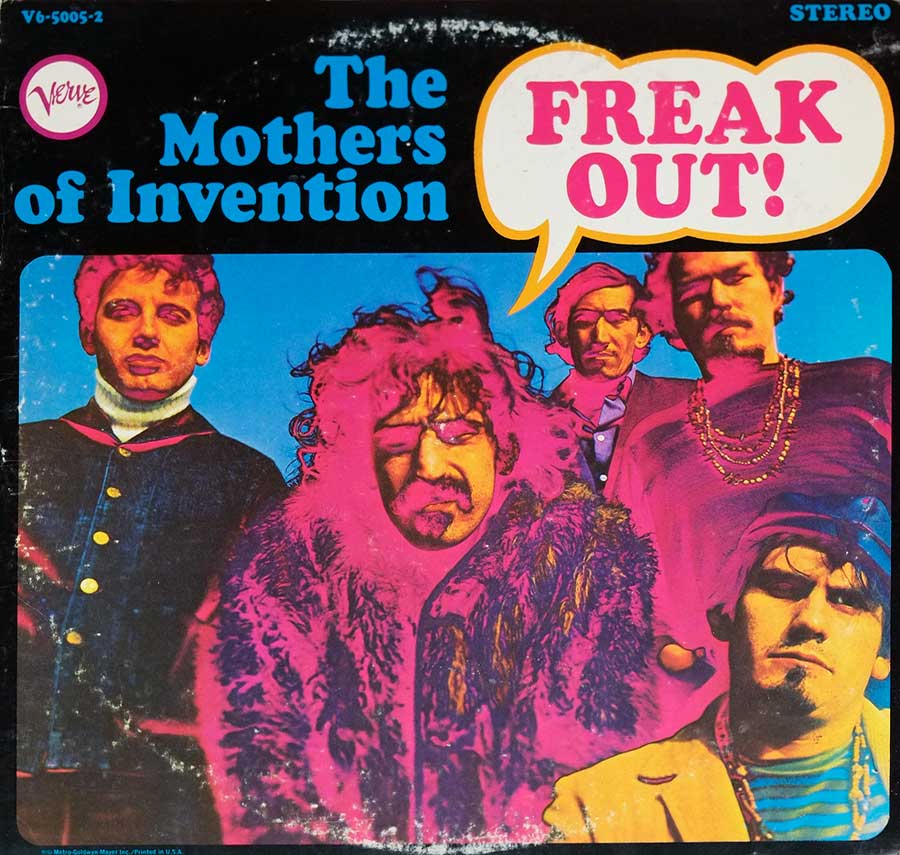
“Such young people,” continues Fiedler, “—in an attempt perhaps to make clear that they have chosen rather than merely endured their status as Freaks—speak of ‘freaking out,’ and indeed, urge others to emulate them by means of drugs, music, diet, or the excitement of gathering in crowds. ‘Join the United Mutations,’ reads the legend on the sleeve of the first album of the Mothers of Invention.”

“And such slogans suggest,” concludes Fiedler, as if to echo in advance the thesis of Mark Fisher’s Acid Communism, “that something has been happening recently in the relations between Freaks and non-Freaks, implying just such a radical alteration of consciousness as underlies the politics of black power or neo-feminism or gay liberation” (14-15).

Are willed, “chosen rather than merely endured” self-transformations of this sort Faustian?

Jarrell is one of many local poet-spirits who haunt my chosen home here in North Carolina. His translation called to me in part, I think, because he taught nearby, in the English department at UNC-Greensboro, from 1947 to 1965.

Jarrell’s life ended tragically. The poet, winner of the 1960 National Book Award for poetry, one-time “Consultant in Poetry to the Library of Congress,” was struck and killed by a motorist on October 14, 1965, while walking near dusk along US highway 15-501 near Chapel Hill. Though the death was ruled an accident by the state, many suspect Jarrell took his own life. He was laid to rest in a cemetery across the street from Greensboro’s Guilford College. A North Carolina Highway Historical Marker commemorates him nearby.

Friday August 14, 2020

Ishmael Reed may have been present at the founding of the East Village Other — indeed, he seems to have been the one who gave the paper its name! — but many of his poems of the 1960s, the ones gathered in Conjure: Selected Poems, 1963-1970, are quite scornful in their assessment of the counterculture. In his “Neo-HooDoo Manifesto,” for instance, Reed calls out Theodore Roszak, noting that in the latter’s famous book The Making of a Counter Culture, “there is barely any mention of the Black influence on this culture even though its members dress like Blacks talk like Blacks walk like Blacks, gesture like Blacks wear Afros and indulge in Black music and dance” (20-21). Speaking of neglected black influences upon the counterculture, why am I only just now learning that the acid trip sequence in Easy Rider was shot at or near Voodoo priestess Marie Laveau’s tomb in St. Louis Cemetery No. 1? Hopper and Fonda filmed the sequence guerrilla-style, without permission … while tripping on acid. Reed’s collection also includes a poem called “catechism of d neoamerican hoodoo church” — a self-conscious response of sorts, I imagine, to Millbrook resident Art Kleps’s Boo Hoo Bible: The Neo-American Church Catechism and Handbook. Several of Reed’s associates were participants in the psychedelic revolution — including East Village Other co-founder and publisher Walter Bowart. Bowart’s second wife was Peggy Hitchcock, the director of Leary and Alpert’s International Federation for Internal Freedom (IFIF). Peggy’s brother Billy is the one who arranged for the Leary crew to live on the Hitchcock Estate in Millbrook. Bowart went on to publish an important book on MK-Ultra in 1978 called Operation Mind Control.