Friday May 17, 2019

I share my couch with my friend’s dog, a cute half-lamb, half-poodle puffball named Stevie. Out in the yard across the street fly a pair of bluejays. Perhaps I should listen again to the birds. Everything else just looks like hype seeking freedom to spend. I wonder which version of London will appear in my coming journey. Will it be one I’ve read about, one I remember? Or will it be a visionary London, an occult London? Will the corporate pentagon of power sour the hour, or will we ascend, rise up, learn about heikhalot literature and Merkabah? For now, let’s assume the “latter” is above our pay grade and seek a third option. As Teilhard de Chardin reminds us, “The outcome of the world, the gates of the future, the entry into the super-human — these are not thrown open to a few of the privileged nor to one chosen people to the exclusion of all others. They will open only to an advance of all together, in a direction in which all together can join and find completion in a spiritual regeneration of the earth” (The Phenomenology of Man, p. 244). Soon I’m coasting along, Erik Davis serving again as guide, recounting for me the account of Indra’s Net from the Flower Garland Sutra — a “cognitive map” if ever there was one! Reading it makes me think for a moment of the here and now, the ground of Being. We are all sustaining and defining one another — so we might as well get good at it. Sunlight, birdsong, subreddits full of horse girls and rats that wash themselves with soap — find room for it, get it in there. Everything in a blog post. Everything on a sheet of paper. Evoke the world as a bird that flies over and tweets. Followed by another, followed by another. Davis explains it well. “Indra’s net is an image of totality,” he writes, “but unlike Teilhard’s vision of the Omega point [the moment when matter evolves into convergence with mind], this holism does not depend upon some apocalyptic moment of future synthesis. In the Hua-yen view, reality is already a totally interdependent matrix, and this unity does not and cannot cancel out difference, the blooming multiplicities that compose each individual event” (TechGnosis, p. 339). With this image of totality set as our map, we become more mindful of our angelic companions. “Buzz, buzz” go the bumblebees. “Buzz, buzz” go birds, cars, pedestrians as we attend to our craft: Self as it attempts to voice, sound, and sense the multitude.

Tuesday May 7, 2019

My eyes pass along the spines of mountainous rows of books. A small portion of my home library. Because of its size, much of the collection will go unread. Each book represents a kind of journey out of body. Yet I often prefer to remain in my body, walking through my neighborhood soaking in and re-transmitting positive vibes. It is here on the streets, or sitting at tables in parks, out and about, where I practice my “secret philosophy,” with its hints and codes. In the mutability of the day-to-day I find revealed to me a unity. Grand syntheses of ideas, even amid birdsong and crying children.

Sunday April 28, 2019

Revive the phenomenological category of the “lifeworld.” Review its history and weave it into the act of sitting, being-with-nature, the appearance of a pair of cardinals, lovers chirping, flitting from branch to branch amid a grove of trees. How can we best experience the sense of life as it unfolds into consciousness? Sarah steps around the corner, visits me to talk about pens beside a burst of pink flowers. Think of this, and of the cardinals, too, as signs of grace — sunlight through trees, enlightening signals of love and goodwill. The goal, as always, is to formulate a vision of wellbeing more compelling than the neoliberal “eudaimonic” subject. Perhaps I should read the work of Mexican philosopher Jorge Portilla, one of the so-called hiperiones, a group that also included Emilio Uranga. Time to school myself in Latin American philosophy, so as to better understand the interventions of El grupo Hiperión. With the arrival into the lifeworld of the Other (an arrival that has always-already occurred except in myth), the lifeworld divides into “homeworld” and “alienworld.” And this process of division continues indefinitely, with the proliferation of the Other into multiple Others leading to the reconstitution of the arrivant’s lifeworld into an interface with an ever-changing multiverse. Countless leaves, branches, insects, birds — being transforming day by day. The past, persisting for potential reactivation by consciousness, allows the latter to travel among worlds, entering and exiting identities as in a dream.

Sunday November 25, 2018

These trance-scripts haven’t spoken adequately yet about the most common altered state of consciousness, the one to which our society remains addicted: namely, fear. There is an element of anarchy in the ontology of the cosmos. This is its beauty. We each have to find our own truths, our own interpretations, the meanings that suit our being. Before meaning’s arrival, though, before its revelation (when all is said and done), there is the maze, the labyrinth, the dungeon — the as-yet-unexamined. Fear emerges when we project into the labyrinth a Minotaur, a spirit of malevolence, an enemy Other. If we concentrate on breathing and re-center in our bodies, fear dissipates. Sunlight catches on windblown leaves, goldens a wall of stained pine.

Saturday April 28, 2018

The World-Self, vacillating between corollary states of waking and dreaming, and the Mimoid God, the “imperfect god” of Solaris: both are explicable as the equivalents of small children, improvising existence, psychically divided due to faulty memory, each being seeing itself as “either/or,” one or the other of two opposing forces, rather than “both/and”: the text and its author. Observers might say upon study of this World-Self that it is not yet ready to put away childish things — or not yet convinced change is possible. Out of it grow hardline anthropocentric types, men who plant flags, their selfish encroachments and annexations acts of profound cosmic indifference, a violence that radiates outward irrespective of other species.

Saturday April 14, 2018

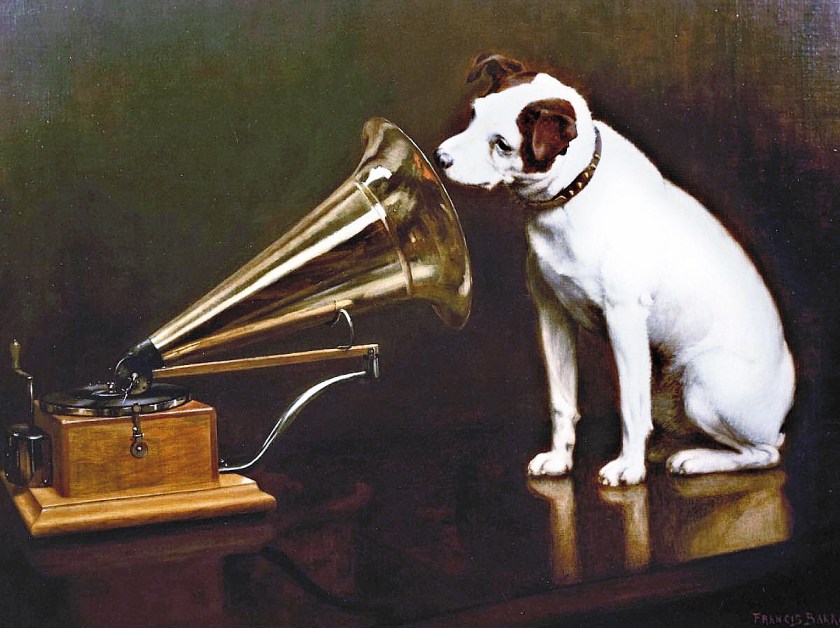
My teachings, I decide, draw heavily on Freud, though mainly by way of the Freudo-Marxists and their rebellious late-60s successors, combined with touches of Psychedelic Utopianism and Jungian Gnosticism. Worlds are always readied for one by presumptuous church fathers. For fear of some savagery, they say — just as local ecosystems have been modified, subdivided into units of practico-inert matter, a socially-constructed objectivity, leaving one little space by which to live. By which I mean something like “self-actualize,” so long as that also entails recognition of a coherent narrative or at least arrival into a meditative garden, a temple of sound, in companionship with others. Whereas everywhere under capitalism, the land unadorned awaits the fall. Neither happy nor splendid. At which point His Master’s Voice (by which I mean the Stanislaw Lem novel) begins to speak to me. “What can be done,” asks the novel’s narrator, “when an important fact is lost in a flood of impostors, and the voice of truth becomes drowned out in an ungodly din? When that voice, though freely resounding, cannot be heard, because the technologies of information have led to a situation in which one can receive best the message of him who shouts the loudest, even when mostly false?” (22). This is our predicament in that moment in the history of capitalism known as the era of Trump, is it not?

His_Master's_Voice

Thursday February 22, 2018

I wonder sometimes about the ongoingness of declared feeling that results from the ritual nature of these trance-scripts. According to Thee Psychick Bible, though, ritual is “the concrete expression of experience…the foundation of awareness.” Ritual is the only way to approach the ideal of a complete and coherent cognitive map of experience. But do we need such a map? For what purpose? I consider abandoning communication altogether after skimming Henry Flynt’s execrable essay “The Psychedelic State.” Are proponents of “Ordinary Language” or “Natural Language” philosophy always as arrogant and as petulant as Flynt? Author, you are no proper author. Time relays itself into an ontological structure shaped like a cantilevered staircase. Weed-huffing is a healthy, low energy way of moving between floors. One is lifted. Consciousness spins itself off into spontaneously assembled wisps of trance-script, a consequence of subject-object entanglement.

Tuesday January 9, 2018

Think about processes of identification. A temporary forgetting occurs when we confuse awareness with either a body or an object or some sign derived therefrom. As from a dream we awake remade. Shopping carts clang into line with their brethren. A winning performance. Conjuring up another semester’s characters is great work. My students come out of my classes on the whole better people. This I do believe, despite my occasional disappointments. Those at my present institution, for instance, are never quite as cool or as smart as I want them to be. I want the universe to work. I want to believe in myself — so I do. In the moments, in the seconds. In the on-off binary interval between mind and creation, our two alternate personas. All of it a playful game or dance. Real travel requires a maximum of unscheduled wandering. That is what today makes possible. The individual with the colossal external nervous system. Become awake. Become alive. It’s time to level up.

Monday January 8, 2018

There is a long silence as the author engages in self-therapy while reading Aldous Huxley’s underappreciated but highly worthwhile final novel, Island. Receptive heads agree. Let us climb up, they chant excitedly. Let us redeem ourselves. We can do what we want. We can drift apart from history into an eternal present. It’s as simple as listening meditatively to “Parallel Drift” by Insect Factory.

Stoke up rows of fiery pinwheels by breathing deeply. Acquire temporary being as a pulsing cloud of energy, before retracting, the self a spectator separate again from experience, a will-less will borne outward, reimagined as sentient co-creator of its own body-projection. “Mind” (if we wish to call it that) need not be confused with its synchronized audiovisual avatar-body. In fact, this confusion can cause great delay. Dislocate the symbol-maker from the sign-system or one will lucid-dream oneself into a system of representation without exit. Unless the self is the root and ground of the universe — which of course it may well be. What voice-box, what menu, what catalog allows interaction with “feelings” or “experiences”? How are these things made? I have been climbing up the signpost instead of following the road.

Friday December 8, 2017

We land on a word as if by spinning the Wheel of Fortune. What else would minds be if not for input from that part of ourselves that is exterior? The world is the set that contains those trees, and this house, and that house, and this body. But what about me, the Author, the Subject, the voice that posits itself through trance-scription? What is my ontological status apart from my body and my senses? Gnostics are they who know themselves to be caught in the midst of a tragic act of forgetting, the knowing and the forgetting intertwined. Because of its impoverished condition, they argue, humanity individually and collectively knows itself in an impoverished manner, through the art it holds up to itself and the names it applies to things — in short, by imperfect discourses, images, and myths. We must learn to commune again with plants, animals, rocks, and rivers. I find myself drawn with equal force, however, to the school of thought known as personalism, given the priority it grants to inner happenings. “How can anyone know me,” sings Matt Johnson of The The, “when I don’t even know myself?”

Is nature naught but presentations produced in finite minds by the Infinite? Material world as divine language? Why does weed take heads away from materialism toward idealism? We become spooky, ghostly, supernatural, transcendent. Nicolas Berdyaev speaks to us, draws from us assenting nods with the distinction he draws between individuals and persons. “The individual is a naturalistic category, biological and sociological,” he writes, “and it appertains to the natural world. […]. It is an atom, indivisible, not having inner life, it is anonymous. […]. Person signifies something altogether different. Person is a spiritual and religious category. Person speaks not only about man belonging to the natural and social order, but also to a different dimension of being, to the spiritual world. […]. Person is a sundering within the natural world, and it is not explainable from it.” The synthesis between inner and outer that the weeded subject seeks, I realize, is what Berdyaev calls “personalist socialism.” More on this, says the prophetic subject, in the days ahead.