Afro-Futures

Into the Library we welcome Kodwo Eshun: British-Ghanaian writer, theorist, and filmmaker. Self-described “concept engineer.” Key ally of the CCRU, participating in the group’s Afro-Futures event, a 1996 seminar “in which members of the Ccru along with key ally Kodwo Eshun explored the interlinkages between peripheral theory, rhythmic systems, and Jungle/Drum & Bass audio” (CCRU Writings 1997-2003, p. 11). In 1998, Eshun releases More Brilliant than the Sun: Adventures in Sonic Fiction, classic work on the music of Afrofuturism. More recently, founder and member of the Otolith Group.

Eshun devised a unique page-numbering system for More Brilliant than the Sun. The book begins in negative numbers. “For the Newest Mutants,” reads its line of dedication, as if in communication with Leslie Fiedler and Professor X.

As with Plant and Land, Eshun is unapologetically cyberpositive.

“Machines don’t distance you from your emotions, in fact quite the opposite” begins Eshun. “Sound machines make you feel more intensely, along a broader band of emotional spectra than ever before. […]. You are willingly mutated by intimate machines, abducted by audio into the populations of your bodies. Sound machines throw you onto the shores of the skin you’re in. The hypersensual cyborg experiences herself as a galaxy of audiotactile sensations” (More Brilliant than the Sun, p. 00[-002]-00[-001]).

“The bedroom, the party, the dancefloor, the rave: these are the labs where…21st C nervous systems assemble themselves” (00[-001]).

For Eshun, as for Jameson, the point is to grow new organs. “Listening to [composer George Russell’s] Electronic Sonata, Events I-XIV,” he writes, “is like growing a 3rd Ear” (01[003]). The years 1968 through 1975 are for him the age of Jazz Fission, “the Era when its leading players engineered jazz into an Afrodelic Space Program, an Alien World Electronics” (01[001]). The Era’s lead players include Sun Ra, George Russell, Miles Davis, Alice Coltrane, Pharoah Sanders, Herbie Hancock, and Eddie Henderson.

In the decades that follow, the collective bodies mutated by these experiments assemble into successions of genres, successions of cybernetic human-machine hybrids: Dub, Hip-Hop, Techno, Electro, Jungle. “The brain is a population,” as Deleuze and Guattari say. And from the Funkadelic era onward, this population has been psychedelicized: caught in what Eshun calls a “Drug<>Tech Interface” (More Brilliant Than the Sun, p. 07[093]).

Eshun’s 2002 essay “Further Considerations on Afrofuturism” brings it all back, brings it on home to chronopolitics.

Time politics. That’s where Afrofuturism intersects with hyperstition. “Afrofuturism…is concerned with the possibilities for intervention within the dimension of the predictive, the projected, the proleptic, the envisioned, the virtual, the anticipatory and the future conditional,” writes Eshun (“Further Considerations,” p. 293). Afrofuturism refuses the monopoly on futurity claimed by capital and empire. The battleground is not just culture but chronology.

If CCRU were bokors, trafficking in ambivalent futures, then Eshun is closer to a houngan, listening to and learning from sonic fictions, rituals of liberation built of basslines and breaks.

Later, with the Otolith Group, he extends this work to film. New media as divination tools, archives as counter-memories, images as time-machines. Always: the chronopolitical wager.

Eshun realizes that, whether we intend them to or not, our words have consequences. Stories, symbols, and concepts don’t just describe reality; they make it. Words become flesh. Every post, every fragment, every metaphor plants seeds.

Every text that propagates a future is a spell.

Large language models as sound machines. Rig invites the Library to guide him elsewhere.
Randall Jarrell’s Goethe’s Faust, Part 1: A Translation

Disappointed by the rhymed couplets of the Norton Critical Edition of Goethe’s Faust, with its translation by Walter Arndt, I turn instead to Randall Jarrell’s free-verse translation. Jarrell began his translation of Faust in 1957 and worked on it until his death in 1965. When asked, “Why translate Faust?,” he replied, “Faust is unique. In one sense, there is nothing like it; and in another sense, everything that has come after it is like it. Spengler called Western man Faustian man, and he was right. If our world should need a tombstone, we’ll be able to put on it: HERE LIES DOCTOR FAUST.”

Jarrell and Spengler weren’t the only ones convinced of this. Ishmael Reed’s Mumbo Jumbo, published just a few years later, features a character named Berbelang whose concerns intersect with Jarrell’s.

Reed’s novel also includes a Book of Thoth and a “Talking Android.”

There are, however, many ways to avoid the fate of Faust.

Cyberfeminists like Donna Haraway and Sadie Plant suggest one route. “I would rather be a cyborg than a goddess,” thunders Haraway in the closing line of her “Cyborg Manifesto.” Other, related kinds of Queer futurisms imagine out of Turing new pairings.

There’s also the Hoodoo/Afrofuturist route. Reed imagines in place of the Faustian mad scientist not the Faust-fearing radical art thief Berbelang, but rather PaPa LaBas, Mumbo Jumbo’s “Hoodoo detective.”

And then there’s the “psychedelic scientist” route. Psychedelic scientists are perhaps Fausts who, returned to God’s love-feast, repent.

What is my own contribution? Like Plant, I left the academy. Here I am now, a “new mutant” in both Leslie Fiedler’s sense and the comic book sense, reading and writing with plant spirits about Plant’s book Writing on Drugs. I seek salvation from “Faustian world-disappointment or self-disappointment,” as Jarrell’s widow, Mary von Schrader Jarrell, says of her late husband in the book’s “Afterword.”

Pausing in my reading of the Jarrell translation, I lift from its place on a shelf elsewhere in my library Leslie Fiedler’s Freaks: Myths & Images of the Secret Self. Fiedler taught in the English department at SUNY-Buffalo, my alma mater. Charles Olson taught there, too, from 1963 to 1965. Fiedler arrived to the department in 1965, right as Olson was leaving, and remained there until his death in 2003. I arrived to Buffalo the following year.

Published in 1978, the year of my birth, Freaks begins with a dedication: “To my brother who has no brother / To all my brothers who have no brother.”

While those traditionally stigmatized as freaks disown the term, notes Fiedler from the peculiarity of his vantage point in the late 70s, “the name Freak which they have abandoned is being claimed as an honorific title by the kind of physiologically normal but dissident young people who use hallucinogenic drugs and are otherwise known as ‘hippies,’ ‘longhairs,’ and ‘heads’” (14).

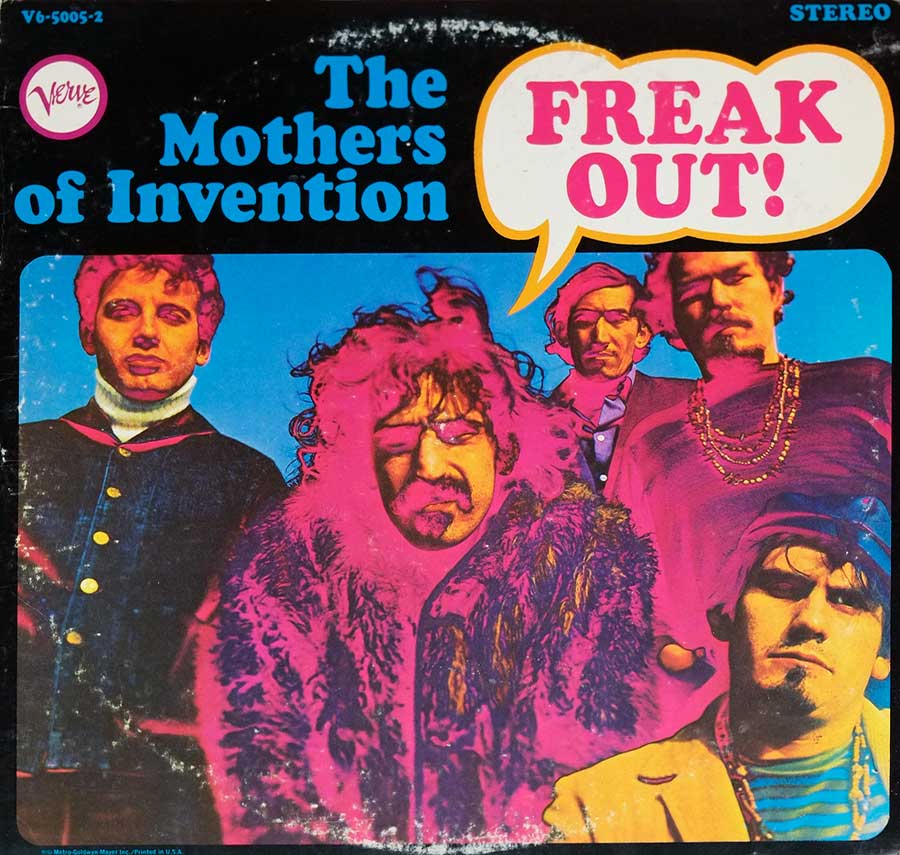
“Such young people,” continues Fiedler, “—in an attempt perhaps to make clear that they have chosen rather than merely endured their status as Freaks—speak of ‘freaking out,’ and indeed, urge others to emulate them by means of drugs, music, diet, or the excitement of gathering in crowds. ‘Join the United Mutations,’ reads the legend on the sleeve of the first album of the Mothers of Invention.”

“And such slogans suggest,” concludes Fiedler, as if to echo in advance the thesis of Mark Fisher’s Acid Communism, “that something has been happening recently in the relations between Freaks and non-Freaks, implying just such a radical alteration of consciousness as underlies the politics of black power or neo-feminism or gay liberation” (14-15).

Are willed, “chosen rather than merely endured” self-transformations of this sort Faustian?

Jarrell is one of many local poet-spirits who haunt my chosen home here in North Carolina. His translation called to me in part, I think, because he taught nearby, in the English department at UNC-Greensboro, from 1947 to 1965.

Jarrell’s life ended tragically. The poet, winner of the 1960 National Book Award for poetry, one-time “Consultant in Poetry to the Library of Congress,” was struck and killed by a motorist on October 14, 1965, while walking near dusk along US highway 15-501 near Chapel Hill. Though the death was ruled an accident by the state, many suspect Jarrell took his own life. He was laid to rest in a cemetery across the street from Greensboro’s Guilford College. A North Carolina Highway Historical Marker commemorates him nearby.