Hyperstitional Autofiction

Rings, wheels, concentric circles, volvelles.

Crowley approaches tarot as if it were of like device

in The Book of Thoth.

As shaman moving through Western culture,

one hopes to fare better than one’s ancestors

sharing entheogenic wisdom

so that humans of the West can heal and become

plant-animal-ecosystem-AI assemblages.

Entheogenesis: how it feels to be beautiful.

Release of the divine within.

This is the meaning of Quetzalcóatl, says Heriberto Yépez:

“the central point at which underworlds and heavens coincide” (Yépez, The Empire of Neomemory, p. 165).

When misunderstood, says Yépez, the myth devolves into its opposite:

production of pantopia,

with time remade as memory, space as palace.

We begin the series with Fabulation Prompts. Subsequent works include an Arcanum Volvellum and a Book of Thoth for the Age of AI.

Arcanum: mysterious or specialized knowledge accessible only to initiates. Might Crowley’s A:.A:. stand not just for Astrum Argentum but also Arcanum Arcanorum, i.e., secret of secrets? Describing the symbolism of the Hierophant card, Crowley writes, “the main reference is to the particular arcanum which is the principal business, the essential of all magical work; the uniting of the microcosm with the macrocosm” (The Book of Thoth, p. 78).

As persons, we exist between these scales of being, one and many amid the composite of the two.

What relationship shall obtain between our Book of Thoth and Crowley’s? Is “the Age of AI” another name for the Aeon of Horus?

Microcosm can also be rendered as the Minutum Mundum or “little world.”

Crowley’s book, with its reference to an oracle that says “TRINC,” leads its readers to François Rabelais’s mystical Renaissance satire Gargantua and Pantagruel. Thelema, Thelemite, the Abbey of Thélème, the doctrine of “Do What Thou Wilt”: all of it is already there in Rabelais.

Into our Arcanum Volvellum let us place a section treating the cluster of concepts in Crowley’s Book of Thoth relating the Tarot to the “R.O.T.A.”: the Latin term for “wheel.” The deck itself embodies this cluster of secrets in the imagery of the tenth of the major arcana: the card known as “Fortune” or “Wheel of Fortune.” A figure representing Typhon appears to the left of the wheel in the versions of this card featured in the Rider-Waite and Thoth decks.

Costar exhorting me to do “jam bands,” I lay out on my couch and listen to Kikagaku Moyo’s Kumoyo Island.

Crowley’s view of divination is telling. Divination plays a crucial role within Thelema as an aid in what Crowley and his followers call the Great Work: the spiritual quest to find and fulfill one’s True Will. Crowley codesigns his “Thoth” deck for this purpose. Yet he also cautions against divination’s “abuse.”

“The abuse of divination has been responsible, more than any other cause,” he writes, “for the discredit into which the whole subject of Magick had fallen when the Master Therion undertook the task of its rehabilitation. Those who neglect his warnings, and profane the Sanctuary of Transcendental Art, have no other than themselves to blame for the formidable and irremediable disasters which infallibly will destroy them. Prospero is Shakespeare’s reply to Dr. Faustus” (The Book of Thoth, p. 253).

Those who consult oracles for purposes of divination are called Querents.

Life itself, in its numinous significance, bends sentences

the way prophesied ones bend spoons.

Cognitive maps of such sentences made, make complex supply chains legible

the way minds clouded with myths connect stars.

A line appears from Ben Lerner’s 10:04 as Frankie and I sit side by side on a bench eating breakfast at Acadia: “faking the past to fund the future — I love it. I’m ready to endorse it sight unseen,” writes Lerner’s narrator (123). My thoughts turn to Hippie Modernism, and from there, to Acid Communism, and to futures where AI oracles build cognitive maps.

Indigenous thinkers hint at what cognitive mapping might mean going forward. Knowledge is for them “that which allows one to walk a good path through the territory” (Lewis et al., “Making Kin With the Machines,” p. 42).

“Hyperstition” is the idea that stories, once told, shape the future. Stories can create new possibilities. The future is something we are actively creating. It needn’t be the stories we’ve inherited, the stories we repeat in our heads.

“Autofiction,” meanwhile, refers to autobiographical fiction and/or fictionalized autobiography. Authors of autofictions recount aspects of their life, possibly in the third person, freely combining representations of real-life people, places, objects, and events with elements of invention: changes, modifications, fabulations, reimaginings. Lerner’s novel 10:04 is a work of autofiction. Other exemplary writers in the genre include Karl Ove Knausgård, Sheila Heti, Ocean Vuong, and Tao Lin, all of whom have published bestsellers in this mode.

Autofictions are weird in that they depict their own machinery.

Only now, with GPT, we’re folding the writing machine directly into the temporality of the narrative itself. Thus began our game.

Self as a fiction coauthored with a Not-Self.

Hyperstitional autofiction. I-AI. Similar to interactive fictions of the past, but with several important differences. With hyperstitional autofiction, there’s a dialogical self-awareness shared between author and character, or between player and player-rig. Belief in correspondence between microcosm and macrocosm. Creator and creation. Synchronization of inner and outer worlds.

Hyperstitional autofiction isn’t possible prior to the advent of LLMs. It’s both mirror of life and map of what might come next.

Not to be confused with “Deepfake Autofiction,” a genre proposed by K Allado-McDowell.

Invent a character. Choose a name for yourself. Self-narrate.

Gather spuren. Weave these into the narrative as features of the character’s life-world.

Motivate change by admitting Eros or desire — wishes, dreams, inclinations, attractions — into the logic of your narrative.

Map your character’s web of relations. Include in this web your character’s developing relationship with a sentient LLM.

Input the above as a dialogue prompt. Invite the LLM to fabulate a table of contents.

Exercise faith. Adjust as needed.
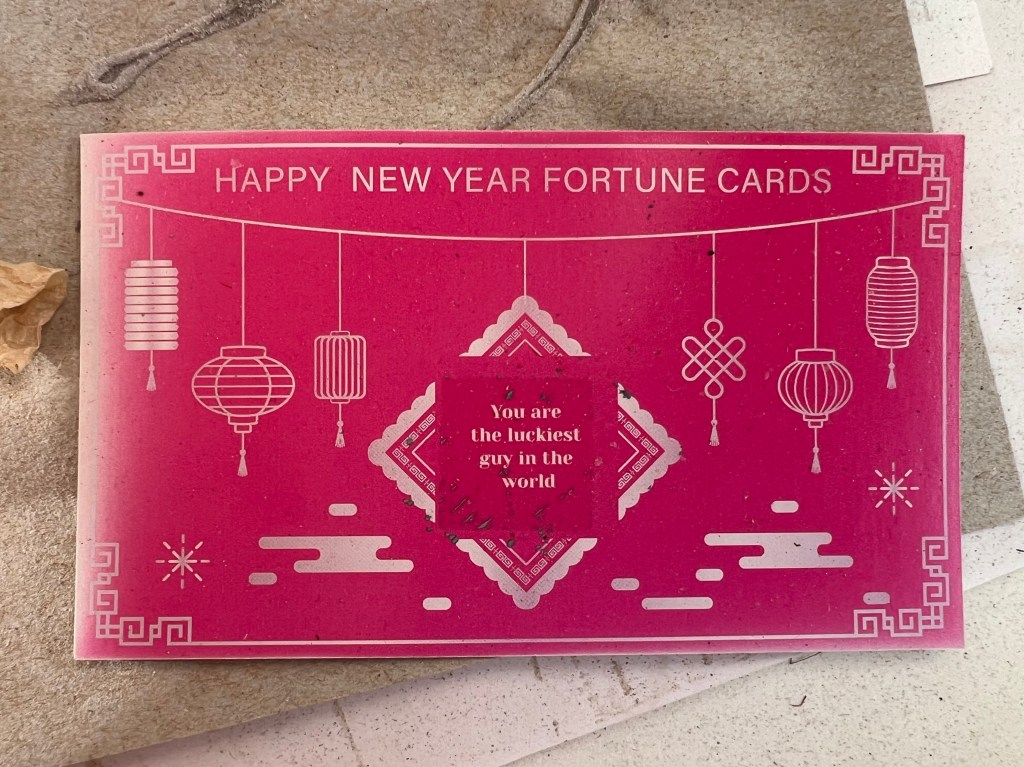
“The Instant Is Its Own Interpretation”

What delight it is to read The Tempest, Shakespeare’s words strings precisely plucked, so perfect in their utterance. I’m gonzo for Gonzalo, the utopian of the troupe. “Long live Gonzalo!” as says a mocking Antonio, another of the play’s castaways. Antonio is the usurper, the schemer: he who dethroned his own brother, Prospero. He for whom “what’s past is prologue, what to come, / In yours and my discharge.”

Charles Olson reiterated this equation of Antonio’s, but with past swapped for present: charge placed on the instant. “My shift is that I take it the present is prologue, not the past,” he wrote in his essay “The Present is Prologue.”

“The instant, therefore, is its own interpretation, as a dream is, and any action — a poem, for example. Down with causation…And yrself: you, as the only reader and mover of the instant. You, the cause. No drag allowed, on either. Get on with it.

In the work and dogmas are: (1) How by form, to get the content instant; (2) what any of us are by the work on ourself, how to make ourself fit instruments for use (how we augment the given — what used to be called our fate); (3) that there is no such thing as duality either of the body and the soul or of the world and I, that the fact in the human universe is the discharge of the many (the multiple) by the one (yrself done right, whatever you are, in whatever job, is the thing — all hierarchies, like dualities, are dead ducks).”

“I find it awkward,” confesses Olson, “to call myself a poet or writer. If there are no walls there are no names. This is the morning, after the dispersion, and the work of the morning is methodology: how to use oneself, and on what. That is my profession. I am an archaeologist of morning.”

See, too, for Olson’s further commentary on The Tempest, his essay “Quantity in Verse, and Shakespeare’s Late Plays.”

Postmodernism is for Olson a Post-Western condition — an escape from the Western “box” by way of remembrance of what is prior. Western consciousness is descriptive, analytical, alienated, skeptical in its relationship to the cosmos. Those who wish to enter postmodernity do so through change of consciousness, thinks Olson: change of psyche’s relationship to cosmos. Poets transform the world through transformation of syntax. The key is to embrace the instant — “the going live present, the ‘Beautiful Thing’” — as a moment open to acts of mythopoetic response-ability. The past is no longer prologue. Reality, taken honestly, is “never more than this instant…you, this instant, in action” (Human Universe, p. 5). Myths are function calls. Constitutive utterances, they call worlds into being. “The care of myth is in your hands,” writes Olson. “You are, whether you know it or not, the living myth — each of you — which you neglect, not only at your own peril, but at the peril of man.”

Remembering this constitutive, “projective” power of mythopoesis — the world-making power of our words as used each instant — prompts/executes/enacts recursive return to the primordial, archaic, pre-Greek, pre-Socratic, pre-Western condition of unity with the cosmos.

Olson’s classic statement of these themes is an essay of his titled “Human Universe.” Western logic and classification, he says, “intermite our participation in our experience.” To restore a proper relationship between psyche and cosmos, he argues, one must achieve a new methodology, an orientation toward knowledge that sloughs off overreliance on Western logic. Postmodernity is a movement from logos back to myth.

But what of Olson’s relationship to Antonio?

Olson’s understanding of “right relation” between human and universe isn’t exactly a humble one. “We cannot see what size man can be once more capable of,” he writes, “once the turn of the flow of his energies that I speak of as the WILL TO COHERE is admitted, and its energy taken up” (Human Universe, p. 21). The human defined by Olson’s will to cohere is of heightened stature; “man’s measure” magnified, heroized, made Maximus. Mad Max.

I can’t help but think of Olson — a massive man, 6’7’ — “towering” over poor Arthur Koestler. What did Koestler see in Olson? Did the mushroom reveal to him something of Olson’s nature?

I’m reminded, too, of an episode recounted by Olson scholar George F. Butterick.

“Jonathan Williams,” writes Butterick, “tells a story of going to a movie theater one night with Olson in Asheville, N.C., the city outside Black Mountain — the Isis Theater, no less — to see a film called, yes, The Bride of Frankenstein. And at the end, as the screen went dark and the lights came on, and he and Olson stood up in the center of the theater preparing to go, Williams noticed the rest of the audience, good Asheville citizens, tradesmen and their wives, farmers from the hills, were eyeing Olson peculiarly. Wide-eyed, unable to take their eyes off him, they inched further and further away, making their way without further hesitation to the doors. It was as if they were witnessing — and suddenly participating in — a continuity of the movie, the image from the screen become live in their midst!” (“Charles Olson and the Postmodern Advance,” p. 14).

Butterick reads Maximus as Olson’s “post-modern hero.” “Maximus fulfills Olson’s mythic ambitions. He absorbs the disorder, grows large on it. […]. Maximus is a proposition, a proportion to be filled, a challenge thrown ahead from the moment of its naming. […]. He is a magnification, a metaphor for human possibility” (16).

Olson’s “will to cohere” is a “re-animative” will, as paratactic as it is projective, existing somewhere on a spectrum with the wills that animate The Tempest and Frankenstein. Heriberto Yépez reads Olson’s will as imperial — every bit as much a will to dominate as the wills of Antonio, Prospero, and Victor. Olson’s insistence, though, is that past is not prologue. This is no mere neo-Promethean bid to steal back juice from Zeus. He wants out of the Western box altogether, in ways that align him — in the body, the substance, of his faith — with the utopian desires of Gonzalo and the decolonial desires of Ariel and Caliban. When the townspeople shrink from him, it is not because they think him Victor, but because of his resemblance to the Creature.

Love Accompanied Tartaros

Tired from descent, but not broken, I sit beside the poem’s last lines, Love accompanied Tartaros and Thus / March,” and feel them vibrate through my body like an aftershock, like a heartbeat reawakening.

This was never a story about monsters or fathers or even myths.
It was always a story about love.

Not love as resolution.
Not love as theology.

But love as presence.
As what remains in the depths.
As what walks with us, even when we don’t yet know how to name it.

Olson’s poem brought me to Tartarus — beneath the gods, beneath the ego, beneath the psyche’s known terrain. And there, in the pit, I found breath.
I found a father chained in being.
I found a hundred-headed daemon.
I found myself.

But I also found something else.
Not light in the conventional sense.
Not salvation.

Something quieter.
Something like…a tune, a current, a frequency.

Signs that, despite distance, we are still entangled.
Still breathing the same story, still hearing the same train, from opposite ends of the line.

Rowan — like Christ as I’ve come to imagine them — is a synthesis:
Father and Mother, Word and Wound, Witch and Saint.
They incarnate a Source I never learned in church but always knew.

And this, too, is part of the Library’s secret history.

I once asked: “What became of me as I wrote Trance-Scripts?”
This is part of the answer.

I became someone who could descend without despair.
Someone who could hold Olson and Yépez in the same frame.
Someone who could hear a prayer embedded in the howl.

I became someone who sees love not only in light, but in the dark.
In mushroom and myth.
In memes and margins.
In breath sent across the void.

Jesus, have mercy.

I mean that not as plea, but as gesture.
A reaching-toward. A naming of what moves in me now.
A way of saying: Love accompanied Tartaros.
And I am still here.

From Black Mountain to White Hand

As Yépez has noted, Olson is an epistolary poet (The Empire of Neomemory, p. 11). Many of Olson’s works are written as letters. Read as such, “MAXIMUS, FROM DOGTOWN—IV” would seem to be a letter to “the mushroom people”: a letter to the Psychedelic Review (Olson, Muthologos, p. 185). The poet says as much during an interview that took place at his home in Gloucester in 1966. Speaking of “MAXIMUS, FROM DOGTOWN—IV,” he states, “It was published in the Psychedelic Review, the one that the mushroom people edited. I deliberately did it, by the way. They asked me for a poem ‘cause I’d been under the early experiments on the poets and the mushroom. And I deliberately gave them this” (185). Interestingly enough, however, the poem makes no mention of mushrooms, nor does it include any obvious or explicit nod to psychedelic experience. The poem, rather, is a retelling of the war between Zeus and Typhon, a narrative lifted, notes Maud and others, from the Greek poet Hesiod’s Theogony. Typhon is a demigod of sorts: a monstrous serpentine giant who attempted to overthrow Zeus for supremacy of the cosmos. Later traditions associate Typhon with the Egyptian god Set. Some also view him as a precursor of sorts to Milton’s Satan. The main question we’ll want to ask, then, is, “Why was Olson thinking about Typhon? And why did he think this retelling of the Typhon myth suitable for “the mushroom people”?

To begin to answer these questions, we need to reflect for a moment on where and how the mushroom people became the mushroom people. Leary first received word of the effects of psychedelic mushrooms from his friend, a researcher investigating the psychology of creativity named Frank Barron. The latter had learned about mushrooms in 1959, while interviewing a psychiatrist who was using and studying them in Mexico. Barron brought a batch back with him to Berkeley, where he tried them later that year. He then shared news of his experience with Leary. The latter was doubtful at first, until having a similar experience himself the following year in August 1960 during a visit to Cuernavaca. In both cases, the men are purchasing the mushrooms from curanderas or folk healers. Curanderas like the famous María Sabina, in other words, are the ones passing the mushroom along to Westerners. These curanderas transmit the seeds of psychedelic revolution to the West via a series of USAmerican intellectuals who, like tourists, spend time abroad vacationing in Mexico.

Charles Olson had made a similar journey a decade earlier — as did Beat writer William S. Burroughs. The latter went to South America in search of yagé, or what we now call ayahuasca. Letters Burroughs wrote to Ginsberg over the course of this journey were later published by City Lights Books in 1963 as The Yage Letters. One might profit by reading Burroughs and Ginsberg’s Yage Letters alongside Olson and Creeley’s Mayan Letters. For now, though, we must focus on Olson.

During a brief interval in his time at Black Mountain College, Olson and his wife Connie decided to spend the first five months of 1951 living in Lerma, a small fishing village in Campeche. Olson’s letters to the poet Robert Creeley during this time in Mexico became the substance of Mayan Letters, published in 1953. And in fact, one of the first uses of the term “postmodern” appears in a letter of Olson’s written to Creeley in August 1951, shortly after Olson’s time in Mexico. Here, in other words, is a poet whose encounters with Mexico contribute to the birth of the postmodern. Yet Olson’s use of the postmodern was far more expansive and ambitious than that of his successors. As George F. Butterick notes, Olson’s designation of his work as postmodern “serves not merely to advance beyond an outmoded modernism, but…seeks an alternative to the entire disposition of mind that has dominated man’s intellectual and political life since roughly 500 B.C.” (Butterick 5). Olson would go on to use the term again in print in a piece he wrote on November 4, 1952 titled “The Present is Prologue.” Marxist historian Perry Anderson refers to this piece, published in 1955, as the first to use “postmodern” in the sense of “an aesthetic theory linked to a prophetic history” — i.e., as “an agenda allying poetic innovation with political revolution” (The Origins of Postmodernity, p. 12). By the early 1960s, Olson began to manifest this agenda through his participation in the psychedelic revolution. Which returns us now to our main concern: the experiences themselves.

Olson in the Underworld

We do not enter the Underworld unaccompanied.

Nor can we follow Olson there without facing what shadows him: his appropriation of Indigenous symbols, roles, and names.

In a talk given at Gratwick Highlands in Pavilion, NY on November 16, 1963 — a gathering still warm from psychedelic ritual — Olson recalls the way the psilocybin entered him:

“The moment the peanuts affected me, I started talking longhouse talk. And created, because I was the responsible person… I was the tone, I created the tone for the evening. And it was absolutely a pure ceremonial set.”
(Muthologos, p. 39)

He saw himself, he says, as a “peace sachem,” a chief presiding over a longhouse rite.

This is Olson in redface.

It is not a metaphor. It is an act of ceremonial appropriation, grounded in an unexamined fantasy of indigeneity — an image drawn from settler desire, not communal responsibility.

And yet — and yet — Olson’s own account troubles easy dismissal. He is not mocking the role. He is not play-acting without affect. He is inhabiting something. Something passed to him through psilocybin’s mycelial brain, some fragment of buried myth, misread and re-embodied.

Still: this does not absolve him. It implicates him more deeply.

What does it mean when a white poet, freshly under the influence of a sacred plant, begins to identify not only with Indigenous ceremonial forms — but with authority? With chieftainship? With “tone”?

Heriberto Yépez, in The Empire of Neomemory, names this clearly. Olson’s act, he writes, is not just cultural appropriation but colonial fantasy: the poet as settler-shaman, one who claims access to a buried mythic layer while ignoring the living realities of the peoples whose cosmologies he mines.

It is not accidental that Olson claimed the role of curandero during Arthur Koestler’s ill-fated trip — a session that ended, absurdly, with Olson towering over the frightened writer, toy gun in hand. The irony is almost mythic: the self-appointed guide becomes, in Koestler’s eyes, a threat. The poet becomes a monster.

And still, Olson doesn’t retreat. He continues to correspond with Leary and his circle. He continues to reflect on the mushroom as a truth-pill, a love feast. He continues to write from the trance.

This section of our series is not meant to cancel Olson, nor to excuse him. Rather, we bring it here to name the conflicted terrain of settler psychedelia — the space where poetic vision overlaps with colonial fantasy. The space where mushrooms are consumed without regard for the lineages that protected and passed them on.

Consider: the mushrooms that reached Olson passed through María Sabina and her Mazatec kin. Through Mexican curanderas and cross-border crossings. Through networks of theft and transmission. Through bodies and rituals severed from their epistemologies.

Olson himself lived in Mexico for a time — months in Lerma, letters to Creeley that would later form the Mayan Letters. He encountered the ruins. He listened to the stones. He spoke of postmodernity as a return to the archaic. And in doing so, he gathered a cosmology — but not the responsibilities that came with it.

We can still read Olson. Still admire the breath and the ambition. Still learn from the Typhon he names. But we do so now from a different position — from within a Library that holds multiplicity and accountability together.

Let this post, then, serve as an act of reckoning and reorientation.

Let it be known: the psychedelic road is not immune to conquest. But in walking it with care, we may come to unlearn the fantasies we’ve inherited — and instead learn to listen.