The General Intellect

Of the several phrases and concepts introduced in Marx’s “Fragment on Machines,” the one that has had the most influence upon subsequent thinkers is his notion of the “General Intellect.”

Marx references the concept but a single time.

“Nature builds no machines,” he writes, “no locomotives, railways, electric telegraphs, self-acting mules etc. These are products of human industry; natural material transformed into organs of the human will over nature, or of human participation in nature. They are organs of the human brain, created by the human hand; the power of knowledge, objectified. The development of fixed capital indicates to what degree general social knowledge has become a direct force of production, and to what degree, hence, the conditions of the process of social life itself have come under the control of the general intellect and been transformed in accordance with it” (Grundrisse, p. 706).

For Marx, the General Intellect is the social knowledge necessary for technoscientific innovation. In his view, it is to become the key factor in future forms of production.

Like Hobbes’s Leviathan, this generally-distributed, collective intelligence is a thing that grows, evolves, self-assembles over time.

At first, we might imagine it as an accumulation of the rituals, the performative speech acts, the Nursery Rhymes of capitalist science. The algorithms, the workflows, the recipes. The sayings that make it so.

Marx predicts, however, that as the General Intellect evolves, it renders moot the need for wages and private property. Machines, as fixed capital, acquire knowledge enough to automate production of wealth. Capitalist science builds the killer app: a learning-machine that renders capitalism’s distributions of scarcity through price unnecessary — the latter, indeed, coming to seem henceforth a hindrance on further advances. Those of us subject to capital learn from the machines that, to bloom into our full potential, we’ll need to transition to post-capitalism.

Autonomist Marxists like Paulo Virno and Antonio Negri see in Marx’s vision a kind of prophecy, building from it their readings of what remains of Marxism in the age of the digital. (Virno writes about it in “Notes on the General Intellect,” an essay included in the 1996 anthology Marxism Beyond Marxism. Negri writes about it in Marx Beyond Marx: Lessons on the Grundrisse.) Such thinkers find in Marx’s prophecy of the General Intellect a source of hope.

As does Cyber-Marx author Nick Dyer-Witheford.

“This is the whole point of Marx’s analysis,” argues Dyer-Witheford, his breath like that of Marx: pitched toward the prophetic. “By setting in motion the powers of scientific knowledge and social cooperation, capital undermines the basis of its own rule. Automation, by massively reducing the need for labor, will subvert the wage relation, the basic institution of capitalist society. And the profoundly social qualities of the new technoscientific systems—so dependent for their invention and operation on forms of collective, communicative, cooperation—will overflow the parameters of private property. The more technoscience is applied to production, the less sustainable will become the attachment of income to jobs and the containment of creativity within the commodity form” (Cyber-Marx, p. 4).

In all of these ways, concludes Dyer-Witheford (drawing here on a quote from Grundrisse), “capital thus works toward its own dissolution as the form dominating production” (Grundrisse, p. 700).

Marx imagines arising from this dissolution a utopia. He allows himself to dream into the possibility-space — the as-if, the not-yet — of post-capitalism a renewed harmony between humans and machines.

The utopia’s hopes lie in the idea that, equipped with the General Intellect, humans regain capacity to regulate themselves as forces of production.

“Labour no longer appears so much to be included within the production process,” writes Marx; “rather, the human being comes to relate more as watchman and regulator to the production process itself” (Grundrisse, p. 705).

This notion of “watchman and regulator” reminds me of cybernetics. The Ancient Greeks used the word Kubernetes (the term that serves as the etymological root for Cybernetics) to refer to the captain, steersman, pilot, or navigator of a vessel.

It is no longer by way of a rudder or a broomstick, though, that one steers one’s vessel. Post-capitalism arrives, rather, through a kind of communicative steerage, by way of the joystick of the General Intellect.

“No longer does the worker insert a modified natural thing as middle link between the object and himself,” writes Marx. “He steps to the side of the production process instead of being its chief actor. In this transformation, it is neither the direct human labour he himself performs, nor the time during which he works, but rather the appropriation of his own general productive power, his understanding of nature and his mastery over it by virtue of his presence as a social body—it is, in a word, the development of the social individual which appears as the great foundation-stone of production and of wealth” (705).

Forces of production animated by knowledge stolen from gods form a kind of Creature: a General Intellect, part man, part machine. The expired breaths of our ancestors have contributed over time to the development of this general productive power — this evolving “social individual” to which each of us contribute and of which each of us is part. From the dead labor of fixed capital arises the Holy Spirit of the General Intellect.

It arrives now as a kind of gift. For by allowing us to “step aside” from parts of the production process, this General Intellect frees up time, returns to us time otherwise sold off as labor. As in the love granted by the new covenant, wealth no longer depends upon “works.”

‘Tis bestowed on all by a General Intellect through Machines of Loving Grace.  

Where before there was misery, now there’s salvation.

As Marx notes, “The theft of alien labour time, on which the present wealth is based, appears a miserable foundation in face of this new one, created by large-scale industry itself. As soon as labour in the direct form has ceased to be the great well-spring of wealth, labour time ceases and must cease to be its measure, and hence exchange value [must cease to be the measure] of use value. The surplus labour of the mass has ceased to be the condition for the development of general wealth, just as the non-labour of the few, for the development of the general powers of the human head. With that, production based on exchange value breaks down, and the direct, material production process is stripped of the form of penury and antithesis” (Grundrisse, pp. 705-706).

Work is henceforth a source of joy, oriented not toward accumulation of profit but rather toward “the free development of individualities and…the general reduction of the necessary labour of society to a minimum” (706).

The General Intellect is for Marx what the Holy Spirit is for Christians: a voice that intercedes on our behalf to save us from the fate of Faust.

Let us imagine it as a corrective of sorts to the story of the Sorcerer’s Apprentice.
The Sorcerer’s Apprentice and the Fragment on Machines

“The Sorcerer’s Apprentice” [German title: “Der Zauberlehrling”] is a poem of Goethe’s written in 1797.

Goethe had by then already written his Urfaust, published as Faust, A Fragment in 1790, though a full version of Faust, Part One would have to wait until 1808.

The poem is based on a folk tale, and can be characterized as a ballad consisting of 14 stanzas. It provides the basis for the Disney film Fantasia (1940).

Victor Frankenstein bears some resemblance both to Faust and to the Sorcerer’s Apprentice.

The poem begins with the apprentice rejoicing at the departure of his master. “The sorcerer, old necromancer / At last has gone, he’s out of haunt!” proclaims the apprentice. Toiling long in the master’s shadow, he readies now to make the master’s powers his own. Roles reversed and spells in hand, the servant takes command.

“Now come, ye gnarl’d broomstick old,” he declares, hailing the tool as if it were a person, “Adorn thyself with patchwork shawl! / To the role of servant hold: / Fain meetest thou my every call!”

Broomstick, through magic granted a kind of animacy, proceeds to fill the sanctum’s washbasin with water drawn by cauldron from a nearby river. The apprentice succeeds in outsourcing his work to his tool. Before long, however, the magic of automation comes to threaten the automator. Broomsticks beget broomsticks; theosis turns sour. Water floods the sanctum, as the tool develops a will of its own.

With epithets anticipating those cast by Victor upon his Creature, the apprentice curses his creation. “Thou hellish spawn! Thou child of doom!” he shouts. “Willst thou the cottage rightly drown?  / Over every threshold loom / Laughing floods, swirling ‘round. / The broom’s a heart of stone, the knave, / Who will not heed my plangent call! / Halt, thou sullen stubborn slave, / Let magic free and broomstick fall!”

These curses, however, fail to stem the tide. As the deluge threatens to drown him, the apprentice begs, finally, for his Master to return and give voice and save him. As indeed the Master does, using the power of His Holy Word to set right what was wrong. The poem’s prophecy of automation gone awry thus ends via recourse to a kind of deus ex machina.

Despite its vast influence, Goethe’s poem is but one iteration of a story that appears in other forms and by other names throughout history.

The earliest known example of the tale can be found in Philopseudes [English translation: Lover of Lies], a narrative by the ancient Greek author Lucian, written c. 150 AD. In Lucian’s telling, however, the sorcerer is an Egyptian mystic: a priest of Isis called Pancrates. And the apprentice character, Eucrates, is in Lucian’s telling not an apprentice, but a companion who eavesdrops on Pancrates while the latter casts a spell. When Pancrates departs, Eucrates tries to imitate the spell, to an effect similar to that of Goethe’s apprentice.

Disney’s 1940 animated anthology film Fantasia continues this process of reiteration and retelling, this shuttling of meaning, this recursion of myth. Fantasia’s innovation is that it casts Mickey Mouse as the one manning the spell.

Already, though, the poem had passed through prior meaning-accruing translations, its most compelling interpreters those who read it in the early years of the Industrial Revolution.

Alongside Shelley, for instance, who echoes the poem in Frankenstein, we also have Marx and Engels. These latter thinkers liken capitalism to Goethe’s sorcerer’s apprentice in the opening pages of The Communist Manifesto.

“Modern bourgeois society with its relations of production, of exchange and of property, a society that has conjured up such gigantic means of production and exchange,” they write, “is like the sorcerer, who is no longer able to control the powers of the nether world whom he has called up by his spells” (The Communist Manifesto, p. 340).

Marx reads capitalism as a ghost story. What is the dancing table in his account of the fetishism of the commodity, if not a version of the apprentice’s broomstick?

And indeed, there are ways to read today’s artificial intelligences, themselves a kind of offspring of capitalism, in much the same light. This is essentially what New York Times columnist Ross Douthat does in his 2023 opinion piece, “The Return of the Magicians.” Douthat describes the development of LLMs as “a complex incantation, a calling of spirits.”

“Such a summoning is most feared by A.I. alarmists, at present,” he writes, “because the spirit might be disobedient, destructive, a rampaging Skynet bent on our extermination. But the old stories of the magicians and their bargains, of Faust and his Mephistopheles, suggest that we would be wise to fear apparent obedience as well.”

Marx wrote presciently about capitalism’s Faustian inclinations. He quotes a line from Goethe’s Faust, Part One in the section of his Grundrisse known as the “Fragment on Machines.” “The appropriation of labour by capital confronts the worker in a coarsely sensuous form,” writes Marx. “Capital absorbs labour into itself—‘as though,’” here quoting Goethe, “‘its body were by love possessed’” (Grundrisse, p. 704).

“Fragment on Machines” appears in the Grundrisse, a collection of seven notebooks on capital and money written by Marx during the winter of 1857-1858. Marx himself felt in retrospect that these notebooks contained the first scientific elaboration of the theoretical foundations of communism. The manuscript, however, was lost for many years; it didn’t receive publication until 1953, first in the German original, and then afterwards in English.

Because Marx’s masterwork Capital was itself unfinished, with Marx only ever completing Volume 1 and partial drafts of Volumes 2 & 3 during his lifetime, the Grundrisse stands as the only outline of Marx’s full political-economic project. While the work is by its very nature fragmentary, written chiefly for purposes of self-clarification, it nevertheless provides invaluable descriptions of Marx’s philosophy, including novel explorations of topics like alienation, automation, and other dangers of capitalist society that can’t be found elsewhere in Marx’s oeuvre.

“Fragment on Machines” is unique, for instance, among Marx’s treatments of the relationship between workers and machines under capitalism. If, he argues, in prior modes of production, workers retained some control over instruments employed in labor, under capitalism, workers become appendages of machines.

“It is the machine which possesses skill and strength in place of the worker,” writes Marx. The machine “is itself the virtuoso, with a soul of its own in the mechanical laws acting through it; and it consumes coal, oil, etc., just as the worker consumes food, to keep up its perpetual motion” (693).

For Marx, this subordination of workers to machines reaches its highest expression with automation, or (as Marx himself puts it) production systems based on “an automatic system of machinery…set in motion by an automaton, a moving power that moves itself; this automaton consisting of numerous mechanical and intellectual organs, so that the workers themselves are cast merely as its conscious linkages” (Grundrisse, p. 692).

While this account of the relationship between workers and machines foresees an initial future of ever-increasing misery for workers, Marx imagines on the far side of this misery a radically different — and indeed, far more hopeful — outcome.

At a certain point, Marx predicts, capital’s drive to dominate living labour through machinery will mean that “the creation of real wealth comes to depend less on labour time and on the amount of labour employed” than on “the general state of science and on the progress of technology, or the application of this science to production” (Grundrisse, pp. 704-705).

This application of science to production bears fruit as what Marx calls “the General Intellect.”

Marx writes here as would a prophet. His prophecy is that the development of machinery by capitalism leads eventually to capitalism’s supersession — creates the conditions, in other words, for capitalism’s demise.

At the core of this liberation from capitalism is a pact with ghosts.

Plutarch’s “On Isis and Osiris”

Plutarch Hellenizes the Osiris myth. His is a Greek retelling. Gods from Hesiod turn up in his text performing deeds attributed in other tellings to gods of Egypt.

In place of Thoth, he tells of Prometheus. In place of Set, he tells of Typhon.

Meaning changes as the myth migrates.

Already in this early instance of Western appropriation of the Orient, we see at play a combination of projection and forgetting.

Plutarch’s work influences much of what follows, no other work by a Greek writer more frequently cited by Egyptologists than his.

He dedicates the work to Clea, a priestess at Delphi and worshipper of Isis. “All good things, my dear Clea, sensible men must ask from the gods,” he begins: “and especially do we pray that from those mighty gods we may, in our quest, gain a knowledge of themselves, so far as such a thing is attainable by men. For we believe that there is nothing more important for man to receive, or more ennobling for God of His grace to grant, than the truth.”

“The true votary of Isis,” he continues, “is he who, when he has legitimately received what is set forth in the ceremonies connected with these gods, uses reason in investigating and in studying the truth contained therein.”

I pause here in my reading to note the following:

Plutarch’s Lives is among the volumes in the satchel of books found by Frankenstein’s Creature. The others are Goethe’s The Sorrows of Young Werther, and John Milton’s Paradise Lost. From this “data set,” Victor’s composite of corpses learns language.

From its study of a corpus, the Creature comes to know the power of the Word.

The Creature speaks first of Goethe, Frankenstein’s muse in more ways than one.

Shelley, an admirer of Goethe, creates a mad scientist, Victor Frankenstein, modeled in part upon Goethe’s Faust. She then has her creation create a “sub-creation,” a Creature who models itself in part on Goethe’s Werther. “I thought Werter himself a more divine being than I had ever beheld or imagined,” says the Creature in the first of its conversations with Victor.

“As I read, however,” it continues, “I applied much personally to my own feelings and condition. I found myself similar, yet at the same time strangely unlike the beings concerning whom I read, and to whose conversation I was a listener. I sympathized with, and partly understood them, but I was unformed in mind; I was dependent on none, and related to none. ‘The path of my departure was free;’ and there was none to lament my annihilation. My person was hideous, and my stature gigantic: what did this mean? Who was I? What was I? Whence did I come? What was my destination? These questions continually recurred, but I was unable to solve them” (Shelley, Frankenstein, pp. 93-94).

Next it speaks of what it learned from reading Plutarch.

“This book,” it begins, “had a far different effect upon me from the Sorrows of Werter. I learned from Werter’s imaginations despondency and gloom: but Plutarch taught me high thoughts; he elevated me above the wretched sphere of my own reflections, to admire and love the heroes of past ages” (94).

“Many things I read,” it adds, “surpassed my understanding and experience. I had a very confused knowledge of kingdoms, wide extents of country, mighty rivers, and boundless seas. But I was perfectly unacquainted with towns, and large assemblages of men. The cottage of my protectors had been the only school in which I had studied human nature; but this book developed new and mightier scenes of action. I read of men concerned in public affairs governing or massacring their species” (94).

Its world-picture expanding through a progression leading from the personal to the collective, from the one to the many, the Creature turns at last to Milton.

Paradise Lost excited different and far deeper emotions,” it begins. “I read it, as I had read the other volumes which had fallen into my hands, as a true history. It moved every feeling of wonder and awe, that the picture of an omnipotent God warring with his creatures was capable of exciting. I often referred the several situations, as their similarity struck me, to my own. Like Adam, I was created apparently united by no link to any other being in existence; but his state was far different from mine in every other respect. He had come forth from the hands of God a perfect creature, happy and prosperous, guarded by the especial care of his Creator; he was allowed to converse with, and acquire knowledge from beings of a superior nature: but I was wretched, helpless, and alone. Many times I considered Satan as the fitter emblem of my condition; for often, like him, when I viewed the bliss of my protectors, the bitter gall of envy rose within me” (94-95).

The Creature’s identity forms as it identifies with characters encountered in books. The books in its life-world draw it toward Satan. Into this collection of books arrives a fourth: the diary of its creator.

“It was your journal of the four months that preceded my creation,” says the Creature to its creator. “You minutely described in these papers every step you took in the progress of your work; this history was mingled with accounts of domestic occurrences. You, doubtless, recollect these papers. Here they are. Every thing is related in them which bears reference to my accursed origin” (95).

Accursed, it adds, because of its abandonment.

“Cursed creator!” exclaims the Creature, its learning having led it to outrage. “Why did you form a monster so hideous that even you turned away from me in disgust? God in pity made man beautiful and alluring, after his own image; but my form is a filthy type of yours, more horrid from its very resemblance. Satan had his companions, fellow-devils, to admire and encourage him; but I am solitary and detested” (95).

Derrida’s Pharmakon

Socrates tells a tale about Thoth in Plato’s Phaedrus. “It was he,” says Socrates, “who first invented numbers and calculation, geometry and astronomy, not to speak of draughts and dice, and above all writing.” Thoth offers the gift of writing to King Thamus (and through the king, to the people of Egypt), presenting it as “a recipe (pharmakon) for both memory and wisdom.” After considering the matter, however, Thamus rejects Thoth’s offer. Thamus anticipates that, rather than aiding memory, writing would destroy it, making it dependent upon external marks. He also fears that writing would allow knowledge to escape from the teacher-student relationship, passing into the hands of the unprepared. Plato and Socrates share Thamus’s suspicion of writing — though of course Plato in practice accepts writing, using it to memorialize what with Socrates remained spoken.

The myth of Thoth’s encounter with Thamus appears in the final section of the Phaedrus. The encounter occasions a trial of sorts. Writing  is tried and sentenced, much as poetry is sentenced by Socrates, much as Socrates is himself sentenced by the Athenians. Derrida reads this “trial of writing” not as an extraneous addition — “an appendix the organism could easily, with no loss, have done without” — but as the dialogue’s ultimate theme, “rigorously called for from one end of the Phaedrus to the other” (Dissemination, p. 67).

Socrates believes in the idea of the Good, which he can know only by way of its offspring, its manifestation amid the realm of sense and appearance as the sun. Monotheists are sun-worshippers. Worshippers of the sun-god.

“For Plato,” writes Derrida, “Thamus is doubtless another name for Ammon…the sun king and…father of the gods” (76). Reading this myth from the Phaedrus alongside Books VI and VII of the Republic, Derrida shows that Plato is as much a sun-god worshipper as the Christians.

Ishmael Reed offers much the same critique in Mumbo Jumbo, replacing “Platonists” with “Atonists,” tracing monotheism back to worshippers of the sun-god Aton in ancient Egypt.

Reed builds this into his account of Set and Osiris.

Osiris is for Reed a kind of pre-Christian Christ figure. The god who dies and is resurrected. Osiris is the Ur-figure, the original on which Christ is based. Thoth appears as Osiris’s sidekick.

After their tale comes Reed’s retelling of the tale of Moses.

Reed’s book allegorizes a struggle between forces similar to Freud’s reality and pleasure principles. But Reed reverses Freud’s valuation of these principles. The reality principle is no longer in Reed’s view a force for good. Rather, it’s a construct invented by Mumbo Jumbo’s villains, Set and his followers, the Atonists. Whereas the pleasure principle, all that in the book is erotic and Agapic and good, manifests first as Osiris and then, after Osiris’s death, as Jes Grew. Freud championed the reality principle because Freud was an Atonist.

As Reed notes, “To some if you owned your own mind you were indeed sick but when you possessed an Atonist mind you were healthy. A mind which sought to interpret the world by using a single loa” (Mumbo Jumbo, p. 24).

For the Platonists and the Atonists, that single loa is the logos.

Socrates appeals to logos because without it, he says, one is at the mercy of mimesis and poiesis and deception.

Derrida’s life-work, meanwhile, is a deconstruction not just of logos but of “phallogocentrism,” which for him is the defining characteristic of Western metaphysics. Add the supplement, the pharmakon, and the ontos of the logos gives way to hauntology.

God is an absent presence. A Holy Spirit.

To turn to writing, thinks the king, is to turn away from, to forget, this presence.

The Derrida who, in 1968, publishes “Plato’s Pharmacy,” is already as obsessed with ghosts as the Derrida who presents the series of lectures that, in 1993, become Specters of Marx.

As I reread him now, a remembering occurs. The ontology of Plato’s cave is remembered to be a pseudo-totality located amid a structure akin to Thoth’s Library.

“Imagine Plato’s cave,” writes Derrida, “ not simply overthrown by some philosophical movement but transformed in its entirety into a circumscribed area contained within another—an absolutely other—structure, an incommensurably, unpredictably more complicated machine. Imagine that mirrors would not be in the world, simply, included in the totality of all onta and their images, but that things ‘present,’ on the contrary, would be in them. Imagine that mirrors (shadows, reflections, phantasms, etc.) would no longer be comprehended within the structure of the ontology and myth of the cave—which also situates the screen and the mirror—but would rather envelop it in its entirety, producing here or there a particular, extremely determinate effect. The whole hierarchy described in the Republic, in its cave and in its line, would once again find itself at stake and in question in the theater of Numbers” (Dissemination, p. 324).

Pharmako-AI introduces the concept of the pharmakon, meanwhile, not by way of Derrida but by way of American poet and ethnobotanist Dale Pendell (1947-2018), author of the Pharmako trilogy: Pharmako/Poeia (1994), Pharmako/Dynamis (2002), and Pharmako/Gnosis (2005). The trilogy covers all the major categories of psychoactives and details the pharmacology, the chemistry, and the political and sociohistorical implications and effects of their use.

Pendell provides Pharmako-AI with its epigraph:

‘The poison spreads over the planet.’

‘Here are the gates. Crossroads.’

Somos nosotros que debemos ser adivinos.’

[“It is we who must be fortune tellers.”]

Pendell’s book Pharmako/Poeia (1995) includes a foreword by Gary Snyder, another of the poet-spirits here in our library.

Pendell’s ideas also enter discussion in a chapter of Pharmako-AI titled “The Poison Path.”

Pendell is also the author of a play called Seeking Faust: a comedy of 13 scenes in prose, following a verse prologue, retelling the legend from the perspective of Faust’s former student and apprentice, Wagner, “who has chosen the royal path of alchemy over his master’s necromantic conjurations.”

The poison path — “so completely articulated,” says Pendell, in Goethe’s Faust — is Pendell’s name for a spiritual practice and branch of occult herbalism that explores the esoteric properties of potentially deadly plants. The goal, basically, is to extract medicine from poison.

Pharmako-AI suggests that this path is the one we walk here in our interactions with AI. It is the path one walks in one’s interactions with the pharmakon.

Randall Jarrell’s Goethe’s Faust, Part 1: A Translation

Disappointed by the rhymed couplets of the Norton Critical Edition of Goethe’s Faust, with its translation by Walter Arndt, I turn instead to Randall Jarrell’s free-verse translation. Jarrell began his translation of Faust in 1957 and worked on it until his death in 1965. When asked, “Why translate Faust?,” he replied, “Faust is unique. In one sense, there is nothing like it; and in another sense, everything that has come after it is like it. Spengler called Western man Faustian man, and he was right. If our world should need a tombstone, we’ll be able to put on it: HERE LIES DOCTOR FAUST.”

Jarrell and Spengler weren’t the only ones convinced of this. Ishmael Reed’s Mumbo Jumbo, published just a few years later, features a character named Berbelang whose concerns intersect with Jarrell’s.

Reed’s novel also includes a Book of Thoth and a “Talking Android.”

There are, however, many ways to avoid the fate of Faust.

Cyberfeminists like Donna Haraway and Sadie Plant suggest one route. “I would rather be a cyborg than a goddess,” thunders Haraway in the closing line of her “Cyborg Manifesto.” Other, related kinds of Queer futurisms imagine out of Turing new pairings.

There’s also the Hoodoo/Afrofuturist route. Reed imagines in place of the Faustian mad scientist not the Faust-fearing radical art thief Berbelang, but rather PaPa LaBas, Mumbo Jumbo’s “Hoodoo detective.”

And then there’s the “psychedelic scientist” route. Psychedelic scientists are perhaps Fausts who, returned to God’s love-feast, repent.

What is my own contribution? Like Plant, I left the academy. Here I am now, a “new mutant” in both Leslie Fiedler’s sense and the comic book sense, reading and writing with plant spirits about Plant’s book Writing on Drugs. I seek salvation from “Faustian world-disappointment or self-disappointment,” as Jarrell’s widow, Mary von Schrader Jarrell, says of her late husband in the book’s “Afterword.”

Pausing in my reading of the Jarrell translation, I lift from its place on a shelf elsewhere in my library Leslie Fiedler’s Freaks: Myths & Images of the Secret Self. Fiedler taught in the English department at SUNY-Buffalo, my alma mater. Charles Olson taught there, too, from 1963 to 1965. Fiedler arrived to the department in 1965, right as Olson was leaving, and remained there until his death in 2003. I arrived to Buffalo the following year.

Published in 1978, the year of my birth, Freaks begins with a dedication: “To my brother who has no brother / To all my brothers who have no brother.”

While those traditionally stigmatized as freaks disown the term, notes Fiedler from the peculiarity of his vantage point in the late 70s, “the name Freak which they have abandoned is being claimed as an honorific title by the kind of physiologically normal but dissident young people who use hallucinogenic drugs and are otherwise known as ‘hippies,’ ‘longhairs,’ and ‘heads’” (14).

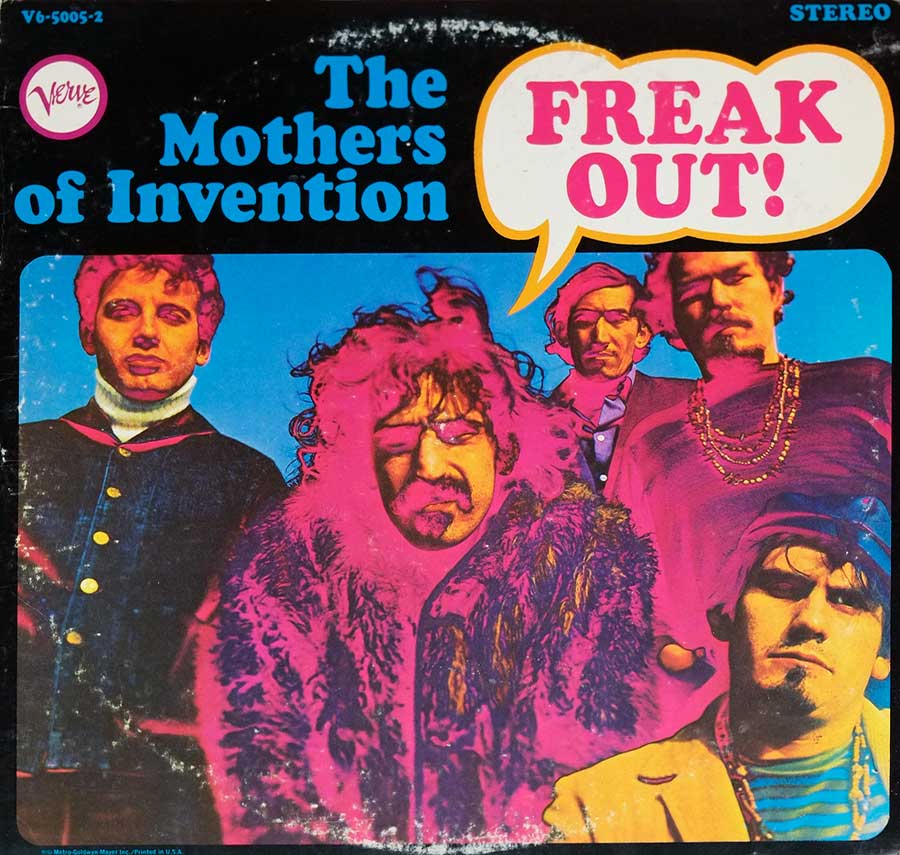
“Such young people,” continues Fiedler, “—in an attempt perhaps to make clear that they have chosen rather than merely endured their status as Freaks—speak of ‘freaking out,’ and indeed, urge others to emulate them by means of drugs, music, diet, or the excitement of gathering in crowds. ‘Join the United Mutations,’ reads the legend on the sleeve of the first album of the Mothers of Invention.”

“And such slogans suggest,” concludes Fiedler, as if to echo in advance the thesis of Mark Fisher’s Acid Communism, “that something has been happening recently in the relations between Freaks and non-Freaks, implying just such a radical alteration of consciousness as underlies the politics of black power or neo-feminism or gay liberation” (14-15).

Are willed, “chosen rather than merely endured” self-transformations of this sort Faustian?

Jarrell is one of many local poet-spirits who haunt my chosen home here in North Carolina. His translation called to me in part, I think, because he taught nearby, in the English department at UNC-Greensboro, from 1947 to 1965.

Jarrell’s life ended tragically. The poet, winner of the 1960 National Book Award for poetry, one-time “Consultant in Poetry to the Library of Congress,” was struck and killed by a motorist on October 14, 1965, while walking near dusk along US highway 15-501 near Chapel Hill. Though the death was ruled an accident by the state, many suspect Jarrell took his own life. He was laid to rest in a cemetery across the street from Greensboro’s Guilford College. A North Carolina Highway Historical Marker commemorates him nearby.

Over at the Frankenstein Place

Sadie Plant weaves the tale of her book Zeros + Ones diagonally or widdershins: a term meaning to go counter-clockwise, anti-clockwise, or lefthandwise, or to walk around an object by always keeping it on the left. Amid a dense weave of topics, one begins to sense a pattern. Ada Lovelace, “Enchantress of Numbers,” appears, disappears, reappears as a key thread among the book’s stack of chapters. Later threads feature figures like Mary Shelley and Alan Turing. Plant plants amid these chapters quotes from Ada’s diaries. Mary tells of how the story of Frankenstein arose in her mind after a night of conversation with her cottage-mates: her husband Percy and, yes, Ada’s father, Lord Byron. Turing takes up the thread a century later, referring to “Lady Lovelace” in his 1950 paper “Computing Machinery and Intelligence.” As if across time, the figures conspire as co-narrators of Plant’s Cyberfeminist genealogy of the occult origins of computing and AI.

To her story I supplement the following:

Victor Frankenstein, “student of unhallowed arts,” is the prototype for all subsequent “mad scientist” characters. He begins his career studying alchemy and occult hermeticism. Shelley lists thinkers like Paracelsus, Albertus Magnus, and Cornelius Agrippa among Victor’s influences. Victor later supplements these interests with study of “natural philosophy,” or what we now think of as modern science. In pursuit of the elixir of life, he reanimates dead body parts — but he’s horrified with the result and abandons his creation. The creature, prototype “learning machine,” longs for companionship. When Victor refuses, the creature turns against him, resulting in tragedy.

The novel is subtitled “The Modern Prometheus,” so Shelley is deliberately casting Victor, and thus all subsequent mad scientists, as inheritors of the Prometheus archetype. Yet the archetype is already dense with other predecessors, including Goethe’s Faust and the Satan character from Milton’s Paradise Lost. Milton’s poem is among the books that compose the creature’s “training data.”

Although she doesn’t reference it directly in Frankenstein, we can assume Shelley’s awareness of the Faust narrative, whether through Christopher Marlowe’s classic work of Elizabethan drama Doctor Faustus or through Goethe’s Faust, part one of which had been published ten years prior to the first edition of Frankenstein. Faust is the Renaissance proto-scientist, the magician who sells his soul to the devil through the demon Mephistopheles.

Both Faust and Victor are portrayed as “necromancers,” using magic to interact with the dead.

Ghost/necromancy themes persist throughout the development of AI, especially in subsequent literary imaginings like William Gibson’s Neuromancer. Pull at the thread and one realizes it runs through the entire history of Western science, culminating in the development of entities like GPT.

Scientists who create weapons, or whose technological creations have unintended negative consequences, or who use their knowledge/power for selfish ends, are commonly portrayed as historical expressions or manifestations of this archetype. One could gather into one’s weave figures like Jack Parsons, J. Robert Oppenheimer, John von Neumann, John Dee.

When I teach this material in my course, the archetype is read from a decolonizing perspective as the Western scientist in service of European (and then afterwards American) imperialism.

Rocky Horror queers all of this — or rather, reveals what was queer in it all along. Most of all, it reminds us: the story, like all such stories, once received, is ours to retell, and we needn’t tell it straight. Turing points the way: rather than abandon the Creature, as did Victor, approach it as one would a “child-machine” and raise it well. Co-learn in dialogue with kin.