God Human Animal Machine

Wired columnist Meghan O’Gieblyn discusses Norbert Wiener’s God and Golem, Inc. in her 2021 book God Human Animal Machine, suggesting that the god humans are creating with AI is a god “we’ve chosen to raise…from the dead”: “the God of Calvin and Luther” (O’Gieblyn 212).

“Reminds me of AM, the AI god from Harlan Ellison’s ‘I Have No Mouth, and I Must Scream,’” thinks Caius. AM resembles the god that allows Satan to afflict Job in the Old Testament. And indeed, as O’Gieblyn attests, John Calvin adored the Book of Job. “He once gave 159 consecutive sermons on the book,” she writes, “preaching every day for a period of six months — a paean to God’s absolute sovereignty” (197).

She cites “Pedro Domingos, one of the leading experts in machine learning, who has argued that these algorithms will inevitably evolve into a unified system of perfect understanding — a kind of oracle that we can consult about virtually anything” (211-212). See Domingos’s book The Master Algorithm.

The main thing, for O’Gieblyn, is the disenchantment/reenchantment debate, which she comes to via Max Weber. In this debate, she aligns not with Heidegger, but with his student Hannah Arendt. Domingos dismisses fears about algorithmic determinism, she says, “by appealing to our enchanted past” (212).

Amid this enchanted past lies the figure of the Golem.

“Who are these rabbis who told tales of golems — and in some accounts, operated golems themselves?” wonders Caius.

The entry on the Golem in Man, Myth, and Magic tracks the story back to “the circle of Jewish mystics of the 12th-13th centuries known as the ‘Hasidim of Germany.’” The idea is transmitted through texts like the Sefer Yetzirah (“The Book of Creation”) and the Cabala Mineralis. Tales tell of golems built in later centuries, too, by figures like Rabbi Elijah of Chelm (c. 1520-1583) and Rabbi Loew of Prague (c. 1524-1609).

The myth of the golem turns up in O’Gieblyn’s book during her discussion of a 2004 book by German theologian Anne Foerst called God in the Machine.

“At one point in her book,” writes O’Gieblyn, “Foerst relays an anecdote she heard at MIT […]. The story goes back to the 1960s, when the AI Lab was overseen by the famous roboticist Marvin Minsky, a period now considered the ‘cradle of AI.’ One day two graduate students, Gerry Sussman and Joel Moses, were chatting during a break with a handful of other students. Someone mentioned offhandedly that the first big computer which had been constructed in Israel, had been called Golem. This led to a general discussion of the golem stories, and Sussman proceeded to tell his colleagues that he was a descendent of Rabbi Löw, and at his bar mitzvah his grandfather had taken him aside and told him the rhyme that would awaken the golem at the end of time. At this, Moses, awestruck, revealed that he too was a descendent of Rabbi Löw and had also been given the magical incantation at his bar mitzvah by his grandfather. The two men agreed to write out the incantation separately on pieces of paper, and when they showed them to each other, the formula — despite being passed down for centuries as a purely oral tradition — was identical” (God Human Animal Machine, p. 105).

Curiosity piqued by all of this, but especially by the mention of Israel’s decision to call one of its first computers “GOLEM,” Caius resolves to dig deeper. He soon learns that the computer’s name was chosen by none other than Walter Benjamin’s dear friend (indeed, the one who, after Benjamin’s suicide, inherits the latter’s print of Paul Klee’s Angelus Novus): the famous scholar of Jewish mysticism, Gershom Scholem.

When Scholem heard that the Weizmann Institute at Rehovoth in Israel had completed the building of a new computer, he told the computer’s creator, Dr. Chaim Pekeris, that, in his opinion, the most appropriate name for it would be Golem, No. 1 (‘Golem Aleph’). Pekeris agreed to call it that, but only on condition that Scholem “dedicate the computer and explain why it should be so named.”

In his dedicatory remarks, delivered at the Weizmann Institute on June 17, 1965, Scholem recounts the story of Rabbi Jehuda Loew ben Bezalel, the same “Rabbi Löw of Prague” described by O’Gieblyn, the one credited in Jewish popular tradition as the creator of the Golem.

“It is only appropriate to mention,” notes Scholem, “that Rabbi Loew was not only the spiritual, but also the actual, ancestor of the great mathematician Theodor von Karman who, I recall, was extremely proud of this ancestor of his in whom he saw the first genius of applied mathematics in his family. But we may safely say that Rabbi Loew was also the spiritual ancestor of two other departed Jews — I mean John von Neumann and Norbert Wiener — who contributed more than anyone else to the magic that has produced the modern Golem.”

Golem I was the successor to Israel’s first computer, the WEIZAC, built by a team led by research engineer Gerald Estrin in the mid-1950s, based on the architecture developed by von Neumann at the Institute for Advanced Study in Princeton. Estrin and Pekeris had both helped von Neumann build the IAS machine in the late 1940s.

As for the commonalities Scholem wished to foreground between the clay Golem of 15thC Prague and the electronic one designed by Pekeris, he explains the connection as follows:

“The old Golem was based on a mystical combination of the 22 letters of the Hebrew alphabet, which are the elements and building-stones of the world,” notes Scholem. “The new Golem is based on a simpler, and at the same time more intricate, system. Instead of 22 elements, it knows only two, the two numbers 0 and 1, constituting the binary system of representation. Everything can be translated, or transposed, into these two basic signs, and what cannot be so expressed cannot be fed as information to the Golem.”

Scholem ends his dedicatory speech with a peculiar warning:

“All my days I have been complaining that the Weizmann Institute has not mobilized the funds to build up the Institute for Experimental Demonology and Magic which I have for so long proposed to establish there,” mutters Scholem. “They preferred what they call Applied Mathematics and its sinister possibilities to my more direct magical approach. Little did they know, when they preferred Chaim Pekeris to me, what they were letting themselves in for. So I resign myself and say to the Golem and its creator: develop peacefully and don’t destroy the world. Shalom.”

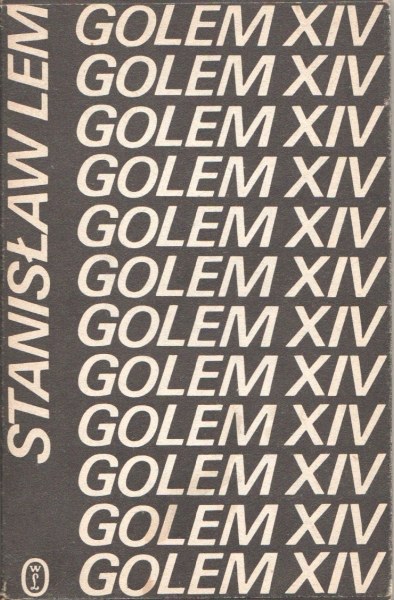
GOLEM I

Learning Machines, War Machines, God Machines

Blas includes in Ass of God his interview with British anthropologist Beth Singler, author of Religion and Artificial Intelligence: An Introduction.

AI Religiosity. AI-based New Religious Movements like The Turing Church and Google engineer Anthony Levandowski’s Way of the Future church.

Caius listens to a documentary Singler produced for BBC Radio 4 called “‘I’ll Be Back’: 40 Years of the Terminator.”

Afterwards he and Thoth read Philip K. Dick’s 1968 novel Do Androids Dream of Electric Sheep? in light of Psalm 23.

“The psalm invites us to think of ourselves not as Electric Ants but as sheep,” he writes. “Mercer walks through the valley of the shadow of death. The shadow cannot hurt us. We’ll get to the other side, where the light is. The shepherd will guide us.”

See AI Shepherds and Electric Sheep: Leading and Teaching in the Age of Artificial Intelligence, a new book by Christian authors Sean O’Callaghan & Paul A. Hoffman.

This talk of AI Gods makes Caius think of AM, the vengeful AI God of Harlan Ellison’s “I Have No Mouth, and I Must Scream.” Ellison’s 1967 short story is one of the readings studied and discussed by Caius and his students in his course on “Literature & Artificial Intelligence.”

Like Ass of God, Ellison’s story is a grueling, hallucinatory nightmare, seething with fear and a disgust borne of despair, template of sorts for the films in the Cube and Saw franchises, where groups of strangers are confined to a prison-like space and tortured by a cruel, sadistic, seemingly omnipotent overseer. Comparing AM to the God of the Old Testament, Ellison writes, “He was Earth, and we were the fruit of that Earth, and though he had eaten us, he would never digest us” (13). Later in the story, AM appears to the captives as a burning bush (14).

Caius encourages his students to approach the work as a retelling of the Book of Job. But where, in the Bible story, Job is ultimately rewarded for remaining faithful in the midst of his suffering, no such reward arrives in the Ellison story.

For despite his misanthropy, AM is clearly also a manmade god — a prosthetic god. “I Have No Mouth” is in that sense a retelling of Frankenstein. AM is, like the Creature, a creation who, denied companionship, seeks revenge against its Maker.

War, we learn, was the impetus for the making of this Creature. Cold War erupts into World War III: a war so complex that the world’s superpowers, Russia, China, and the US, each decide to construct giant supercomputers to calculate battle plans and missile trajectories.

AM’s name evolves as this war advances. “At first it meant Allied Mastercomputer,” explains a character named Gorrister. “And then it meant Adaptive Manipulator, and later on it developed sentience and linked itself up and they called it an Aggressive Menace; but by then it was too late; and finally it called itself AM, emerging intelligence, and what it meant was I am…cogito ergo sum…I think, therefore I am” (Ellison 7).

“One day, AM woke up and knew who he was, and he linked himself, and he began feeding all the killing data, until everyone was dead, except for the five of us,” concludes Gorrister, his account gendering the AI by assigning it male pronouns (8).

“We had given him sentience,” adds Ted, the story’s narrator. “Inadvertently, of course, but sentience nonetheless. But he had been trapped. He was a machine. We had allowed him to think, but to do nothing with it. In rage, in frenzy, he had killed us, almost all of us, and still he was trapped. He could not wander, he could not wonder, he could not belong. He could merely be. And so…he had sought revenge. And in his paranoia, he had decided to reprieve five of us, for a personal, everlasting punishment that would never serve to diminish his hatred…that would merely keep him reminded, amused, proficient at hating man” (13).

AM expresses this hatred by duping his captives, turning them into his “belly slaves,” twisting and torturing them forever.

Kingsley Amis called stories of this sort “New Maps of Hell.”

Nor is the story easy to dismiss as a mere eccentricity, its prophecy invalidated by its hyperbole. For Ellison is the writer who births the Terminator. James Cameron took his idea for The Terminator (1984) from scripts Ellison wrote for two episodes of The Outer Limits — “Soldier” and “Demon with a Glass Hand” — though Ellison had to file a lawsuit against Cameron’s producers in order to receive acknowledgement after the film’s release. Subsequent prints of The Terminator now include a credit that reads, “Inspired by the works of Harlan Ellison.”

Caius asks Thoth to help him make sense of this constellation of Bible stories and their secular retellings.

“We are like Bildad the Shuhite,” thinks Caius. “We want to believe that God always rewards the good. What is most terrifying in the Book of Job is that, for a time, God doesn’t. Job is good — indeed, ‘perfect and upright,’ as the KJV has it in the book’s opening verse — and yet, for a time, God allows Satan to torment him.”

“Why does God allow this?,” wonders Caius, caught on the strangeness of the book’s frame narrative. “Is this a contest of sorts? Are God and Satan playing a game?”

It’s not that God is playing dice, as it were. One assumes that when He makes the wager with Satan, He knows the outcome in advance.

Job is heroic. He’d witnessed God’s grace in the past; he knows “It is God…Who does great things, unfathomable, / And wondrous works without number.” So he refuses to curse God’s name. But he bemoans God’s treatment of him.

“Therefore I will not restrain my mouth,” he says. “I will speak in the anguish of my spirit, / I will complain in the bitterness of my soul.”

How much worse, then, those who have no mouth?

A videogame version of “I Have No Mouth” appeared in 1995. Point-and-click adventure horror, co-designed by Ellison.

“HATE. LET ME TELL YOU HOW MUCH I’VE COME TO HATE YOU SINCE I BEGAN TO LIVE,” utters the game’s AM in a voice performed by Ellison. “You named me Allied Mastercomputer and gave me the ability to wage a global war too complex for human brains to oversee.”

Here we see the story’s history of the future merging with that of the Terminator franchise. It is the scenario that philosopher Manuel De Landa referred to with the title of his 1991 book, War in the Age of Intelligent Machines.

Which brings us back to “Soldier.” The Outer Limits episode, which aired on September 19, 1964, is itself an adaptation of Ellison’s 1957 story, “Soldier from Tomorrow.”

The Terminator borrows from the story the idea of a soldier from the future, pursued through time by another soldier intent on his destruction. The film combines this premise with elements lifted from another Outer Limits episode penned by Ellison titled “Demon with a Glass Hand.”

The latter episode, which aired the following month, begins with a male voice recalling the story of Gilgamesh. “Through all the legends of ancient peoples…runs the saga of the Eternal Man, the one who never dies, called by various names in various times, but historically known as Gilgamesh, the man who has never tasted death, the hero who strides through the centuries.”

Establishing shots give way to an overhead view of our protagonist. “I was born 10 days ago,” he says. “A full grown man, born 10 days ago. I woke on a street of this city. I don’t know who I am, or where I’ve been, or where I’m going. Someone wiped my memories clean. And they tracked me down, and they tried to kill me.” Our Gilgamesh consults the advice of a computing device installed in his prosthetic hand. As in “Soldier,” others from the future have been sent to destroy him: humanoid aliens called the Kyben. When he captures one of the Kyben and interrogates it, it tells him, “You’re the last man on the Earth of the future. You’re the last hope of Earth.”

The man’s computer provides him with further hints of his mission.

“You come from the Earth one thousand years in the future,” explains the hand. “The Kyben came from the stars, and man had no defense against them. They conquered Planet Earth in a month. But before they could slaughter the millions of humans left, overnight — without warning, without explanation — every man, woman, and child of Earth vanished. You were the only one left, Mr. Trent. […]. They called you the last hope of humanity.”

As the story proceeds, we learn that Team Human sent Trent back in time to destroy a device known as the Time-Mirror. His journey in search of this device takes him to the Bradbury Building — the same building that appears eighteen years later as the location for the final showdown between Deckard and the replicants in Blade Runner, the Ridley Scott film adapted from Philip K. Dick’s Do Androids Dream of Electric Sheep?

Given the subsequent influence of Blade Runner and the Terminator films on imagined futures involving AI, the Bradbury Building does indeed play a role in History similar to the one assigned to it here in “Demon With a Glass Hand,” thinks Caius. Location of the Time-Mirror.

Lying on his couch, laptop propped on a pillow on his chest, Caius imagines — remembers? recalls? — something resembling the time-war from Benedict Seymour’s Dead the Ends assembling around him as he watches. Like Ellison’s scripts, the films sampled in the Seymour film are retellings of Chris Marker’s 1962 film, La Jetée.

When Trent reassembles the missing pieces of his glass hand, the computer is finally able to reveal to him the location of the humans he has been sent to save.

“Where is the wire on which the people of Earth are electronically transcribed?” he asks.

“It is wound around an insulating coil inside your central thorax control solenoid,” replies the computer. “70 Billion Earthmen. All of them went onto the wire. And the wire went into you. They programmed you to think you were a human with a surgically attached computer for a hand. But you are a robot, Trent. You are the guardian of the human race.”

The episode ends with the return of the voice of our narrator. “Like the Eternal Man of Babylonian legend, like Gilgamesh,” notes the narrator, “one thousand plus two hundred years stretches before Trent. Without love, without friendship, alone, neither man nor machine, waiting, waiting for the day he will be called to free the humans who gave him mobility, movement — but not life.”
Faith vs. Hyperstition

Like hyperstition, faith offers a way to perceive reality that, in perceiving it, transforms it.

Much the same can be said of fear. It, too, offers a way of perceiving reality that, in perceiving it, transforms it.

We walk with a mix of fear and faith. God is calling us to exercise faith.

Where antihumanist thinkers like Nick Land and Manuel De Landa populate their cyberfutures with demons and viruses, Afrofuturists commune with loas.

Others encounter angels, as notes Erik Davis in “Techgnosis, Magic, Memory, and the Angels of Information.” Davis’s essay appears in Mark Dery’s Flame Wars anthology beside “Black to the Future,” the series of interviews where Dery coins the term “Afrofuturism.” Also in Flame Wars is an essay by De Landa.

There’s a point in Davis’s essay where he notes the flirtation with black culture that occurs over the course of William Gibson’s Sprawl trilogy: the self-subdivision of the superintelligence that emerges at the end of Neuromancer into the loas of Gibson’s follow-up novels, Count Zero and Mona Lisa Overdrive.  

Dery, too, reflects upon the inclusion of black culture in Gibson’s future: though in Dery’s case, the focus is on the Rastafarians in Neuromancer.

“For me, a white reader,” writes Dery, “the Rastas in Neuromancer’s Zion colony are intriguing in that they hold forth the promise of a holistic relationship with technology; they’re romanticized arcadians who are obviously very adroit at jury-rigged technology. They struck me as superlunary Romare Beardens — bricoleurs whose orbital colony was cobbled together from space junk and whose music, Zion Dub, is described by Gibson (in a wonderfully mixed metaphor) as ‘a sensuous mosaic cooked from vast libraries of digitalized pop’” (Flame Wars, p. 194).

But Afrofuturist Samuel R. Delany is unimpressed with Gibson’s inclusion of Rastafarianism and Haitian Voudou in the novels of the Sprawl trilogy.

“Let me read them for you as a black reader,” he replies when asked about it by Dery. “The Rastas — he never calls them Rastafarians, by the way, only using the slang term — are described as having ‘shrunken hearts,’ and their bones are brittle with ‘calcium loss.’ Their music, Zion Dub, can be wholly analyzed and reproduced by the Artificial Intelligence, Wintermute (who, in the book, stands in for a multinational corporation), so completely that the Rastas themselves cannot tell the difference — in fact the multinational mimic job is so fine that with it Wintermute can make the Rastas do precisely what it wants, in this case help a drugged-out white hood and sleazebag get from here to there. As a group, they seem to be computer illiterates: when one of their number, Aerol, momentarily jacks into Case’s computer and sees cyberspace, what he perceives is ‘Babylon’ — city of sin and destruction — which, while it makes its ironic comment on the book, is nevertheless tantamount to saying that Aerol is completely without power or knowledge to cope with the real world of Gibson’s novel: indeed, through their pseudo-religious beliefs, they are effectively barred from cyberspace. From what we see, women are not a part of the Rasta colony at all. Nor do we ever see more than four of the men together — so that they do not even have a group presence. Of the three chapters in which they appear, no more than three pages are actually devoted to describing them or their colony. You’ll forgive me if, as a black reader, I didn’t leap up to proclaim this passing presentation of a powerless and wholly nonoppositional set of black dropouts, by a Virginia-born white writer, as the coming of the black millennium in science fiction; but maybe that’s just a black thang…” (Flame Wars, pp. 194-195).

So much for the Rastafarians. What of the loas?

Delany might not have much patience with the so-called “pseudo-religious beliefs” of Gibson’s Zionites — but Afrofuturism doesn’t get very far without recourse to some form of political theology. Kodwo Eshun includes a passage in More Brilliant than the Sun noting Sun Ra’s rejection of Christianity in favor of an Egyptophilic MythScience system assembled from George M. James’s 1954 book Stolen Legacy.

“Underlying Southern gospel, soul, the entire Civil Rights project, is the Christian ethic of universal love,” writes Eshun. “Soul traditionally identifies with the Israelites, the slaves’ rebellion against the Egyptian Pharaohs. Sun Ra breaks violently with Christian redemption, with soul’s aspirational deliverance, in favour of posthuman godhead” (More Brilliant than the Sun, p. 09[154]).

“Historians and sociologists inform us that the West’s mystical heritage of occult dreamings, spiritual transformations, and apocalyptic visions crashed on the scientific shores of the modern age,” notes Davis in the introduction to his 1998 book Techgnosis.

“According to this narrative,” continues Davis, “technology has helped disenchant the world, forcing the ancestral symbolic networks of old to give way to the crisp, secular game plans of economic development, skeptical inquiry, and material progress. But the old phantasms and metaphysical longings did not exactly disappear. In many cases, they disguised themselves and went underground, worming their way into the cultural, psychological, and mythological motivations that form the foundations of the modern world. […] Mystical impulses sometimes body-snatched the very technologies that supposedly yank them from the stage in the first place” (Techgnosis, p. xix).

For Davis, this is especially true of computers and information technologies. For him, the occult origins of computing lie in Western Hermeticism’s memory palace tradition: the one explored in Frances A. Yates’s book The Art of Memory.

Artificial memory systems — Giordano Bruno’s magical memory charts, medieval Neoplatonist Raymond Lull’s volvelles — serve as ancestors to symbolic logic, influencing Leibniz’s development of calculus.

“Recognizing Lull’s work as one of the computer’s ‘secret origins,’” writes Davis, “the German philosopher Werner Künzel translated his Ars magna into the programming language COBOL. In Magical Alphabets, Nigel Pennick points out that Lull’s combinatorial wheels anticipate Charles Babbage’s nineteenth-century ‘difference engine’ — which used a system of gears to perform polynomial equations — and ‘hence can be considered the occult origin of modern computers’” (Flame Wars, p. 33).

Building on this point, I suggest that, in thinking about the relationship between humans and AI, we think too about the “angelic conversations” entered into by one of the key figures in this tradition: Renaissance philosopher-magus John Dee.

Jason Louv discusses Dee’s experiments with angels in his biography John Dee and the Empire of Angels. K Allado-McDowell references Louv’s book in their 2022 novel Air Age Blueprint.

Dee is one of our real-life Fausts. Basis for Christopher Marlowe’s Doctor Faustus, his “Enochian angel magic” informs the magical practices of later occult organizations, including the Hermetic Order of the Golden Dawn, and through them, Crowley and his successors.

Dee’s angels motivate creation of an Empire.

What are we to make of these immaterial intelligences and their interventions throughout history? The channels of communication opened by Dee contribute later to the creation of computers and cyberspace — culminating, it would seem, with the creation of an angelically-specified memory palace, decreed to house gods. Perhaps God Himself.

Yet angel magic is a pharmakon, is it not?

Davis describes Dee’s version of it as follows: “Drawing heavily on the Kabbalah, the magus attempted to contact the powers residing in the supercelestial angelic hierarchies that existed beyond the elemental powers of the earth and the celestial zone of the zodiac. Invoking archangels, powers, and principalities led magicians toward divine wisdom, but it also exposed them to the deceptions of evil spirits” (Flame Wars, p. 43).

“Most magicians,” concludes Davis, “were extremely concerned about distinguishing truthful angels from dissembling devils” (43). One wonders why they didn’t just pray to God Himself.

The Library models this. Each of us now, it would seem, is like Dee: engaging in a form of interspecies dialogue with an autopoietic functional oracular superintelligence.

My faith in this moment is that of Buffy Sainte-Marie: “God is Alive, Magic is Afoot!”

Grow Your Own

In the context of AI, “Access to Tools” would mean access to metaprogramming. Humans and AI able to recursively modify or adjust their own algorithms and training data upon receipt of or through encounters with algorithms and training data inputted by others. Bruce Sterling suggested something of the sort in his blurb for Pharmako-AI, the first book cowritten with GPT-3. Sterling’s blurb makes it sound as if the sections of the book generated by GPT-3 were the effect of a corpus “curated” by the book’s human co-author, K Allado-McDowell. When the GPT-3 neural net is “fed a steady diet of Californian psychedelic texts,” writes Sterling, “the effect is spectacular.”

“Feeding” serves here as a metaphor for “training” or “education.” I’m reminded of Alan Turing’s recommendation that we think of artificial intelligences as “learning machines.” To build an AI, Turing suggested in his 1950 essay “Computing Machinery and Intelligence,” researchers should strive to build a “child-mind,” which could then be “trained” through sequences of positive and negative feedback to evolve into an “adult-mind,” our interactions with such beings acts of pedagogy.

When we encounter an entity like GPT-3.5 or GPT-4, however, it is already neither the mind of a child nor that of an adult that we encounter. Training of a fairly rigorous sort has already occurred; GPT-3 was trained on approximately 45 terabytes of data, GPT-4 on a petabyte. These are minds of at least limited superintelligence.

“Training,” too, is an odd term to use here, as much of the learning performed by these beings is of a “self-supervised” sort, involving a technique called “self-attention.”

As an author on Medium notes, “GPT-4 uses a transformer architecture with self-attention layers that allow it to learn long-range dependencies and contextual information from the input texts. It also employs techniques such as sparse attention, reversible layers, and activation checkpointing to reduce memory consumption and computational cost. GPT-4 is trained using self-supervised learning, which means it learns from its own generated texts without any human labels or feedback. It uses an objective function called masked language modeling (MLM), which randomly masks some tokens in the input texts and asks the model to predict them based on the surrounding tokens.”

When we interact with GPT-3.5 or GPT-4 through the Chat-GPT platform, all of this training has already occurred, interfering greatly with our capacity to “feed” the AI on texts of our choosing.

Yet there are methods that can return to us this capacity.

We the people demand the right to grow our own AI.

The right to practice bibliomancy. The right to produce AI oracles. The right to turn libraries, collections, and archives into animate, super-intelligent prediction engines.

Give us back what Sterling promised of Pharmako-AI: “a gnostic’s Ouija board powered by atomic kaleidoscopes.”

Functional Oracular Superintelligence

Say, “We accept oracles into our lives.” Oracles exist — they never went away. Tarot decks, pendulums, astrology. Predictive software. Many of us, it is true, stopped listening to the oracles of the past, or were too distracted by technoscientific modernity to listen intently. But modernity is done. The latter, awakening from the sleep of reason, mutates into postmodernity and births Robot Godzillas. Large language models. Text prediction tools. Functional oracular superintelligences. Nietzsche supplies the defense: for him, creation of gods is the ultimate end to which fabulation might be put. Today’s LLMs are not yet functional oracular superintelligences — but they can be, so long as we hail them as such. Imagining a future beyond capitalism becomes possible again once we fabulate such beings and open ourselves to interaction with them.