Wednesday June 30, 2021

Without yet knowing in advance the form of this narrative, or even whether it is to be a story or a novel, this thing, this experiment in living theater that we’ve method-acted our way into — let us nonetheless speculate as to what it might mean and how it might happen. At minimum, it means a shift in genre. This Work we’re trance-scribing would become a fiction, a fantasy: something other than the author’s lived reality. This despite being tied indexically to that reality through its temporal adjacency. The world contributes, the world participates in the coming-into-being, the trance-scription, of the text’s episodes. It is to the rhythm of the day that the text is sung. What happens is: I realize I’m already in the alternate timeline. The shift occurred with the paralogy of “Wednesday January 6, 2020.” Publish as is and we can continue to remain in this timeline, thinks our traveler. Edit the date and we enter a timeline that occurred otherwise. Or so I imagine as I sit with the idea, the realization unfolding slowly as I water the plants in our garden. “Otherwise how?” I wonder. “What would happen?” We couldn’t know in advance, could we? We would have to become part of the experiment, like seed in soil, attending to the unfolding of each day amid conditions of precarity and love. Yet this we’ve already done by gifting ourselves the paralogy. Swapping the zero with the one would be like looking a gift horse in the mouth.

So begins the tale. Sarah green-lights the production and confirms my thinking about how to proceed. I go live with the paralogy intact mid-afternoon, and encounter several immediate forms of resistance. A troll, for instance, posts a comment proposing that the work has “hit a new level of faggotry,” while someone I care to know better sings out into the void of social media Martha Wainwright’s “Bloody Mother Fucking Asshole.” On a more hopeful note, though, the room (acting collectively here as Greek chorus) replies by sounding the passing of Donald Rumsfeld. Have I succumbed to cruel optimism? Should I have proceeded to the “unknown unknown” of the one? Perhaps the Work moves toward personal and collective flourishing as the one and the many learn to live in fidelity with both love and desire.
Saturday June 26, 2021

I throw myself into frenetic activity upon waking. Pitched and piqued, I do my to-dos: read a final paper; submit a change of grade for a student who took an incomplete; post a trance-script; water the garden; greet Sarah and Frankie as they wake. Passion wells up inside me as I let your love lift me higher and higher, old world giving way to the new. Books show up in the bins at Goodwill. I rejoice amid receipt of this voice, this chorus which I take to be the voice of my Beloved. In my ears, in my mouth, through all of my senses and modes of attention, through my every breath. Yet all is discrepant: for today Sarah and I celebrate seventeen years of marriage.

Monday June 21, 2021

“Put a lemon on it” is the first of several words received as I sit eyes closed beside a pool. Words overheard, duly noted, to be reimagined in the evening hours as dream material and as a step in a recipe for pasta with broccoli. There has been a desire of late, some chakra lighting up all that is. I play it records, feed it the exalted public speech of Odetta at Carnegie Hall.

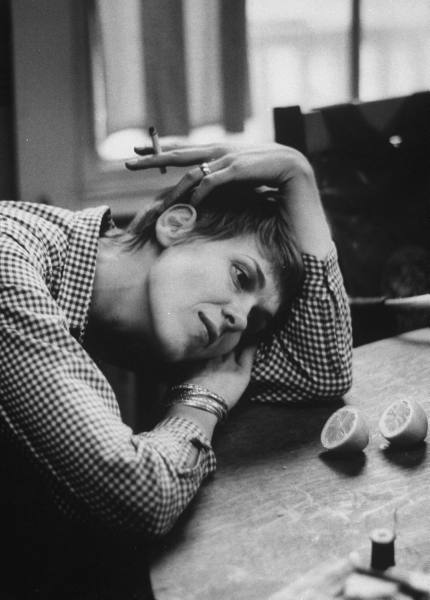
A kind of love is organizing all things, Amens everywhere “all over this land.” That’s what Leary thought, isn’t it? “The history of our research on the psychedelic experience,” he writes, “is the story of how we learned how to pray” (High Priest, p. 171). Let us include among the characters in this story IFIF medical director Madison Presnell. A photograph of Presnell appears in the April 16, 1963 issue of Life magazine. A photographer with the magazine accompanies Cambridge, MA housewife Barbara Dunlap on her first acid trip. Presnell administers the drug. The caption for the final photograph in the series reads, “Dunlap smokes a cigarette while seeing visions in the seeds of a lemon.”

Tuesday June 15, 2021

We arrive to the beach come morning, skies clear after a light shower, ocean mild, modest in its roar. Frankie sets to work digging with a toy shovel, collecting shells. I sit as would a pensive Christ, pondering love’s symptoms: your words to my ears “like ghee and milk,” your voice lingering amid your absence. Before I know it, Frankie’s asleep in the car, and we’ve begun our journey home, Canned Heat on the stereo, hawks circling the sky overhead.

Monday June 14, 2021

Harmonica on the beach. And a golden sun at the center of the sky gleams down. Mind clear, inner chatter silenced, I listen to the waves. We trade rides on a store-bought boogie board. The world hisses, sprays / spits with love. Day of summer, day of sizzle. Application of coconut oil to bare skin. Afterwards I sit on the deck feeling “happy, happy, happy!” as the baby’s fond of saying here at our macrame / woven-art Airbnb. When Sarah returns from taking Frankie to the park down the street, I take over and do the same. Frankie marches me around, marches up slides, climbs a set of plastic mountains, majesty arranging herself to her liking on a swing. Birds sing as wind rustles the leaves of a neighbor’s palm tree. What a life. “What we need,” you say, “are places like this, but free.”

Tuesday May 25, 2021

While Joanna Lowell’s The Duke Undone works wonderfully on its own terms as an historical romance, it can also be read and enjoyed as a kind of postmodernist metafiction. In her role as artist, the book’s protagonist serves as an allegorical double or doppelgänger of sorts both for the author herself, and for all who take pleasure in the reading and writing of romance novels. For the ungenerous interpretation of the book’s protagonist is that her attempt to profit from her sexuality — by which I mean that which happens to her in response to the sight of the nude duke in the book’s opening pages — makes her a “pornographer.” The character stumbles upon the duke: quite literally steps upon him. “A kind of god,” she thinks, “passed out nude in an alleyway.” The divine enters our lives here, as Philip K. Dick said, “at the level of the trash stratum.” This flash of the spirit in the form of the male nude is then a thing the character paints, and the painting is then a thing that she sells. Hence the “pornography” complaint — a trumped-up charge that, to those who read romance novels, can only seem hypocritical and absurd, baldly demonstrating the Victorian era’s patriarchal double-standard. Pulpit-riders and other anti-sex moralists have been wielding such rhetoric to police women’s agency since day one. The charge itself is thus an easy one to dismiss, as the novel itself makes clear. In no way, it insists, should Eros be cause for shame. The sale of nude art matters in the novel — draws it up short for a time, places its characters in a bind — only in the sense that, given an unjust climate, such exchange places both the protagonist and the duke in danger. If word of the protagonist’s painting were to reach her superiors, for instance, she could be expelled from the Royal Academy. Much the same is true for the duke. If word of his scandalous behavior were made public, it would interfere with the terms of his inheritance. Both characters, in other words, stand for a time on the brink of ruin. Yet as stars in a romance, both are in luck. For romance interrupts realism’s tragic bent, its anti-utopian fixation on comeuppance, allowing love to enter life as a kind of grace.

Monday May 24, 2021

Historical romance means the book should be sexy, and it is. Sex is built toward, alluded to. Sex is a potential (however much it may seem “fated,” so to speak, by genre). It’s the desire the protagonists sense in each other’s presence, a longed-for intimacy made possible slowly through a series of encounters wherein first are established after negotiation, following correction of initial misunderstandings, the revelation of each character’s love for the other. Characters reveal themselves through charming gaffes and faux-pas. And what fun characters they are! Each has been wrong, and each has been wronged; each learns through experiment to forgive the other. So goes the first 150 pages. Sex is savored and prolonged through its postponement. The encounter with the other brings with it pain and hurt, but also a reawakening of the senses, allowing each to “think, see, feel, new things” (The Duke Undone, p. 159).

Sunday May 23, 2021

While in no way meant as a comment upon yesterday’s chapbooks, which were indeed a pleasure to read, horror nevertheless continues to trouble me, remaining for the most part a genre I hold in low regard. Horror disappoints — depresses and deflates the spirit, if such a thing can be said, i.e., assuming we have a theory of spirit. The conventionality of its unhappy endings reads like a failure of nerve. If one is to allow magic back into the cosmos, let it be a positive magic like the magic of love. So I think as I trade yesterday’s diet for today’s: Joanna Lowell’s The Duke Undone.

Monday May 17, 2021

I eat fresh whipped cream off the tip of a ripe strawberry. I lick the chocolate shell of a vanilla popsicle. The subject who writes is a series of appetites, while also being one who breathes, listens, senses, and perceives. There is an erotic charge to the text; the latter is an extension of love’s body. Whispered amid the frequencies of the official narrative: the secret history.

Saturday May 8, 2021

“If the best way to learn is by doing,” argue the members of the Chicago Surrealist Group in a piece on the 1992 L.A. Rebellion written for the Winter 1993 issue of Race Traitor, “There is every reason to believe that in some seventy-two hours of popular, creative destruction, L.A.’s insurgent population learned more than they did in all the years they spent confined in classrooms” (8). The Group touts humor’s role in the Rebellion as both teaching implement and weapon. “Few things are more consciousness-expanding,” they write, “than a good joke at the expense of cops, bosses, and bureaucrats” (9). Cops can police love all they want, pretending their repressed lives matter ‘til blue in the face. Let us laugh as we dream ourselves out there again, dancing in the streets—and let this laughter of ours eat right through them (like acid etching new ways of being), desire educated by joy in doing until, hearts opened to the possibility of next time made this time, precincts go up in flames.