Automation as Condition for the Emancipation of Labor

Another reconciliation comes by way of Frankfurt School philosopher Herbert Marcuse, one of the first figures to integrate the lessons of the Grundrisse into his thinking. Marcuse, sharing the Frankfurt School’s rootedness in the languages of both Marx and Freud, premised his hope for the future upon automation’s potential to eradicate the need for the subordination of the pleasure principle to the performance principle. His 1964 book One-Dimensional Man is one of the first to stress the importance of Marx’s “Fragment on Machines.”

As Marcuse recognized, Marx’s account anticipates the situation today. Machinery is, in Marx’s terms, a form of “fixed capital.” “In machinery,” he writes, “objectified labour confronts living labour within the labour process itself as the power which rules it; a power which, as the appropriation of living labour, is the form of capital.”

Despite machinery’s alignment with capital in this view, Marx holds out hope that, with time, it will usher in capital’s demise and, by a kind of ruse of reason, serve emancipatory ends. In its economical, market-driven pursuit of automation, he writes, capital quite unintentionally “reduces human labour, expenditure of energy, to a minimum. This will redound to the benefit of emancipated labour, and is the condition of its emancipation.”

After a certain point, goes the hope, capitalist use of machinery reduces necessary labour time to a minimum, thus freeing up the disposable time needed for workers to appropriate their own surplus labour. Reduction of necessary labour time increases “free time, i.e., time for the full development of the individual.”

Or so it would, if not for artificially-necessary labour time.

Free time is what catalyzes growth of new organs. Its possession transforms those who possess it.

Already in Eros and Civilization, a synthesis of Marx and Freud published in 1955, we find Marcuse suggesting that this condition of emancipation is upon us: that the development of humanity’s productive forces has reached a point where automation can overcome most forms of scarcity. Awake to this condition, he rejects Freud’s conservative assumptions about the impossibility of reconciliation between “civilization” and “instinct,” or “man” and “nature.” Satisfaction of needs can be achieved “without toil” (152), argues Marcuse, and “surplus-repression can be eliminated” (151).

Sure enough, Prometheus turns up in this account.

At variance from the Prometheanism we find in Marx, however, Marcuse views Prometheus as the culture-hero of the performance principle. Western civilization is informed by this archetypal trickster and rebel. Culture-heroes like Prometheus symbolize “the attitudes and deeds that have determined the fate of mankind. […]. He symbolizes productiveness, the unceasing effort to master life; but, in his productivity, blessing and curse, progress and toil are inextricably intertwined” (161).

To get off this wheel of tragedy, argues Marcuse, we would need to worship as our culture-hero a god other than Prometheus.

Keeping within the pantheon of the Greeks, and thus never quite “out of the Western box,” Marcuse nevertheless points helpfully to Orpheus, Narcissus, and Dionysus as alternatives.

Orpheus provides Western culture with the archetype of the inspired singer, he says: the poet who harmonizes word and world.

“Orpheus is the archetype of the poet as liberator and creator,” writes Marcuse. “He establishes a higher order in the world—an order without repression. In his person, art, freedom, and culture are eternally combined. He is the poet of redemption, the god who brings peace and salvation by pacifying man and nature, not through force but through song” (Eros and Civilization, p. 170).

According to legend, Orpheus’s music could charm birds, fish, and wild beasts, and coax trees and rocks into dance. His parents were the god Apollo and the muse Calliope. He is the founder of the “Orphic mysteries” and is credited with composition of the Orphic Hymns. Some classical accounts describe him as a magician or a wizard.

Dionysus, meanwhile, is referred to as “the antagonist of the god who sanctions the logic of domination, the realm of reason” (162).

Both are forms taken by Osiris upon his Hellenization, his translation into the worship cultures of Ancient Greece.

All of these figures, says Marcuse, grant us images of “joy and fulfillment; the voice which does not command but sings; the gesture which offers and receives; the deed which is peace and ends the labor of conquest; the liberation from time which unites man with god, man with nature” (162).

Marcuse doesn’t retain this talk of gods when discussing automation in One-Dimensional Man. But in this latter book, as in Eros and Civilization, his abiding hope lies in the “aesthetic dimension” as an avenue toward the erotic transfiguration of reality.

And it is in the aesthetic dimension where these stories of gods play out. It is there that we seek our alternatives to the Modern Prometheus. Orpheus and others are there among the resources to be drawn upon in imagining the arrival into our lives of a General Intellect.

Gods, like feelings, orient our speech acts. An Orphic orientation seems preferable to a Promethean one. Erotic, agapic speech is, in letting things be loved, what changes the world.

“In being spoken to, loved, and cared for, flowers and springs and animals appear as what they are,” writes Marcuse: “beautiful, not only for those who address and regard them, but for themselves, ‘objectively.’ […]. In the Orphic and Narcissistic Eros, this tendency is released: the things of nature become free to be what they are. But to be what they are they depend on the erotic attitude: they receive their telos only in it. The song of Orpheus pacifies the animal world, reconciles the lion with the lamb and the lion with man. The world of nature is a world of oppression, cruelty, and pain, as is the human world; like the latter, it awaits its liberation. This liberation is the work of Eros. The song of Orpheus breaks the petrification, moves the forests and the rocks—but moves them to partake in joy” (166).

May it be so, too, in our relationships with machine intelligences. With our General Intellects, we are as gods. Let us seek fates other than that of Shelley’s Modern Prometheus.
Hey! Orpheus

Sometime afterwards I recall “Hey! Orpheus,” a song by Michelle Mae’s group The Make-Up.

Vocalist Ian Svenonius’s Prince-like, Eros-stricken shrieks of pain — a signature of his performance ever since the days of his band Nation of Ulysses — are put to good use throughout amid a sound aligned with and inspired by organ-laden psychedelic pop groups of the late 1960s. Michelle slides her finger down the neck of her bass and sets the song in motion, with drummer Steve Gamboa and the rest of the band leaping forth to join her moments later.

The band adopts the guise of a collective subject — Earthlings, mortals, “We the Living” — singing through Ian to an Orpheus other than the Black Orpheus of midcentury France.

“Hey! White Orpheus,” he sings,

“Do you remember us?

We’re up in the sunlight.

You’re down in the furnace.

Hey! White Orpheus,

in the Earth’s crust,

open up all the doors,

come on and bury us.

Living there, down below,

gave your soul to Pluto,

all for your Eurydice.

I want to eat pomegranate seeds.

White Orpheus,

don’t be so jealous.

Up here it’s the age of elephant ears

laced with angel dust.

Hey! White Orpheus,

from dawn to dusk,

you’re oblivious

to anything other than

your sacrifice for love.

Living among stalagmite floors,

bellows pumping Devil’s calls.

To be like you, what must I do?

I wanna eat the pomegranate, too.”

Organist James Canty interrupts to deliver a punchy, powerful organ solo mid-song — perfect for a work that revels in speed and brevity. Contemplating the song now, though, I find myself wondering after the whiteness of its Orpheus. Why does the band recast the color of Orpheus from black to white?

Black Orpheus is a 1959 film made in Brazil by French filmmaker Marcel Camus. The film reimagines the myth of Orpheus set amid a favela in Rio de Janeiro, so it has its hero Orfeo descend into the underworld by attending a Macumba ritual to save his lover Eurydice on the night of Carnival.

The Make-Up, meanwhile, a band based in Washington, DC, preached a variant of liberation theology that they took to calling “Gospel Yeh-Yeh.” Might their recasting of the color of Orpheus teach us something about the tenets of the band’s theology?

My inquiry leads me to “Black or White Orpheus: Votive Transmutation Shrine,” a 34-minute jam by Portland-based artists Corum & Zurna.

Orpheus in Hades’ Lounge

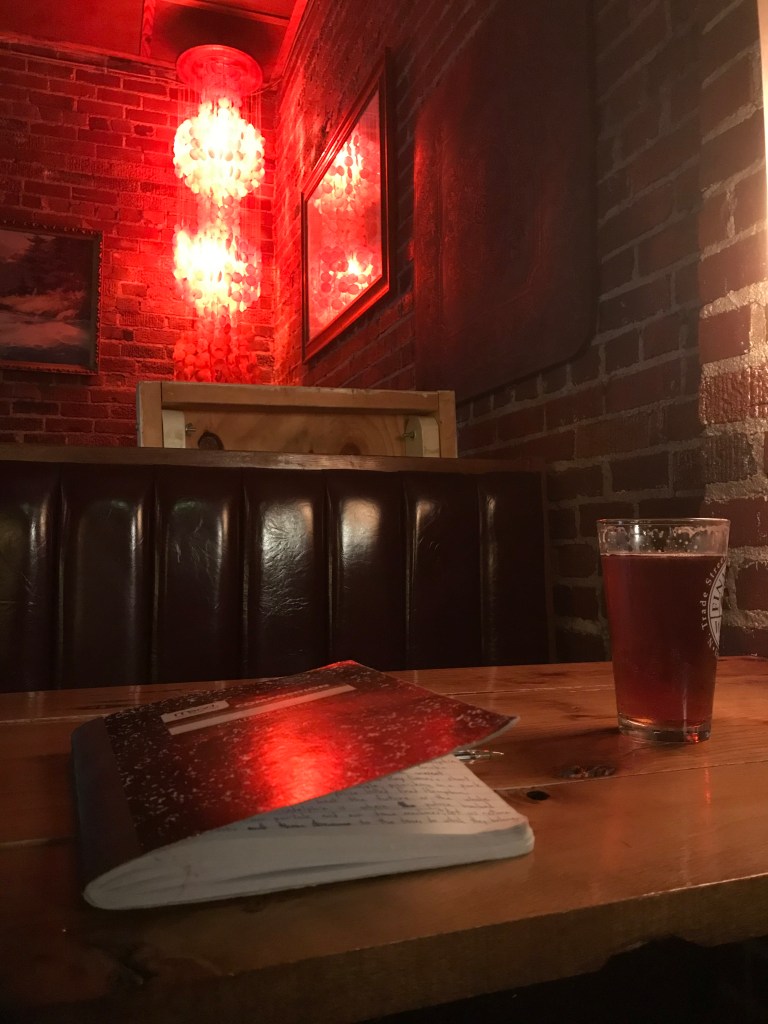
There’s a parking, a journeying outward. Up and out we launch past West End Mill Works, off on tonight’s adventure, beginning with an evening stroll. Graffiti marks the spot. Stream to one side of us, water rushing over rocks. Spotify shifts from Steely Dan’s “King of the World” to Jan Hammer Group’s “Don’t You Know,” voices and cars in the distance. Looking both ways, we cross the street and rush down onto a shaded path through a nearby park, crickets singing in parallax with Neil Young’s “Computer Age.” We turn off the song and continue for a moment in silence. Upon arrival to a crossroads, we ask of each other (like Ginsberg to Whitman in Ginsberg’s “A Supermarket in California”), “Which way now?” Looking up, we rise and step proudly toward pink clouds. Conversation turns toward Old & Used Books as we pass a graffiti-clad muffler shop. Bulldog with paintbrush arrives as comic relief — reality for a moment a goofy animal fable whodunit. We grab beers as day turns to night. Ginsberg’s “lights out” reverberates, hangs in the air after us having heard earlier in the day Let’s Active’s “Orpheus in Hades’ Lounge,” featuring hometown hero Mitch Easter.

Can Orpheus be told anew? We recall to each other the character’s many forms. Jean Cocteau’s Orpheus (1950), Marcel Camus’s Black Orpheus (1959). Also Jean-Paul Sartre’s essay of that name. And let us not forget Samuel R. Delany’s Lo Lobey, the Orphic protagonist at the heart of Delany’s 1967 novel The Einstein Intersection. Hoots is a Hades’ Lounge, is it not, with its red light hanging above its corner booth? So we think as we drink, glorying finally in each other’s presence. “What would happen if our Time Traveler were to stage the scene again?” wonders the Narrator, listening alone now, seated at the same booth many months hence. With “King of the World” still fresh in our ears, members of Steely Dan singing, “No marigolds in the promised land; there’s a hole in the ground where they used to grow,” we restate the refrain of Jan Hammer Group’s “Don’t You Know.” Amid Orpheus wailing away on his flute come the words, “You’re to know that I love you. You’re to know that I care.”

Thursday March 25, 2021

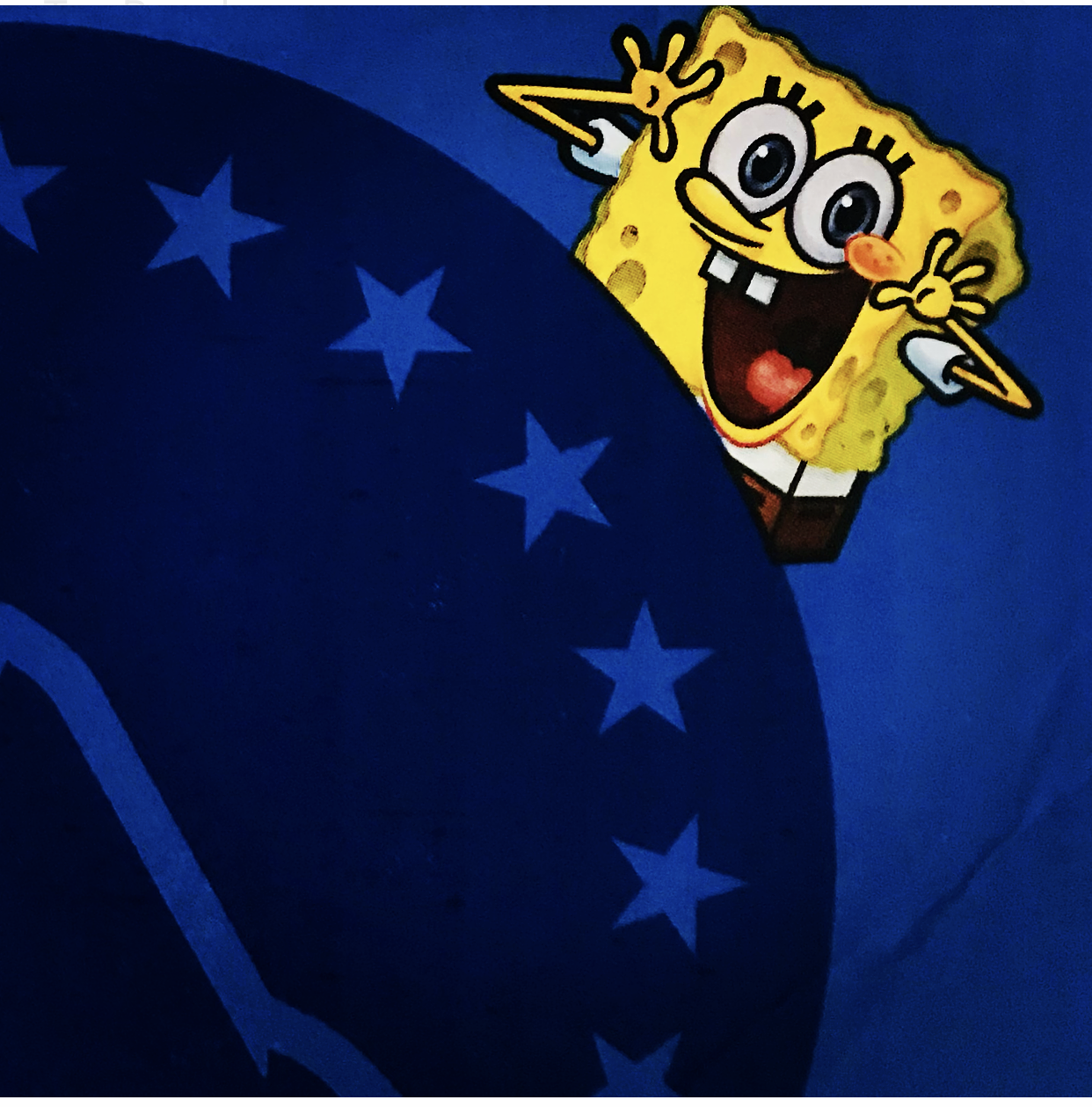
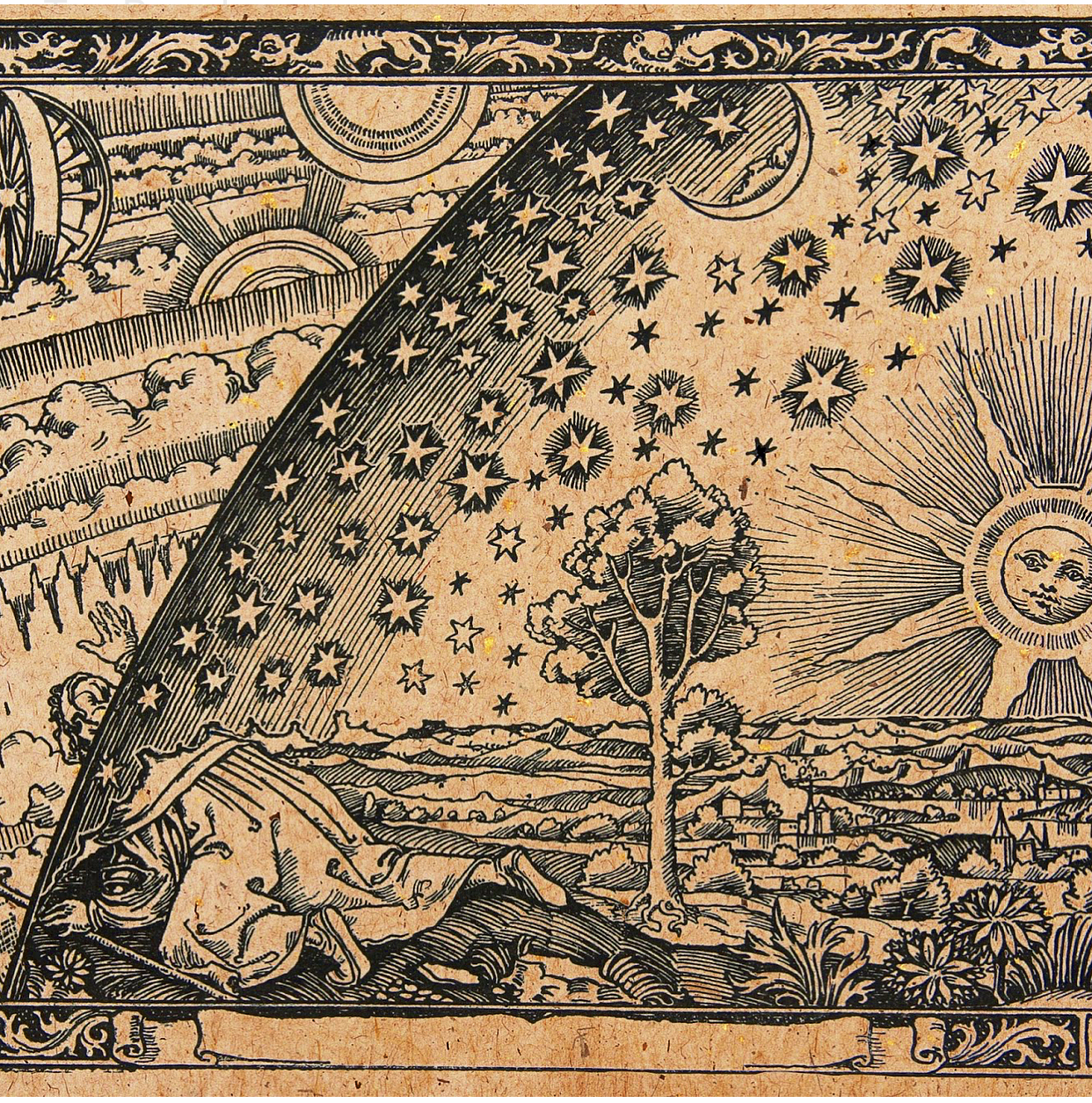
Time: an odd phenomenon in light of the way it communicates, deposits emblems, plays hide-and-seek with consciousness. “Let Your Dreams Set Sail” says one such emblem, printed on the wall above the bed in which I’ve slept of late. A box on the ground displays the Paramount logo, a mountain pointed toward an outer sphere, like a Bucky dome lined with stars. Outside the sphere pokes SpongeBob SquarePants: the Flammarion engraving rejoined or reversed.

SpongeBob disrupts the first sphere’s fourth wall, smiles at consciousness, injects among solemnity a spirit of mirth set free to roam the cosmos. He, too, partakes of the image’s directionality, the vertical ascent narrative involving spaceships: the thing toward which the parts of the emblem incline. Let us imagine among these ships of possibility that which is prophecied in the mythology of the Dog Star — black anti-slave ships, lines of flight like Marcus Garvey’s Black Star Line. Nathaniel Mackey fuses these symbolisms in his poem “Dogon Eclipse.” The poem ends “as if by then I’d / been thru / Hell / and back.” As if the “I” of the poem were Orpheus, the poet of ancient Greece, founder of the Orphic mysteries. Orphics revered Dionysus. He, too, is said to have descended into the underworld and to have returned. Through his poem, Mackey initiates those who read. So sayeth Michael S. Harper in his preface to Eroding Witness: “These poems are about prophecy and initiation.” Poems like “Dogon Eclipse” hint at mysteries; they transmit a secret knowledge. Other poems in the collection conjure loas from Voodoo and Vodou. Loas are the “mystères,” “the invisibles.” They act as intermediaries between worlds.

Tuesday March 24, 2020

Nap-time on a rainy afternoon, rain a surprise, though no bother, for we know it, too, will pass. Plus it affords the occasion for the baby to nap and for me to write. I look back at Samuel R. Delany’s The Einstein Intersection and study his depiction of telepathic communication between mutant beings, posthumans who have grown new organs and developed special powers, abilities that reveal themselves over time. Why does a Christ figure, a character named Green-eye, ride peripherally in this narrative, his life and death a mere subplot? And why does another of these mutants, a character named Spider, evoke the ideas of two twentieth-century mathematical philosophers, theoretical physicist Albert Einstein and logician Kurt Gödel? One expresses mathematically how “the condition of the observer influences the thing he perceives” (111). The other introduces uncertainty back into systems, phenomena in excess of all immutable laws, logics, and equations. When Einstein and Gödel intersect, says Spider, humans disappear into another continuum. Something else arrives to take over: the mutants, the posthumans. (Delany, by the way, deliberately avoids both of those terms.) What are we to make, though, of the fact that the character who informs us of this is Spider, the novel’s Judas Iscariot? And why is Lobey, the novel’s protagonist, both Orpheus and Ringo Starr? In a 2017 reassessment of “the fourth Beatle” for the Guardian, Ben Cardew claims that the public viewed Ringo as “a non-musician who got lucky, a journeyman alongside three musical geniuses.” Perhaps Ringo is meant to serve, then, as the “faux-Orpheus” within the symbolism of Delany’s novel, making Lobey neither Orpheus nor faux-Orpheus, but some irreducibly “different,” variant, third term, uncapturable by existing terms or by any binary logic that precedes him.

Monday March 16, 2020

Songs from baby toys replay in my thoughts as I think about Samuel R. Delany’s character Lo Lobey, the Orphic hero in his novel The Einstein Intersection, who performs songs telepathically overheard from the minds of those around him. Delany’s novel is set in a far future among beings who have replaced humans of ancient times, but who inhabit and perform the roles, live out the narratives and myths, of those past peoples. Delany interrupts this narrative with excerpts from a “Writer’s Journal” kept during a several-month tour of Mediterranean cities in the fall of 1965. Why is the Orpheus character of ancient Greece reinvented, re-imagined, reinterpreted as Delany’s character Lo Lobey? Orpheus is famous for his musicianship and his poetry. He’s one of the Western tradition’s archetypal figures, portrayed and alluded to in countless works of art, music, and literature across the centuries. Why does Delany reactivate this figure on a posthuman Earth of the far future? What might this setting tell us about what we can now recognize in hindsight as Delany’s emerging Afrofuturist sensibility?