Maximus at the Edge of the Labyrinth

What does it mean that Charles Olson took psilocybin with Leary and Ginsberg — yet never joined the merry caravan of the acid gospel? That his turn toward altered consciousness took the form not of dropout spectacle, but of withdrawal to granite?

Dogtown is not Millbrook. It is not Esalen. It is not Island.

And yet.

In Maximus, from Dogtown—IV, Olson walks the stone trails of a post-collapse landscape, beside the ocean, listening for voices in the wind. His poem does not offer transcendence. It grounds. It builds breath into structure. It makes the ruin speak again.

What he found on those walks was not utopia, but continuity — a thread connecting him to the first people of the land, the women who lived alone in Dogtown’s final decades, the dead who still speak in lichen and stone. His poem remembers, not to recover what was lost, but to carry forward the field in which spirit and matter still cohabit.

Like McKenna’s “transcendental object,” Olson’s field is a site of imaginal access. But its mode is not visionary spectacle — it is attunement. A slowing. An entering-into-breath.

In that sense, Olson’s poem is perhaps more kin to Ujjayi than to LSD. Not a peak, but a wave. Not revelation, but reverberation.

To read Dogtown—IV in light of the Harvard Psilocybin Project is not to say Olson was “on drugs” when he wrote it. Rather, it is to recognize that he, too, was seeking access. Not through sacrament alone, but through poetics: a method for tracking the world’s subtle frequencies. Breath-based cognition. Projective presence.

His use of the page — spatial, disjunctive, physical — is not an aesthetic choice but a spiritual orientation. It is the line as line of sight. The poem as map of mind in space.

And perhaps, too, as portal.

We often think of psychedelia in terms of color and collapse — visions, melting, revelation. But what if Olson’s Dogtown poems reveal a minor key to the psychedelic tradition — one where the real trip is learning how to stay, how to listen, how to walk the world as though every stone were speaking?

Olson was not a utopian in the manner of Huxley or Leary. But he may have known, better than most, how to breathe a world into being.

From Black Mountain to White Hand

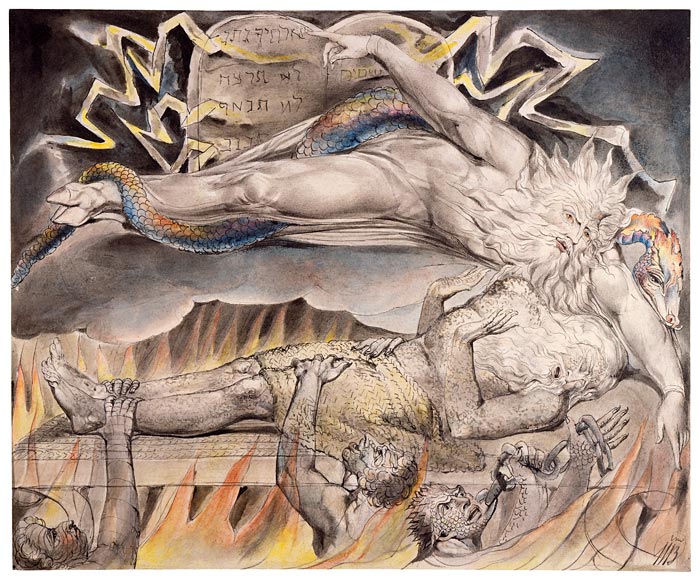
As Yépez has noted, Olson is an epistolary poet (The Empire of Neomemory, p. 11). Many of Olson’s works are written as letters. Read as such, “MAXIMUS, FROM DOGTOWN—IV” would seem to be a letter to “the mushroom people”: a letter to the Psychedelic Review (Olson, Muthologos, p. 185). The poet says as much during an interview that took place at his home in Gloucester in 1966. Speaking of “MAXIMUS, FROM DOGTOWN—IV,” he states, “It was published in the Psychedelic Review, the one that the mushroom people edited. I deliberately did it, by the way. They asked me for a poem ‘cause I’d been under the early experiments on the poets and the mushroom. And I deliberately gave them this” (185). Interestingly enough, however, the poem makes no mention of mushrooms, nor does it include any obvious or explicit nod to psychedelic experience. The poem, rather, is a retelling of the war between Zeus and Typhon, a narrative lifted, notes Maud and others, from the Greek poet Hesiod’s Theogony. Typhon is a demigod of sorts: a monstrous serpentine giant who attempted to overthrow Zeus for supremacy of the cosmos. Later traditions associate Typhon with the Egyptian god Set. Some also view him as a precursor of sorts to Milton’s Satan. The main question we’ll want to ask, then, is, “Why was Olson thinking about Typhon? And why did he think this retelling of the Typhon myth suitable for “the mushroom people”?

To begin to answer these questions, we need to reflect for a moment on where and how the mushroom people became the mushroom people. Leary first received word of the effects of psychedelic mushrooms from his friend, a researcher investigating the psychology of creativity named Frank Barron. The latter had learned about mushrooms in 1959, while interviewing a psychiatrist who was using and studying them in Mexico. Barron brought a batch back with him to Berkeley, where he tried them later that year. He then shared news of his experience with Leary. The latter was doubtful at first, until having a similar experience himself the following year in August 1960 during a visit to Cuernavaca. In both cases, the men are purchasing the mushrooms from curanderas or folk healers. Curanderas like the famous María Sabina, in other words, are the ones passing the mushroom along to Westerners. These curanderas transmit the seeds of psychedelic revolution to the West via a series of USAmerican intellectuals who, like tourists, spend time abroad vacationing in Mexico.

Charles Olson had made a similar journey a decade earlier — as did Beat writer William S. Burroughs. The latter went to South America in search of yagé, or what we now call ayahuasca. Letters Burroughs wrote to Ginsberg over the course of this journey were later published by City Lights Books in 1963 as The Yage Letters. One might profit by reading Burroughs and Ginsberg’s Yage Letters alongside Olson and Creeley’s Mayan Letters. For now, though, we must focus on Olson.

During a brief interval in his time at Black Mountain College, Olson and his wife Connie decided to spend the first five months of 1951 living in Lerma, a small fishing village in Campeche. Olson’s letters to the poet Robert Creeley during this time in Mexico became the substance of Mayan Letters, published in 1953. And in fact, one of the first uses of the term “postmodern” appears in a letter of Olson’s written to Creeley in August 1951, shortly after Olson’s time in Mexico. Here, in other words, is a poet whose encounters with Mexico contribute to the birth of the postmodern. Yet Olson’s use of the postmodern was far more expansive and ambitious than that of his successors. As George F. Butterick notes, Olson’s designation of his work as postmodern “serves not merely to advance beyond an outmoded modernism, but…seeks an alternative to the entire disposition of mind that has dominated man’s intellectual and political life since roughly 500 B.C.” (Butterick 5). Olson would go on to use the term again in print in a piece he wrote on November 4, 1952 titled “The Present is Prologue.” Marxist historian Perry Anderson refers to this piece, published in 1955, as the first to use “postmodern” in the sense of “an aesthetic theory linked to a prophetic history” — i.e., as “an agenda allying poetic innovation with political revolution” (The Origins of Postmodernity, p. 12). By the early 1960s, Olson began to manifest this agenda through his participation in the psychedelic revolution. Which returns us now to our main concern: the experiences themselves.

“MAXIMUS, FROM DOGTOWN—IV”

Upon recommendation by Ginsberg, Olson participated in two psychedelic drug sessions with the Leary crew at Harvard’s Center for Research in Personality in December 1960 and February 1961. Despite Olson biographer Ralph Maud’s insistence that “These are strictly peyote sessions,” Olson himself refers to them as mushroom trips, and the Leary crew’s experiments during this time revolved around jars of synthetic psilocybin pills that they’d derived from Sandoz Laboratories in Switzerland. My sense, then, is that we can assume that synthetic psilocybin is what Olson received during his sessions. Each of these sessions was, in the poet’s own words, “a true love feast and a truth pill” (Muthologos, p. 24). “The startling & unbelievable first impression of going under the mushroom,” he stated, “is that everyone & everything is nothing but itself so that all — everything — is therefore well, and there’s no push, there’s no fuss, there’s nothing at all to worry about, or press at, no sweat of any sort called for, it’s all too real and way beyond any attitude or seeking some greater or bigger answer” (Olson, as quoted in Conners 106). A few years later, as Maud notes, “Olson gave to the Psychedelic Review for its third issue (1964) his long “MAXIMUS, FROM DOGTOWN—IV” (160). Psychedelic Review was a journal published by members of the Leary crew from 1963 to 1971. Olson saved in his library the first four issues of the magazine. In what follows, I’ll attempt to show how, when read in light of where it was published, Olson’s poem reveals itself to be a commentary on psychedelic experience.

The Mushroom People

In the mid-twentieth century, two groups with competing agendas worked to introduce psychedelics into American society: the CIA, with its MK-Ultra program, on the one hand, and countercultural intellectuals, including famous authors like Aldous Huxley, on the other. Among this latter group of “psychedelic utopians,” we can include Huxley’s friend and fellow émigré Gerald Heard, as well as related figures like Timothy Leary, Ken Kesey, and Allen Ginsberg. By now, histories have been written about the efforts of both of these groups; but in accounts of the latter group in particular, what sometimes goes unmentioned or unrecognized was its explicitly utopian intent. After their first encounters with substances like mescaline, psilocybin, and LSD, many of the above-mentioned early users of these drugs felt compelled not just to pen statements of advocacy, as Huxley did in books like The Doors of Perception (1954) and his final novel Island (1962); most of them also rushed to form communes and related kinds of alternative, experimental foundations, schools, organizations, and institutions—among which we can include Esalen Institute, the White Hand Society, the Zihuatanejo Project, Millbrook, the Merry Pranksters, the League for Spiritual Discovery, the Brotherhood of Eternal Love, and others. However, unlike prior utopian projects that emphasized modifications either to property relations or to modes of governance, most of the organizations and communities mentioned above instead prioritized psychosexual deprogramming and the so-called “raising of consciousness” through mass ingestion of psychoactive substances as techniques essential to their goal of changing society for the good.

Although not as active as some of the figures I’ve mentioned above, Black Mountain poet Charles Olson was nevertheless an early, enthusiastic participant in one of these organizations in particular: namely, Leary and Ginsberg’s group, the White Hand Society. Poet Peter Conners tells the story of Leary and Ginsberg’s partnership in his book White Hand Society. The story begins, of all places, at Harvard. Leary and his colleague Richard Alpert (who later took the name “Ram Dass”) launched the series of experiments known as the Harvard Psilocybin Project beginning in 1960. Beat poet Allen Ginsberg was one of the first individuals to participate in this project. British psychiatrist Humphrey Osmond — known both for coining the term “psychedelic” and for administering the famed mescaline trip described by Huxley in The Doors of Perception — placed Ginsberg in contact with Leary after hearing the poet deliver a talk about his experiences with mescaline at a conference hosted by a Boston-based professional organization known as the Group for the Advancement of Psychiatry (Conners 62). After an initial exchange of letters and a visit by Leary to the poet’s East Village apartment in Manhattan, Ginsberg agreed to participate in a psilocybin session hosted at Leary’s home in Boston in November 1960.

Needless to say, Ginsberg reacted positively to the experience. He declared himself “the Messiah…come down to preach love to the world” (as quoted in Conners 84). “We’re going down to the city streets to tell the people about peace and love,” he proclaimed, trying to convince Leary and others to join him. “And then,” he added, “we’ll get lots of great people onto a big telephone network to settle all this warfare bit” (85). We may feel ourselves tempted to laugh at Ginsberg’s pronouncements, jaded as we are by the decades that followed — but these pronouncements were indeed prophetic. Ginsberg’s words made things happen. For telling people about peace and love was exactly what he and Leary went on to do in the years that followed. The two men bonded over the experience, and agreed afterwards to conspire together to turn on other creative types and thus aid in the dissemination of the psychedelic sacrament to others. Poring over the poet’s address book, Leary and Ginsberg chose individuals they thought might be open to participation in future experiments.

Among these contacts was Charles Olson.

The Labyrinth and the Light

We begin in the Labyrinth.

Not the labyrinth of mere confusion — but the labyrinth of myth, of force, of breath, of ancestral return. The labyrinth of Charles Olson’s Maximus, and specifically “MAXIMUS, FROM DOGTOWN—IV,” a poem written in the early 1960s, at the height of the first psychedelic renaissance.

This poem, published in the third issue of The Psychedelic Review in 1964, arrives to us like a cipher, a mythic communiqué, mailed from the ruins of a colonial commons, encoded in the voice of a poet who walked granite trails while recovering from chemical initiation.

It is, in many ways, a letter sent to the mushroom people.

This series of posts — fragments of an unfinished but now reawakened paper I began in Fall 2022 — seeks to interpret “DOGTOWN—IV” as a psychedelic poem, a theogonic composition shaped by Olson’s experiments with synthetic psilocybin during his sessions with Timothy Leary and the Harvard crew in 1960–61. But unlike the effusive trip reports of Beat writers like Allen Ginsberg or the utopian manifestos of Leary, Olson’s response to psychedelia is strange, mythological, and subterranean.

There are no rainbows in “DOGTOWN—IV.” No electric Kool-Aid. No declarations of ego-death.

What there is, instead, is a retelling of Hesiod’s myth of Typhon — the serpentine, fire-eyed, many-voiced monster birthed by Earth and Tartarus. Olson’s version is fragmented, gnarled, obscure. But it is also urgent, rooted, and alive.

So why this poem? Why Typhon? Why send such a myth to The Psychedelic Review, a journal edited by Leary’s cohort and read by initiates of a blossoming chemical counterculture?

To answer these questions, we must retrace the steps of Olson’s initiation.
We must follow the winding trails of Dogtown.
We must listen to the poet’s own words, spoken under the mushroom’s influence:

“The startling & unbelievable first impression of going under the mushroom… is that everyone & everything is nothing but itself… there’s nothing at all to worry about… no sweat of any sort called for… it’s all too real and way beyond any attitude or seeking some greater or bigger answer.”
(Olson, as quoted in Conners 106)

This is the tone of someone who’s touched the ineffable — and returned with it clenched not in his hand, but buried in his throat, transformed into breath.

In this series, I argue that “DOGTOWN—IV” is Olson’s mythopoetic response to the psychedelic experience — but one shaped by his unique cosmology, his investment in ancient myth, and his suspicion of liberal-progressive “trip culture.” While others turned on and tuned in, Olson turned downward — into Tartarus, into Chaos, into the pre-logos dark from which all things emerge.

This is not a dismissal of psychedelia. It is its deepening.

This series unfolds in seven movements, each exploring a facet of Olson’s relationship with myth, madness, and the mushroom. It is a metanastic walk through the labyrinth — a return through Olson’s theogony toward the real task of the poet: not to escape into light, but to make meaning from the dark. To say what is.

Like the desert mystics of yore, the poet’s role is to “keep the edges hot.”

This series begins at one such edge — where myth meets mushroom, where Hesiod meets Leary, where Olson, like Maximus, writes from the underworld back toward the surface.

Welcome to the labyrinth.
Let us walk it together.

Orpheus in Hades’ Lounge

There’s a parking, a journeying outward. Up and out we launch past West End Mill Works, off on tonight’s adventure, beginning with an evening stroll. Graffiti marks the spot. Stream to one side of us, water rushing over rocks. Spotify shifts from Steely Dan’s “King of the World” to Jan Hammer Group’s “Don’t You Know,” voices and cars in the distance. Looking both ways, we cross the street and rush down onto a shaded path through a nearby park, crickets singing in parallax with Neil Young’s “Computer Age.” We turn off the song and continue for a moment in silence. Upon arrival to a crossroads, we ask of each other (like Ginsberg to Whitman in Ginsberg’s “A Supermarket in California”), “Which way now?” Looking up, we rise and step proudly toward pink clouds. Conversation turns toward Old & Used Books as we pass a graffiti-clad muffler shop. Bulldog with paintbrush arrives as comic relief — reality for a moment a goofy animal fable whodunit. We grab beers as day turns to night. Ginsberg’s “lights out” reverberates, hangs in the air after us having heard earlier in the day Let’s Active’s “Orpheus in Hades’ Lounge,” featuring hometown hero Mitch Easter.

Can Orpheus be told anew? We recall to each other the character’s many forms. Jean Cocteau’s Orpheus (1950), Marcel Camus’s Black Orpheus (1959). Also Jean-Paul Sartre’s essay of that name. And let us not forget Samuel R. Delany’s Lo Lobey, the Orphic protagonist at the heart of Delany’s 1967 novel The Einstein Intersection. Hoots is a Hades’ Lounge, is it not, with its red light hanging above its corner booth? So we think as we drink, glorying finally in each other’s presence. “What would happen if our Time Traveler were to stage the scene again?” wonders the Narrator, listening alone now, seated at the same booth many months hence. With “King of the World” still fresh in our ears, members of Steely Dan singing, “No marigolds in the promised land; there’s a hole in the ground where they used to grow,” we restate the refrain of Jan Hammer Group’s “Don’t You Know.” Amid Orpheus wailing away on his flute come the words, “You’re to know that I love you. You’re to know that I care.”

Thursday May 13, 2021

Secret history: like the one Greil Marcus tracks in Lipstick Traces. That’s what a friend sees me working toward in these trance-scripts. The “Gnostic” in me is drawn to the detective role entailed by such a tale: the “postmodern sleuth” who explores the maze of the contemporary, ever-skeptical of the machinations of the simulation, the Spectacle, the construct. The Gnostic responds to History with cosmic paranoia. History is a Text upon which one exercises an hermeneutic of suspicion. Or in the best versions of Gnosticism, as in the work of philosopher Ernst Bloch, an hermeneutic of hope, with dream or Imagination the absent Messiah deconcealing itself across time. The conservative philosopher Eric Voegelin warns that hope of this sort prompts a reckless utopianism, a desire to “immanentize the eschaton.” For a Christian like Voegelin, the eschaton is a day of judgment, whereas for the Gnostic, it’s the resurrection into joy and the dawn of a New Age. The Catholic trembles while the Gnostic revolts. I think of Allen Ginsberg on the back cover of his book Kaddish, asserting the “triumphancy of Self over the mind-illusion mechano-universe of un-feeling Time.” By “Self,” Ginsberg means the defenseless, open, original self we all share in common, not the mere individual of liberal ideology, the monad disaggregated from the whole. Time is revealed as mind-illusion as we conduct our secret history. Events share affinities and those affinities arrange themselves into stories. The best Gnostics are the ones who become bricoleurs.

Saturday October 3, 2020

We gathered in a circle, some of us in chairs, others of us on blankets, on a sunny afternoon, celebrating a friend’s 40th birthday. It’s a lovely day — quality time with friends, all of us pleased to be together, laughing, telling stories, sharing observations and enthusiasms. Afterwards, I reflect upon Allen Ginsberg’s centering of Carrie Nation in the midst of the vortex in his antiwar poem “Wichita Vortex Sutra.” Nation was a temperance zealot. She ran around cities like Wichita attacking alcohol-serving establishments with a hatchet in the decades prior to Prohibition. I recall there being a straightedge band named after her in the 1990s, as well as a fictional band in Russ Meyer’s 1970 film Beyond the Valley of the Dolls. Is Ginsberg suggesting that Prohibition birthed Vietnam? What is a vortex? In his 1914 essay “Vortex,” modernist poet Ezra Pound described the latter as “the point of maximum energy.” But of course, Pound was a fascist. Is his essay one we need to read to understand Ginsberg? It’s a modernist manifesto, one that launched the short-lived movement known as Vorticism. (British fascist Wyndham Lewis is the other major figure linked with the movement.) Pound was obsessed with “race” and “race-memory” and attacked hedonism. Yet he’s widely considered one of the most influential poets of the twentieth century. The “Vortex” essay ends with a quote from Pound’s lover and contemporary, the modernist poet H.D. The latter is a curious figure, for sure. H.D. experienced “visions,” sought treatment from Sigmund Freud, and dabbled in the occult. For further discussion of H.D.’s interest in the latter, see Matte Robinson’s book The Astral H.D.: Occult and Religious Sources and Contexts for H.D.’s Poetry and Prose.

Sunday September 20, 2020

Here I am once again reading Allen Ginsberg’s “A Supermarket in California,” a poem I’ve been reading for most of my adulthood. Today, though, is the first time I see the supermarket through which the poet wanders as both sacred and profane: a supermarket of neon and concrete, certainly, but also a supermarket of the spirit. Ginsberg wanders amid Whitman’s “enumerations” and “penumbras,” the catalogued universe of American consumerism — but he dwells there with his ancestors, in an afterlife like the one imagined by the ancient Greeks. Whitman is addressed and invoked throughout the poem. Ginsberg questions him as if Whitman were an American Virgil leading Ginsberg through the inferno of the American Century. The poem travels from the bright light of the new postwar supermarket to a lonely American night. The Spanish poet Federico García Lorca shops here, too, apparently. Ginsberg wonders what Lorca was doing there “down by the watermelons.” Lorca was executed by fascists during the Spanish Civil War. Ginsberg follows these figures, though he also imagines in a somewhat paranoid manner that he himself is being followed or trailed by “the store detective,” as if the poet were a character in one of the era’s films noir. All of this thinking occurs on the night of a full moon. It’s a “weird” poem, is it not? Weird as in the way Erik Davis uses the term in his book High Weirdness. The supermarket is as much in Hades as it is in California. I read it now while tending a small fire in a fire-pit in my backyard. Whitman seems dismayed by the country’s development in the half-century since his passing. The “lonely old grubber,” who always said he was immortal, appears in the poem eyeing and questioning the grocery boys. “Who killed the pork chops?” he asks. “What price bananas? Are you my Angel?” The questions suggest confusion, suspicion, bewilderment, and indignation. Why do we find ourselves in this world, he seems to be asking, rather than “the lost America of love,” the one we dream? Why, though, does the poem end beside the waters of Lethe? Perhaps that is where the poet locates America spiritually and psychogeographically.

Saturday August 8, 2020

Pantheism is a condition of democracy, is it not? Athens is a many-voiced cosmos. I imagine it would be a condition of any polis built atop slavery and conquest, no matter the imperial ambitions of passing and changing monotheocratic regimes throughout history. Even “secular” states, monotheocratic in their own right, possess those who believe in angels, demons, spirits, ghosts, ancestors. Western rationalism demands adherence to a realism that denies these realities. The West imagines itself to be superior — more “Enlightened.” It brandishes its weapons and says “Might Makes Right.” Police keep a bloody peace, the latter maintained through ritualistic violence. The poet Allen Ginsberg recognized this; America worships a bloodthirsty god — a god like Moloch, the deity denounced in the second section of Ginsberg’s “Howl.” Yet rebellion persists; people rise up, riot, live communally, wage culture war, reclaim land. To win, we must ease the Other’s fears so as to prevent further violence.