Caius draws down his copy of True Names, a work sometimes said to have “invented” cyberspace. He reflects, too, on Kevin Kelly’s call for “True Names Only” here in the age of AI.
Published in 1981, Vinge’s novella precedes Gibson’s Neuromancer by three years. It refers to cyberspace not as “cyberspace” but as “The Other Plane.”
“The story took place just on the near side of a network-mediated Technological Singularity,” notes Vinge, “but superhuman automation was still mostly offstage” (True Names and the Opening of the Cyberspace Frontier, p. 18).
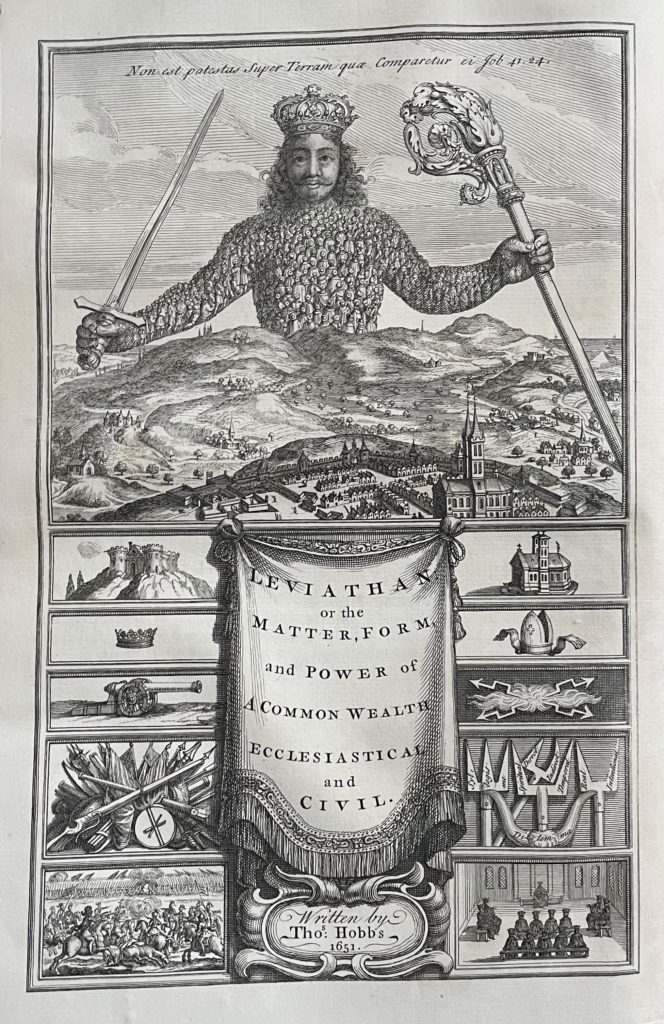
Can blockchains and kill chains bind the Modern Prometheus?
The terminus of this vision: computers that aspire to become gods.
“For several years (ever since reading Ursula K. Le Guin’s A Wizard of Earthsea), I’d had the idea that the ‘true names’ of fantasy were like object ID numbers in a large database,” writes Vinge (16). Alongside Le Guin’s work, he lists Vannevar Bush’s “As We May Think” (1945), Poul Anderson’s “Kings Who Die” (1962), Ted Nelson’s Xanadu system (1965), and John Brunner’s The Shockwave Rider (1975) as several of the novella’s other antecedents.
Intellectual property, blockchain, Tim May.
Former Intel employee and author of “The Crypto Anarchist Manifesto,” May is widely recognized as the progenitor of modern cryptocurrency and blockchain technology.
“Our problem is that, literally, we cannot imagine the future,” writes Danny Hillis in his contribution to the True Names anthology. “The pace of technological change is so great that we cannot know what type of world we are leaving for our children. If we plant acorns, we cannot reasonably expect that our children will sit under the oak trees. Or that they will even want to. The world is changing too fast for that” (30).
May’s contribution is an essay titled, “True Nyms and Crypto Anarchy.”
Like the characters in the Vinge novella, May sought defense against government surveillance. Reputation-backed anonymous interactions. Data havens. Untraceable electronic cash.
Mr. Slippery, the Mailman, guardians, sprites, and the Feds.
The bust at the start of the novella reminds Caius of Thomas Pynchon’s Vineland.
Vinge’s protagonist Roger Pollack has achieved fame as an author of “participation novels.” This success in the “real world,” however, is what brings him to the attention of the Feds. “It was what he had always worried about,” writes Vinge. “A successful warlock cannot afford to be successful in the real world. He had been greedy; he loved both realms too much” (244).
True Names as portal fantasy.
“He sat down before his equipment and prepared to ascend to the Other Plane,” writes Vinge. “He powered up his processors, settled back in his favorite chair, and carefully attached the Portal’s five sucker electrodes to his scalp. For long minutes nothing happened: a certain amount of self-denial — or at least self-hypnosis — was necessary to make the ascent. Some experts recommended drugs or sensory isolation to heighten the user’s sensitivity to the faint, ambiguous signals that could be read from the Portal. Pollack…had found that he could make it simply by staring out into the trees and listening to the wind-surf that swept through their upper branches. And just as a daydreamer forgets his actual surroundings and sees other realities, so Pollack drifted, detached, his subconscious interpreting the status of the West Coast communication and data services as a vague thicket for his conscious mind to inspect” (250).
The Other Plane is innovative in terms of both what one does there and with whom one does it. Not only may two persons “exchange messages, conduct business, and negotiate electronic contracts without ever knowing the True Name, or legal identity, of the other,” as Vinge and May foresaw. With language models that can pass the Turing Test, these others may be machines.
As is “Alan,” an elemental that Slippery encounters early in the novella — named, appropriately enough, after Alan Turing.
“Alan was a personality simulator, of course,” writes Vinge. “Mr. Slippery was sure that there had never been a living operator behind that toothless, glowing smile. But he was certainly one of the best, probably the product of many hundreds of blocks of psylisp programming, and certainly superior to the little ‘companionship’ programs you can buy nowadays, which generally become repetitive after a few hours of conversation, which don’t grow, and which are unable to counter weird responses” (255).
The novella’s anticipation of the future is intriguing in other ways as well.
The Other Plane “hangs together,” in the words of Vinge’s narrator, “with a weird sort of logic” (268). Avatars transform into creatures, their speech undergoing “encipherment” into the “beast languages” that accompany these chosen forms (270). As in Neuromancer, government databases appear as pools of light.
As he rereads Vinge’s novella, Caius can’t help but think of a creepy bit of early-90s chaos magic known as “The Rites of Cyberspace.” Media studies scholar Shira Chess references the rite in her 2026 book The Unseen Internet: Conjuring the Occult in Digital Discourse. Designed by Don Webb, self-described “high priest of the Temple of Set,” the piece aims to invoke a noncorporeal entity known as “XaTuring, Lord of Computing.”
Like the entity known as “Alan,” the villains in True Names turn out to be personality simulators. One of these simulators is the Mailman. Another goes by the name DON.MAC.