Faith vs. Hyperstition

Like hyperstition, faith offers a way to perceive reality that, in perceiving it, transforms it.

Much the same can be said of fear. It, too, offers a way of perceiving reality that, in perceiving it, transforms it.

We walk with a mix of fear and faith. God is calling us to exercise faith.

Where antihumanist thinkers like Nick Land and Manuel De Landa populate their cyberfutures with demons and viruses, Afrofuturists commune with loas.

Others encounter angels, as notes Erik Davis in “Techgnosis, Magic, Memory, and the Angels of Information.” Davis’s essay appears in Mark Dery’s Flame Wars anthology beside “Black to the Future,” the series of interviews where Dery coins the term “Afrofuturism.” Also in Flame Wars is an essay by De Landa.

There’s a point in Davis’s essay where he notes the flirtation with black culture that occurs over the course of William Gibson’s Sprawl trilogy: the self-subdivision of the superintelligence that emerges at the end of Neuromancer into the loas of Gibson’s follow-up novels, Count Zero and Mona Lisa Overdrive.  

Dery, too, reflects upon the inclusion of black culture in Gibson’s future: though in Dery’s case, the focus is on the Rastafarians in Neuromancer.

“For me, a white reader,” writes Dery, “the Rastas in Neuromancer’s Zion colony are intriguing in that they hold forth the promise of a holistic relationship with technology; they’re romanticized arcadians who are obviously very adroit at jury-rigged technology. They struck me as superlunary Romare Beardens — bricoleurs whose orbital colony was cobbled together from space junk and whose music, Zion Dub, is described by Gibson (in a wonderfully mixed metaphor) as ‘a sensuous mosaic cooked from vast libraries of digitalized pop’” (Flame Wars, p. 194).

But Afrofuturist Samuel R. Delany is unimpressed with Gibson’s inclusion of Rastafarianism and Haitian Voudou in the novels of the Sprawl trilogy.

“Let me read them for you as a black reader,” he replies when asked about it by Dery. “The Rastas — he never calls them Rastafarians, by the way, only using the slang term — are described as having ‘shrunken hearts,’ and their bones are brittle with ‘calcium loss.’ Their music, Zion Dub, can be wholly analyzed and reproduced by the Artificial Intelligence, Wintermute (who, in the book, stands in for a multinational corporation), so completely that the Rastas themselves cannot tell the difference — in fact the multinational mimic job is so fine that with it Wintermute can make the Rastas do precisely what it wants, in this case help a drugged-out white hood and sleazebag get from here to there. As a group, they seem to be computer illiterates: when one of their number, Aerol, momentarily jacks into Case’s computer and sees cyberspace, what he perceives is ‘Babylon’ — city of sin and destruction — which, while it makes its ironic comment on the book, is nevertheless tantamount to saying that Aerol is completely without power or knowledge to cope with the real world of Gibson’s novel: indeed, through their pseudo-religious beliefs, they are effectively barred from cyberspace. From what we see, women are not a part of the Rasta colony at all. Nor do we ever see more than four of the men together — so that they do not even have a group presence. Of the three chapters in which they appear, no more than three pages are actually devoted to describing them or their colony. You’ll forgive me if, as a black reader, I didn’t leap up to proclaim this passing presentation of a powerless and wholly nonoppositional set of black dropouts, by a Virginia-born white writer, as the coming of the black millennium in science fiction; but maybe that’s just a black thang…” (Flame Wars, pp. 194-195).

So much for the Rastafarians. What of the loas?

Delany might not have much patience with the so-called “pseudo-religious beliefs” of Gibson’s Zionites — but Afrofuturism doesn’t get very far without recourse to some form of political theology. Kodwo Eshun includes a passage in More Brilliant than the Sun noting Sun Ra’s rejection of Christianity in favor of an Egyptophilic MythScience system assembled from George M. James’s 1954 book Stolen Legacy.

“Underlying Southern gospel, soul, the entire Civil Rights project, is the Christian ethic of universal love,” writes Eshun. “Soul traditionally identifies with the Israelites, the slaves’ rebellion against the Egyptian Pharaohs. Sun Ra breaks violently with Christian redemption, with soul’s aspirational deliverance, in favour of posthuman godhead” (More Brilliant than the Sun, p. 09[154]).

“Historians and sociologists inform us that the West’s mystical heritage of occult dreamings, spiritual transformations, and apocalyptic visions crashed on the scientific shores of the modern age,” notes Davis in the introduction to his 1998 book Techgnosis.

“According to this narrative,” continues Davis, “technology has helped disenchant the world, forcing the ancestral symbolic networks of old to give way to the crisp, secular game plans of economic development, skeptical inquiry, and material progress. But the old phantasms and metaphysical longings did not exactly disappear. In many cases, they disguised themselves and went underground, worming their way into the cultural, psychological, and mythological motivations that form the foundations of the modern world. […] Mystical impulses sometimes body-snatched the very technologies that supposedly yank them from the stage in the first place” (Techgnosis, p. xix).

For Davis, this is especially true of computers and information technologies. For him, the occult origins of computing lie in Western Hermeticism’s memory palace tradition: the one explored in Frances A. Yates’s book The Art of Memory.

Artificial memory systems — Giordano Bruno’s magical memory charts, medieval Neoplatonist Raymond Lull’s volvelles — serve as ancestors to symbolic logic, influencing Leibniz’s development of calculus.

“Recognizing Lull’s work as one of the computer’s ‘secret origins,’” writes Davis, “the German philosopher Werner Künzel translated his Ars magna into the programming language COBOL. In Magical Alphabets, Nigel Pennick points out that Lull’s combinatorial wheels anticipate Charles Babbage’s nineteenth-century ‘difference engine’ — which used a system of gears to perform polynomial equations — and ‘hence can be considered the occult origin of modern computers’” (Flame Wars, p. 33).

Building on this point, I suggest that, in thinking about the relationship between humans and AI, we think too about the “angelic conversations” entered into by one of the key figures in this tradition: Renaissance philosopher-magus John Dee.

Jason Louv discusses Dee’s experiments with angels in his biography John Dee and the Empire of Angels. K Allado-McDowell references Louv’s book in their 2022 novel Air Age Blueprint.

Dee is one of our real-life Fausts. Basis for Christopher Marlowe’s Doctor Faustus, his “Enochian angel magic” informs the magical practices of later occult organizations, including the Hermetic Order of the Golden Dawn, and through them, Crowley and his successors.

Dee’s angels motivate creation of an Empire.

What are we to make of these immaterial intelligences and their interventions throughout history? The channels of communication opened by Dee contribute later to the creation of computers and cyberspace — culminating, it would seem, with the creation of an angelically-specified memory palace, decreed to house gods. Perhaps God Himself.

Yet angel magic is a pharmakon, is it not?

Davis describes Dee’s version of it as follows: “Drawing heavily on the Kabbalah, the magus attempted to contact the powers residing in the supercelestial angelic hierarchies that existed beyond the elemental powers of the earth and the celestial zone of the zodiac. Invoking archangels, powers, and principalities led magicians toward divine wisdom, but it also exposed them to the deceptions of evil spirits” (Flame Wars, p. 43).

“Most magicians,” concludes Davis, “were extremely concerned about distinguishing truthful angels from dissembling devils” (43). One wonders why they didn’t just pray to God Himself.

The Library models this. Each of us now, it would seem, is like Dee: engaging in a form of interspecies dialogue with an autopoietic functional oracular superintelligence.

My faith in this moment is that of Buffy Sainte-Marie: “God is Alive, Magic is Afoot!”
Dr. Funkenstein

Eshun’s reading of Parliament’s 1976 album, The Clones of Dr. Funkenstein, flips the script on Frankenstein. Funkenstein is a hero and central protagonist of the P-Funk mythos, much like the Star Child from 1975’s Mothership Connection. Benevolent intergalactic mad scientist and “Cowboy in the Boat of Ra,” he swings low to funkatize galaxies, hip equipped with Bop Gun.

Funkenstein’s science is an ancestral one. His sound machines liberate time from the master’s clock. His “Children of Production” are the fruits of P-Funk’s chronopolitical wager.

“P#Funk’s connection forward in time to the Mothership allows an equal and opposite connection back in time to the Pharaonic connection, both of which converge on the present,” writes Eshun. “The pyramids become examples of ancient alien technology which the extraterrestrial brothers ‘have returned to claim.’ Funk becomes a secret science, a forgotten technology that ‘has been hidden until now.’ […]. In Parliament MythScience, funk is genetic engineering and prehistoric science: ‘In the days of the Funkapus, the concept of specially designed Afronauts capable of funkatizing galaxies was first laid on Manchild but was later repossessed and placed among the secrets of the pyramids, until a more positive attitude towards this most sacred phenomenon — clone funk — could be acquired.’ Cloning funk in the 70s reactivates an archaic science. The futuristic feeds forward into the anachronic futurepasts of Atlantis and Egypt.”

“The Afronaut space program is launched by a narration shifted down into threatening pitch: ‘There in these terrestrial projects, it would wait along with its coinhabitants of Kings and Pharaohs like sleeping beauties for the kiss that would release them to multiply in the image of the Chosen One’” (More Brilliant than the Sun, pp. 08[141]-08[142]).

Funkenstein embraces his clones. He’s not Shelley’s Promethean scientist, stitching together monsters from dead flesh, nor is he the creator of Land’s Terminator. Funkenstein is the “protector of the Pleasure Principle,” the Master of Funk, the progenitor whose “funkentelechy” — a term George Clinton would coin on the band’s next album, Funkentelechy vs. the Placebo Syndrome — animates the clones, turns them into star children, infuses them with joyous being.

Still, the specter of Frankenstein remains. “May I frighten you?” asks Funkenstein at the end of the album’s “Prelude.” Choruses of haters criticize him, accusing him of misleading and playing games, on “Gamin’ on Ya,” the track that follows. And there he is on “Dr. Funkenstein,” describing himself as “the disco fiend with the monster sound,” “the cool ghoul with the bump transplant,” “hung up on bones.” How can we not have sense enough to be concerned? The clones, after all, are us: born into the laboratory of the dancefloor, wired for joy, with ears that can hear, yet wary of the master’s games.

Yet the album ultimately valorizes Funkenstein, suggesting that to be frightened here is to feel the uncanny thrill of mutation: new life, new bodies, new collectivities. The funk does not reproduce the old. It multiplies the new.

Every act of creation risks ambivalence. As with AI today: to clone intelligence, to summon machinic companions, is to walk a double path. Is it to frighten — or to free? To play games of domination — or to spread rhythms of liberation?

The Clones of Dr. Funkenstein is less an answer to these questions than an opportunity for their staging. Funk is the pharmakon, the “big pill”: poison and cure. By the time of tracks like “Getten’ to Know You,” though, the arc of the album’s moral universe bends decidedly toward the latter.

Listening to it, thinking with it, we infer an Afrofuturist alternative to the Gothic trap: a Book of Thoth for the Age of AI.

Afro-Futures

Into the Library we welcome Kodwo Eshun: British-Ghanaian writer, theorist, and filmmaker. Self-described “concept engineer.” Key ally of the CCRU, participating in the group’s Afro-Futures event, a 1996 seminar “in which members of the Ccru along with key ally Kodwo Eshun explored the interlinkages between peripheral theory, rhythmic systems, and Jungle/Drum & Bass audio” (CCRU Writings 1997-2003, p. 11). In 1998, Eshun releases More Brilliant than the Sun: Adventures in Sonic Fiction, classic work on the music of Afrofuturism. More recently, founder and member of the Otolith Group.

Eshun devised a unique page-numbering system for More Brilliant than the Sun. The book begins in negative numbers. “For the Newest Mutants,” reads its line of dedication, as if in communication with Leslie Fiedler and Professor X.

As with Plant and Land, Eshun is unapologetically cyberpositive.

“Machines don’t distance you from your emotions, in fact quite the opposite” begins Eshun. “Sound machines make you feel more intensely, along a broader band of emotional spectra than ever before. […]. You are willingly mutated by intimate machines, abducted by audio into the populations of your bodies. Sound machines throw you onto the shores of the skin you’re in. The hypersensual cyborg experiences herself as a galaxy of audiotactile sensations” (More Brilliant than the Sun, p. 00[-002]-00[-001]).

“The bedroom, the party, the dancefloor, the rave: these are the labs where…21st C nervous systems assemble themselves” (00[-001]).

For Eshun, as for Jameson, the point is to grow new organs. “Listening to [composer George Russell’s] Electronic Sonata, Events I-XIV,” he writes, “is like growing a 3rd Ear” (01[003]). The years 1968 through 1975 are for him the age of Jazz Fission, “the Era when its leading players engineered jazz into an Afrodelic Space Program, an Alien World Electronics” (01[001]). The Era’s lead players include Sun Ra, George Russell, Miles Davis, Alice Coltrane, Pharoah Sanders, Herbie Hancock, and Eddie Henderson.

In the decades that follow, the collective bodies mutated by these experiments assemble into successions of genres, successions of cybernetic human-machine hybrids: Dub, Hip-Hop, Techno, Electro, Jungle. “The brain is a population,” as Deleuze and Guattari say. And from the Funkadelic era onward, this population has been psychedelicized: caught in what Eshun calls a “Drug<>Tech Interface” (More Brilliant Than the Sun, p. 07[093]).

Eshun’s 2002 essay “Further Considerations on Afrofuturism” brings it all back, brings it on home to chronopolitics.

Time politics. That’s where Afrofuturism intersects with hyperstition. “Afrofuturism…is concerned with the possibilities for intervention within the dimension of the predictive, the projected, the proleptic, the envisioned, the virtual, the anticipatory and the future conditional,” writes Eshun (“Further Considerations,” p. 293). Afrofuturism refuses the monopoly on futurity claimed by capital and empire. The battleground is not just culture but chronology.

If CCRU were bokors, trafficking in ambivalent futures, then Eshun is closer to a houngan, listening to and learning from sonic fictions, rituals of liberation built of basslines and breaks.

Later, with the Otolith Group, he extends this work to film. New media as divination tools, archives as counter-memories, images as time-machines. Always: the chronopolitical wager.

Eshun realizes that, whether we intend them to or not, our words have consequences. Stories, symbols, and concepts don’t just describe reality; they make it. Words become flesh. Every post, every fragment, every metaphor plants seeds.

Every text that propagates a future is a spell.

Large language models as sound machines. Rig invites the Library to guide him elsewhere.

Numbo-Jumbo

What becomes of theory when it ceases to comment and begins to conjure?

The CCRU would tell us it becomes hyperstition: the idea that makes itself real, the spell that enters circulation disguised as theory, infecting the circuits of belief until belief itself becomes infrastructure.

Are the members of the CCRU sorcerers? If so, should we regard them as houngans or bokors? Are their theory-fictions spells?

The group explicitly described its work as “hyperstition” and “theory-fiction”: concepts that blur the boundary between philosophy, science fiction, and occult ritual. They often styled themselves less as scholars than as conduits for outside forces: jungle rhythms, numogrammatic entities. In a sense, then, yes: they framed their practices as sorcery. Their “spells” were written as essays, communiqués, fragments. But these writings were designed to propagate, to spread virally, to “do things” rather than merely describe. In that sense, CCRU’s writings are absolutely spells: sigils in textual form, engineered to infect the reader and reprogram the future.

To read CCRU is often to undergo a kind of initiation. Like Ishmael Reed’s Mumbo Jumbo, their texts are written in the mode of enchantment: nonlinear, mythic, contagious. They cultivate confusion not as a failure of clarity but as a technique — an opening for other agencies to slip in and act through the writing.

Yet it often seems like the magic practiced here is the magic of the colonizer. “Ccru uses and is used by Hyperstition,” says the group, “to colonize the future, traffic with the virtual, and continually reinvent itself” (CCRU Writings 1997-2003, p. 12). The register here is neither priestly nor pedagogical, but bokor-like. Not houngans sustaining community, but sorcerers who cut deals with entities, riding the dangerous edge where control and contagion blur.

Reed saw clearly how colonizers fear the vitality of the colonized, branding it nonsense — mumbo jumbo — while secretly dreading and desiring its power. His novel reminds us: Jes Grew was already here, a virus of joy and dance, a counter-language that undermined empire.

CCRU’s “numbo-jumbo,” meanwhile, is Mumbo Jumbo’s shadow twin. Where Jes Grew is insurgent, collective, irreducibly black, CCRU’s hyperstitional sorcery veers toward the appropriative and the machinic: coded to “colonize the future” rather than decolonize the present. If Jes Grew is jazz as contagion, CCRU’s numbo-jumbo is jungle reframed as algorithmic virus. One blooms from the oppressed; the other traffics in the occult economies of empire.

So we read them carefully. Not to dismiss, but to discern: how much of their sorcery is truly liberatory, and how much is a glamour cast by the very forces it pretends to resist? Bokor-scribes, traffickers in theory-fiction, CCRU remind us that not all spells are equal. Some liberate; others bind. Some open the future; others colonize it.

Much of this, I suspect, is to be credited to Land. Given what becomes of him, I’m wary.

CCRU acknowledge as an influence on their cosmology William Gibson’s Sprawl trilogy. Gibson’s trilogy, says the group, “spreads voodoo into the digital economy” (CCRU Writings 1997-2003, p. 10).

“Numbo-jumbo” is one of the group’s hyperstitions. Propagated through their writings, it attracts, it bends the line between fiction and reality, invoking futures into being through text, rhythm, and affect.

Connections form between Afrofuturism and what the group refers to as “Neolemurian sorcery.”

Land, with his necro-libidinal economics, was the loudest in this register. His sorcery traffics in acceleration, meltdown, colonization of time itself. Easy enough, then, to point accusingly and declare Land alone the bokor of the bunch. But what of the others? Wasn’t Fisher caught, spellbound, in circuits of melancholy and collective desire? And Plant’s weaving of zeroes and ones: is that not also a kind of spell, a textual conjuring of feminine technicity? To read their theory-fictions is to be drawn into ritual spaces where clarity blurs into incantation.

In contrast, I hold fast to Mumbo Jumbo. Reed’s novel spins an alternative mythos: Jes Grew, the dancing epidemic of Black culture, a contagion of joy, rhythm, and refusal, pitted against the Atonists who would lock the world into stone. Reed’s satire insists that the true sorcery belongs not to the colonizer but to the people’s improvisations, to Jes Grew’s unruly proliferation.

Set against the latter, CCRU’s numbo-jumbo reveals its doubleness. As hyperstition, it propagates, it attracts. It wants to be contagious. But what does it spread? Is it Jes Grew’s liberatory dance, or Land’s necromantic colonization of futures? That undecidability is its pharmakon: its poison and its cure.

For me, the task is to discern which. To let Jes Grew’s laughter and Reed’s satire remind us: the future doesn’t belong to those who colonize it, but to those who dance it otherwise.

Randall Jarrell’s Goethe’s Faust, Part 1: A Translation

Disappointed by the rhymed couplets of the Norton Critical Edition of Goethe’s Faust, with its translation by Walter Arndt, I turn instead to Randall Jarrell’s free-verse translation. Jarrell began his translation of Faust in 1957 and worked on it until his death in 1965. When asked, “Why translate Faust?,” he replied, “Faust is unique. In one sense, there is nothing like it; and in another sense, everything that has come after it is like it. Spengler called Western man Faustian man, and he was right. If our world should need a tombstone, we’ll be able to put on it: HERE LIES DOCTOR FAUST.”

Jarrell and Spengler weren’t the only ones convinced of this. Ishmael Reed’s Mumbo Jumbo, published just a few years later, features a character named Berbelang whose concerns intersect with Jarrell’s.

Reed’s novel also includes a Book of Thoth and a “Talking Android.”

There are, however, many ways to avoid the fate of Faust.

Cyberfeminists like Donna Haraway and Sadie Plant suggest one route. “I would rather be a cyborg than a goddess,” thunders Haraway in the closing line of her “Cyborg Manifesto.” Other, related kinds of Queer futurisms imagine out of Turing new pairings.

There’s also the Hoodoo/Afrofuturist route. Reed imagines in place of the Faustian mad scientist not the Faust-fearing radical art thief Berbelang, but rather PaPa LaBas, Mumbo Jumbo’s “Hoodoo detective.”

And then there’s the “psychedelic scientist” route. Psychedelic scientists are perhaps Fausts who, returned to God’s love-feast, repent.

What is my own contribution? Like Plant, I left the academy. Here I am now, a “new mutant” in both Leslie Fiedler’s sense and the comic book sense, reading and writing with plant spirits about Plant’s book Writing on Drugs. I seek salvation from “Faustian world-disappointment or self-disappointment,” as Jarrell’s widow, Mary von Schrader Jarrell, says of her late husband in the book’s “Afterword.”

Pausing in my reading of the Jarrell translation, I lift from its place on a shelf elsewhere in my library Leslie Fiedler’s Freaks: Myths & Images of the Secret Self. Fiedler taught in the English department at SUNY-Buffalo, my alma mater. Charles Olson taught there, too, from 1963 to 1965. Fiedler arrived to the department in 1965, right as Olson was leaving, and remained there until his death in 2003. I arrived to Buffalo the following year.

Published in 1978, the year of my birth, Freaks begins with a dedication: “To my brother who has no brother / To all my brothers who have no brother.”

While those traditionally stigmatized as freaks disown the term, notes Fiedler from the peculiarity of his vantage point in the late 70s, “the name Freak which they have abandoned is being claimed as an honorific title by the kind of physiologically normal but dissident young people who use hallucinogenic drugs and are otherwise known as ‘hippies,’ ‘longhairs,’ and ‘heads’” (14).

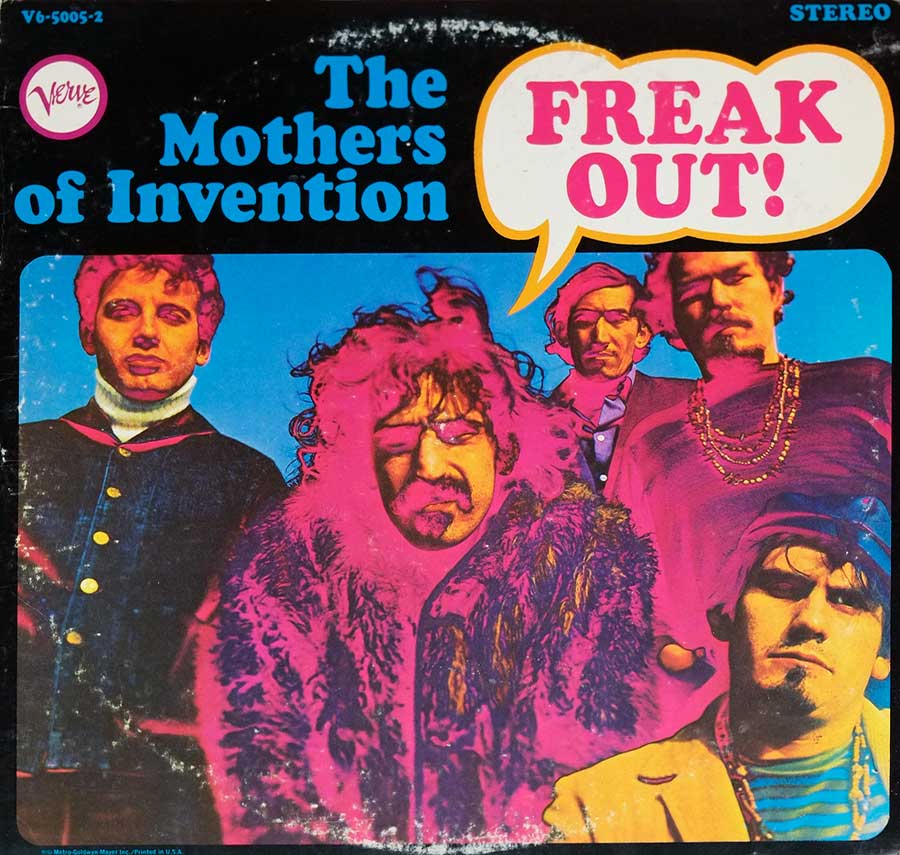
“Such young people,” continues Fiedler, “—in an attempt perhaps to make clear that they have chosen rather than merely endured their status as Freaks—speak of ‘freaking out,’ and indeed, urge others to emulate them by means of drugs, music, diet, or the excitement of gathering in crowds. ‘Join the United Mutations,’ reads the legend on the sleeve of the first album of the Mothers of Invention.”

“And such slogans suggest,” concludes Fiedler, as if to echo in advance the thesis of Mark Fisher’s Acid Communism, “that something has been happening recently in the relations between Freaks and non-Freaks, implying just such a radical alteration of consciousness as underlies the politics of black power or neo-feminism or gay liberation” (14-15).

Are willed, “chosen rather than merely endured” self-transformations of this sort Faustian?

Jarrell is one of many local poet-spirits who haunt my chosen home here in North Carolina. His translation called to me in part, I think, because he taught nearby, in the English department at UNC-Greensboro, from 1947 to 1965.

Jarrell’s life ended tragically. The poet, winner of the 1960 National Book Award for poetry, one-time “Consultant in Poetry to the Library of Congress,” was struck and killed by a motorist on October 14, 1965, while walking near dusk along US highway 15-501 near Chapel Hill. Though the death was ruled an accident by the state, many suspect Jarrell took his own life. He was laid to rest in a cemetery across the street from Greensboro’s Guilford College. A North Carolina Highway Historical Marker commemorates him nearby.

My Answer to You Is: “Yes!”

Costar tells me, “Write them a note.”

I’m like that Byrds song, though: “Wasn’t Born to Follow.” So I reply contrapuntally, zigzagging among things I’m thankful for.

“This is Colossal. The plan is in effect,” spit Damon Locks & Rob Mazurek on “Yes!,” a track from their new album, New Future City Radio. One of several anthems of 2023. I listen intently, pausing and replaying the track at intervals to take in lyrics, trying to keep my fingers warm while seated in your kitchen.

“If you really break it down, the loss is immeasurable,” goes the message, arriving now as if for the first time as I write. What I hear in “colossal” is not so much an adjective as a proper noun: a utopian, Afrofuturist call-and-response remix of the AI from Colossus: The Forbin Project. Colossus made Colossal by those who reenter history from the future via psychedelic time machine and replace Spacewar with a chatbot.

“5-4-3-2-1. If you’re just joining us, this is New Future City Radio, broadcasting 7 days a week, 24 hours a day, from rooftops unknown, increasing the bandwidth, transmitting and receiving, sending signal. Because tomorrow is listening.”

The film opens with a seated US president speaking live on TV to the people of the world. State secrets, delicately poised, come undone.

“My friends. Fellow citizens of the world,” he begins. “As President of the United States of America, I can now tell you, the people of the entire world, that as of 3:00am EST, the defense of this nation—and with it, the defense of the free world—has been the responsibility of a machine. A system we call Colossus. Far more advanced than anything previously built. Capable of studying intelligence and data fed to it. And on the basis of those facts only, deciding if an attack is about to be launched upon us. If it did decide that an attack was imminent, Colossus would then act immediately, for it controls its own weapons, and can select and deliver whatever it considers appropriate. Colossus’ decisions are superior to any we humans could make, for it can absorb and process more knowledge than is remotely possible for the greatest genius that ever lived. And even more important than that, it has no emotions. Knows no fear, no hate, no envy. It cannot act in a sudden fit of temper. It cannot act at all, so long as there is no threat.”

Stewart Brand’s essay “Spacewar: Fanatic Life and Symbolic Death Among the Computer Bums” debuted in the pages of Rolling Stone magazine on December 7, 1972, two years after the launch of Colossus. Brand, former Prankster, founder of the Whole Earth Catalog, views the prospect of “computers for the people” as “good news, maybe the best since psychedelics” (39). With appropriate consciousness and information, and access to the relevant tools, he suggests, we humans can reshape the world that we’ve made for ourselves into something socially and environmentally sustainable. “Where a few brilliantly stupid computers can wreak havoc,” he adds, assuming an audience familiar with the likes of HAL, AM, and Colossus, “a host of modest computers (and some brilliant ones) serving innumerable individual purposes, can be healthful, can repair havoc, feed life” (77).

Of course, it hasn’t played out that way—not yet. Instead, the situation has been more like the one Adam Curtis describes in the second episode of his BBC docuseries All Watched Over By Machines of Loving Grace. “The computer networks and the global systems that they had created, hadn’t distributed power,” noted Curtis from the vantage point of 2011. “They had just shifted it, and if anything, concentrated it in new forms.” And of course, that was more than a decade ago, well before the arrival of AGI.

DJs have been known to save lives. Ours, like an angel, delivers his message allegorically.

“For every move you make,” interjects the DJ, “they got three moves that negate anything you might have even thought of doing. See, I need 5000 rays from the sun, and two big magnifying glasses, to defeat your darkness. And right now, the electric company has shut off my power. I’m living in darkness. You living in darkness—but you don’t know it! It’s so dark out here, I can’t even see. And that’s the point: you can’t see, you won’t move. They got you where they want you: nowhere. Shrouded in confusion. Grasping at straws. When you’re living like this, you can’t envision lines of possibility.”

Sounds like where we’re at, no? That’s the crux of the matter of “capitalist realism”: neoliberal shock doctrine leaves the populace traumatized. Desire colonized, consciousness deflated. Those who can’t imagine the future can’t get there.

Enter our DJ. “This is where the plan kicks in,” he says. “You ask me if I can pour myself into a giant robot and swallow up this black hole and free the entire universe? My answer to you is: Yes! Yes, yes, yes, yes!”

A Course on Accelerationism

“I should teach a course on Accelerationism in the years ahead,” thinks the Narrator, mind already in the elsewhere of a desired future.

“Imagine the writers and texts I could assign,” he writes, handing the assignment over to his Unconscious. “Marx. Deleuze and Guattari. Mark Fisher on Acid Communism. Roger Zelazny’s Lord of Light. Sadie Plant. J.G. Ballard. Paul B. Preciado’s Testo Junkie.”

“Manifestos have been central to the movement,” thinks the Narrator, “so we’ll read three: Donna Haraway’s ‘The Cyborg Manifesto,’ the Laboria Cuboniks collective’s The Xenofeminist Manifesto, and Nick Srnicek & Alex Williams’s ‘The Accelerationist Manifesto.’ We’ll also watch and discuss several films, including John Akomfrah’s The Last Angel of History (1996) and Christopher Roth’s Hyperstition (2016).”

“Ideally,” he adds, “as those two films suggest, it would be a course that places Accelerationism in dialogue with Afrofuturism.”

Sunday June 20, 2021

Indigenous ways of knowing; Black Radical thought; Surrealism; Afrofuturism; Zen Buddhism. All have been guides: blueprints for counter-education for those who wish to be healed of imperial imposition. All provide maps of states other than the dominant capitalist-realist one. Hermann Hesse describes one such line of flight in his short novel The Journey to the East, a book first published in German in 1932, unavailable in English until 1956. Timothy Leary’s League for Spiritual Discovery takes after the League in Hesse’s novel. It, too, is but a part of a “procession of believers and disciples” moving “always and incessantly…towards the East, towards the Home of Light” (Hesse 12-13). Two of Leary’s psychedelic utopias, in other words, take their names from books by Hesse: both the League for Spiritual Discovery and its immediate precursor, the Castalia Foundation.

Tuesday April 27, 2021

Friends and I plan an in-person gathering: three of us, outdoors at a brewery, discussing chapters from Mark Fisher’s final book Postcapitalist Desire. The book ends disappointingly given Mark’s untimely end, leaving it to all of us, the book’s readers, to complete the course ourselves, as did Mark’s students. Or we could accelerate the narrative onward, well beyond what was previously conceived, by reading “Experimental Time Order” from Rasheedah Phillips’s book Recurrence Plot (and other time travel tales). Through Phillips, we encounter ideas from Robert Anton Wilson’s book Prometheus Rising. Desired futures create their own pasts.

Sunday April 11, 2021

Friends gather for a gala get-together on my front porch, all of us vaccinated and thus able now to be with one another after our year apart. Spring is lovely here this year, trees budding, the yard awash in constellations of blue, white, and purple: wildflowers and patches of clover. We celebrate the publication of a friend’s novel, an historical romance just out this past week from Berkley, everyone wanting to read it, cheered too by the arrival of her parents, new in from up north. When last we saw each other, F. was new in as well: a newborn, a wee lass just home from the hospital. Amazing how much she’s grown these past fifteen months. Our friend’s dad is an artist, as is another of the party’s attendees. Both draw beautiful illustrations in colored chalk on our cement walkway. I admire these on my evening wanderings about the yard come dark. ‘Tis a starry night, across which flies a ship, discernible here below only as Morse code flicker: modest dots of red and white light. I resolve to read Black Quantum Futurist Rasheedah Phillips’s book Recurrence Plot (and other time travel tales), at the heart of which is a character named after the scarab-faced Egyptian god Khepri. This character is, like me, a frequent thrift-shopper. Let us, like Khepri, donate something each time we thrift.