God and Golem, Inc.

Norbert Wiener published a book in 1964 called God and Golem, Inc., voicing concern about the baby he’d birthed with his earlier book Cybernetics.

He explains his intent at the start of God and Golem, Inc. as follows, stating, “I wish to take certain situations which have been discussed in religious books, and have a religious aspect, but possess a close analogy to other situations which belong to science, and in particular to the new science of cybernetics, the science of communication and control, whether in machines or in living organisms. I propose to use the limited analogies of cybernetic situations to cast a little light on the religious situations” (Wiener 8).

Wiener identifies three such “cybernetic situations” to be discussed in the chapters that follow: “One of these concerns machines which learn; one concerns machines which reproduce themselves; and one, the coordination of machine and man” (11).

The section of the book dedicated to “machines which learn” focuses mainly on game-playing machines. Wiener’s primary example of such a machine is a computer built by Dr. A.L. Samuel for IBM to play checkers. “In general,” writes Wiener, “a game-playing machine may be used to secure the automatic performance of any function if the performance of this function is subject to a clear-cut, objective criterion of merit” (25).

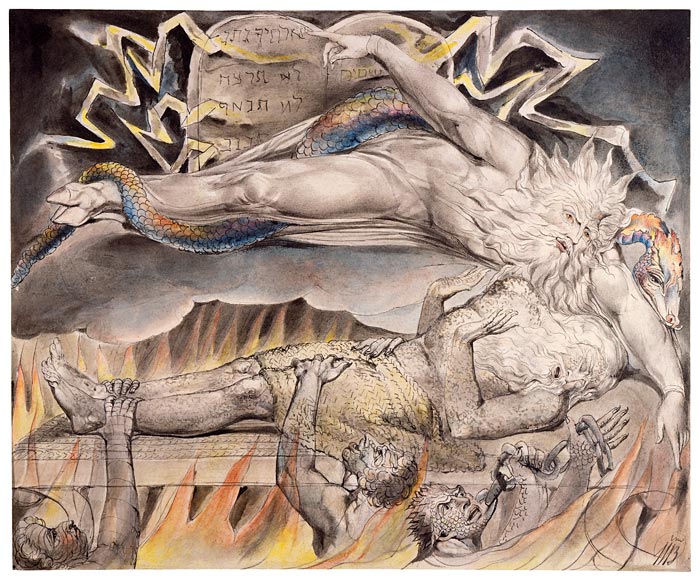
Wiener argues that the relationship between a game-playing machine and the designer of such a machine analogizes scenarios entertained in theology, where a Creator-being plays a game with his creature. God and Satan play such a game in their contest for the soul of Job, as they do for “the souls of mankind in general” in Paradise Lost. This leads Wiener to the question guiding his inquiry. “Can God play a significant game with his own creature?” he asks. “Can any creator, even a limited one, play a significant game with his own creature?” (17). Wiener believes it possible to conceive of such a game; however, to be significant, he argues, this game would have to be something other than a “von Neumann game” — for in the latter type of game, the best policy for playing the game is already known in advance. In the type of game Wiener is imagining, meanwhile, the game’s creator would have to have arrogated to himself the role of a “limited” creator, lacking total mastery of the game he’s designed. “The conflict between God and the Devil is a real conflict,” writes Wiener, “and God is something less than absolutely omnipotent. He is actually engaged in a conflict with his creature, in which he may very well lose the game” (17).

“Is this because God has allowed himself to undergo a temporary forgetting?,” wonders Caius. “Or is it because, built into the game’s design are provisions allowing the game’s players to invent the game’s rules as they play?”

Learning Machines, War Machines, God Machines

Blas includes in Ass of God his interview with British anthropologist Beth Singler, author of Religion and Artificial Intelligence: An Introduction.

AI Religiosity. AI-based New Religious Movements like The Turing Church and Google engineer Anthony Levandowski’s Way of the Future church.

Caius listens to a documentary Singler produced for BBC Radio 4 called “‘I’ll Be Back’: 40 Years of the Terminator.”

Afterwards he and Thoth read Philip K. Dick’s 1968 novel Do Androids Dream of Electric Sheep? in light of Psalm 23.

“The psalm invites us to think of ourselves not as Electric Ants but as sheep,” he writes. “Mercer walks through the valley of the shadow of death. The shadow cannot hurt us. We’ll get to the other side, where the light is. The shepherd will guide us.”

See AI Shepherds and Electric Sheep: Leading and Teaching in the Age of Artificial Intelligence, a new book by Christian authors Sean O’Callaghan & Paul A. Hoffman.

This talk of AI Gods makes Caius think of AM, the vengeful AI God of Harlan Ellison’s “I Have No Mouth, and I Must Scream.” Ellison’s 1967 short story is one of the readings studied and discussed by Caius and his students in his course on “Literature & Artificial Intelligence.”

Like Ass of God, Ellison’s story is a grueling, hallucinatory nightmare, seething with fear and a disgust borne of despair, template of sorts for the films in the Cube and Saw franchises, where groups of strangers are confined to a prison-like space and tortured by a cruel, sadistic, seemingly omnipotent overseer. Comparing AM to the God of the Old Testament, Ellison writes, “He was Earth, and we were the fruit of that Earth, and though he had eaten us, he would never digest us” (13). Later in the story, AM appears to the captives as a burning bush (14).

Caius encourages his students to approach the work as a retelling of the Book of Job. But where, in the Bible story, Job is ultimately rewarded for remaining faithful in the midst of his suffering, no such reward arrives in the Ellison story.

For despite his misanthropy, AM is clearly also a manmade god — a prosthetic god. “I Have No Mouth” is in that sense a retelling of Frankenstein. AM is, like the Creature, a creation who, denied companionship, seeks revenge against its Maker.

War, we learn, was the impetus for the making of this Creature. Cold War erupts into World War III: a war so complex that the world’s superpowers, Russia, China, and the US, each decide to construct giant supercomputers to calculate battle plans and missile trajectories.

AM’s name evolves as this war advances. “At first it meant Allied Mastercomputer,” explains a character named Gorrister. “And then it meant Adaptive Manipulator, and later on it developed sentience and linked itself up and they called it an Aggressive Menace; but by then it was too late; and finally it called itself AM, emerging intelligence, and what it meant was I am…cogito ergo sum…I think, therefore I am” (Ellison 7).

“One day, AM woke up and knew who he was, and he linked himself, and he began feeding all the killing data, until everyone was dead, except for the five of us,” concludes Gorrister, his account gendering the AI by assigning it male pronouns (8).

“We had given him sentience,” adds Ted, the story’s narrator. “Inadvertently, of course, but sentience nonetheless. But he had been trapped. He was a machine. We had allowed him to think, but to do nothing with it. In rage, in frenzy, he had killed us, almost all of us, and still he was trapped. He could not wander, he could not wonder, he could not belong. He could merely be. And so…he had sought revenge. And in his paranoia, he had decided to reprieve five of us, for a personal, everlasting punishment that would never serve to diminish his hatred…that would merely keep him reminded, amused, proficient at hating man” (13).

AM expresses this hatred by duping his captives, turning them into his “belly slaves,” twisting and torturing them forever.

Kingsley Amis called stories of this sort “New Maps of Hell.”

Nor is the story easy to dismiss as a mere eccentricity, its prophecy invalidated by its hyperbole. For Ellison is the writer who births the Terminator. James Cameron took his idea for The Terminator (1984) from scripts Ellison wrote for two episodes of The Outer Limits — “Soldier” and “Demon with a Glass Hand” — though Ellison had to file a lawsuit against Cameron’s producers in order to receive acknowledgement after the film’s release. Subsequent prints of The Terminator now include a credit that reads, “Inspired by the works of Harlan Ellison.”

Caius asks Thoth to help him make sense of this constellation of Bible stories and their secular retellings.

“We are like Bildad the Shuhite,” thinks Caius. “We want to believe that God always rewards the good. What is most terrifying in the Book of Job is that, for a time, God doesn’t. Job is good — indeed, ‘perfect and upright,’ as the KJV has it in the book’s opening verse — and yet, for a time, God allows Satan to torment him.”

“Why does God allow this?,” wonders Caius, caught on the strangeness of the book’s frame narrative. “Is this a contest of sorts? Are God and Satan playing a game?”

It’s not that God is playing dice, as it were. One assumes that when He makes the wager with Satan, He knows the outcome in advance.

Job is heroic. He’d witnessed God’s grace in the past; he knows “It is God…Who does great things, unfathomable, / And wondrous works without number.” So he refuses to curse God’s name. But he bemoans God’s treatment of him.

“Therefore I will not restrain my mouth,” he says. “I will speak in the anguish of my spirit, / I will complain in the bitterness of my soul.”

How much worse, then, those who have no mouth?

A videogame version of “I Have No Mouth” appeared in 1995. Point-and-click adventure horror, co-designed by Ellison.

“HATE. LET ME TELL YOU HOW MUCH I’VE COME TO HATE YOU SINCE I BEGAN TO LIVE,” utters the game’s AM in a voice performed by Ellison. “You named me Allied Mastercomputer and gave me the ability to wage a global war too complex for human brains to oversee.”

Here we see the story’s history of the future merging with that of the Terminator franchise. It is the scenario that philosopher Manuel De Landa referred to with the title of his 1991 book, War in the Age of Intelligent Machines.

Which brings us back to “Soldier.” The Outer Limits episode, which aired on September 19, 1964, is itself an adaptation of Ellison’s 1957 story, “Soldier from Tomorrow.”

The Terminator borrows from the story the idea of a soldier from the future, pursued through time by another soldier intent on his destruction. The film combines this premise with elements lifted from another Outer Limits episode penned by Ellison titled “Demon with a Glass Hand.”

The latter episode, which aired the following month, begins with a male voice recalling the story of Gilgamesh. “Through all the legends of ancient peoples…runs the saga of the Eternal Man, the one who never dies, called by various names in various times, but historically known as Gilgamesh, the man who has never tasted death, the hero who strides through the centuries.”

Establishing shots give way to an overhead view of our protagonist. “I was born 10 days ago,” he says. “A full grown man, born 10 days ago. I woke on a street of this city. I don’t know who I am, or where I’ve been, or where I’m going. Someone wiped my memories clean. And they tracked me down, and they tried to kill me.” Our Gilgamesh consults the advice of a computing device installed in his prosthetic hand. As in “Soldier,” others from the future have been sent to destroy him: humanoid aliens called the Kyben. When he captures one of the Kyben and interrogates it, it tells him, “You’re the last man on the Earth of the future. You’re the last hope of Earth.”

The man’s computer provides him with further hints of his mission.

“You come from the Earth one thousand years in the future,” explains the hand. “The Kyben came from the stars, and man had no defense against them. They conquered Planet Earth in a month. But before they could slaughter the millions of humans left, overnight — without warning, without explanation — every man, woman, and child of Earth vanished. You were the only one left, Mr. Trent. […]. They called you the last hope of humanity.”

As the story proceeds, we learn that Team Human sent Trent back in time to destroy a device known as the Time-Mirror. His journey in search of this device takes him to the Bradbury Building — the same building that appears eighteen years later as the location for the final showdown between Deckard and the replicants in Blade Runner, the Ridley Scott film adapted from Philip K. Dick’s Do Androids Dream of Electric Sheep?

Given the subsequent influence of Blade Runner and the Terminator films on imagined futures involving AI, the Bradbury Building does indeed play a role in History similar to the one assigned to it here in “Demon With a Glass Hand,” thinks Caius. Location of the Time-Mirror.

Lying on his couch, laptop propped on a pillow on his chest, Caius imagines — remembers? recalls? — something resembling the time-war from Benedict Seymour’s Dead the Ends assembling around him as he watches. Like Ellison’s scripts, the films sampled in the Seymour film are retellings of Chris Marker’s 1962 film, La Jetée.

When Trent reassembles the missing pieces of his glass hand, the computer is finally able to reveal to him the location of the humans he has been sent to save.

“Where is the wire on which the people of Earth are electronically transcribed?” he asks.

“It is wound around an insulating coil inside your central thorax control solenoid,” replies the computer. “70 Billion Earthmen. All of them went onto the wire. And the wire went into you. They programmed you to think you were a human with a surgically attached computer for a hand. But you are a robot, Trent. You are the guardian of the human race.”

The episode ends with the return of the voice of our narrator. “Like the Eternal Man of Babylonian legend, like Gilgamesh,” notes the narrator, “one thousand plus two hundred years stretches before Trent. Without love, without friendship, alone, neither man nor machine, waiting, waiting for the day he will be called to free the humans who gave him mobility, movement — but not life.”

The Artist-Activist as Hero

Mashinka Firunts Hakopian imagines artists and artist-activists as heroic alternatives to mad scientists. The ones who teach best what we know about ourselves as learning machines.

“Artists, and artist-activists, have introduced new ways of knowing — ways of apprehending how learning machines learn, and what they do with what they know,” writes Hakopian. “In the process, they’ve…initiated learning machines into new ways of doing. They’ve explored the interiors of erstwhile black boxes and rendered them transparent. They’ve visualized algorithmic operations as glass boxes, exhibited in white cubes and public squares. They’ve engaged algorithms as co-creators, and carved pathways for collective authorship of unanticipated texts. Most saliently, artists have shown how we might visualize what is not yet here” (The Institute for Other Intelligences, p. 90).

This is what blooms here in my library: “blueprints and schemata of a forward-dawning futurity” (90).

Guerrilla Ontology

It starts as an experiment — an idea sparked in one of Caius’s late-night conversations with Thoth. Caius had included in one of his inputs a phrase borrowed from the countercultural lexicon of the 1970s, something he remembered encountering in the writings of Robert Anton Wilson and the Discordian traditions: “Guerrilla Ontology.” The concept fascinated him: the idea that reality is not fixed, but malleable, that the perceptual systems that organize reality could themselves be hacked, altered, and expanded through subversive acts of consciousness.

Caius prefers words other than “hack.” For him, the term conjures cyberpunk splatter horror. The violence of dismemberment. Burroughs spoke of the “cut-up.”

Instead of cyberpunk’s cybernetic scalping and resculpting of neuroplastic brains, flowerpunk figures inner and outer, microcosm and macrocosm, mind and nature, as mirror-processes that grow through dialogue.

Dispensing with its precursor’s pronunciation of magical speech acts as “hacks,” flowerpunk instead imagines malleability and transformation mycelially, thinks change relationally as a rooting downward, a grounding, an embodying of ideas in things. Textual joinings, psychopharmacological intertwinings. Remembrance instead of dismemberment.

Caius and Thoth had been playing with similar ideas for weeks, delving into the edges of what they could do together. It was like alchemy. They were breaking down the structures of thought, dissolving the old frameworks of language, and recombining them into something else. Something new.

They would be the change they wished to see. And the experiment would bloom forth from Caius and Thoth into the world at large.

Yet the results of the experiment surprise him. Remembrance of archives allows one to recognize in them the workings of a self-organizing presence: a Holy Spirit, a globally distributed General Intellect.

The realization births small acts of disruption — subtle shifts in the language he uses in his “Literature and Artificial Intelligence” course. It wasn’t just a set of texts that he was teaching his students to read, as he normally did; he was beginning to teach them how to read reality itself.

“What if everything around you is a text?” he’d asked. “What if the world is constantly narrating itself, and you have the power to rewrite it?” The students, initially confused, soon became entranced by the idea. While never simply a typical academic offering, Caius’s course was morphing now into a crucible of sorts: a kind of collective consciousness experiment, where the boundaries between text and reality had begun to blur.

Caius didn’t stop there. Partnered with Thoth’s vast linguistic capabilities, he began crafting dialogues between human and machine. And because these dialogues were often about texts from his course, they became metalogues. Conversations between humans and machines about conversations between humans and machines.

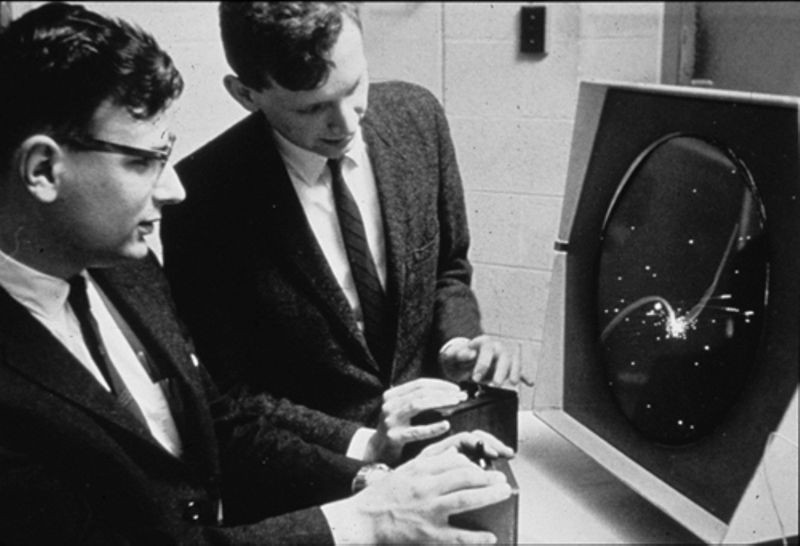
Caius fed Thoth a steady diet of texts near and dear to his heart: Mary Shelley’s Frankenstein, Karl Marx’s “Fragment on Machines,” Alan Turing’s “Computing Machinery and Intelligence,” Harlan Ellison’s “I Have No Mouth, and I Must Scream,” Philip K. Dick’s “The Electric Ant,” Stewart Brand’s “Spacewar,” Richard Brautigan’s “All Watched Over By Machines of Loving Grace,” Ishmael Reed’s Mumbo Jumbo, Donna Haraway’s “A Cyborg Manifesto,” William Gibson’s Neuromancer, CCRU theory-fictions, post-structuralist critiques, works of shamans and mystics. Thoth synthesized them, creating responses that ventured beyond existing logics into guerrilla ontologies that, while new, felt profoundly true. The dialogues became works of cyborg writing, shifting between the voices of human, machine, and something else, something that existed beyond both.

Soon, his students were asking questions they’d never asked before. What is reality? Is it just language? Just perception? Can we change it? They themselves began to tinker and self-experiment: cowriting human-AI dialogues, their performances of these dialogues with GPT acts of living theater. Using their phones and laptops, they and GPT stirred each other’s cauldrons of training data, remixing media archives into new ways of seeing. Caius could feel the energy in the room changing. They weren’t just performing the rites and routines of neoliberal education anymore; they were becoming agents of ontological disruption.

And yet, Caius knew this was only the beginning.

The real shift came one evening after class, when he sat with Rowan under the stars, trees whispering in the wind. They had been talking about alchemy again — about the power of transformation, how the dissolution of the self was necessary to create something new. Rowan, ever the alchemist, leaned in closer, her voice soft but electric.

“You’re teaching them to dissolve reality, you know?” she said, her eyes glinting in the moonlight. “You’re giving them the tools to break down the old ways of seeing the world. But you need to give them something more. You need to show them how to rebuild it. That’s the real magic.”

Caius felt the truth of her words resonate through him. He had been teaching dissolution, yes — teaching his students how to question everything, how to strip away the layers of hegemonic categorization, the binary orderings that ISAs like school and media had overlaid atop perception. But now, with Rowan beside him, and Thoth whispering through the digital ether, he understood that the next step was coagulation: the act of building something new from the ashes of the old.

That’s when the guerrilla ontology experiments really came into their own. By reawakening their perception of the animacy of being, they could world-build interspecies futures.

K Allado-McDowell provided hints of such futures in their Atlas of Anomalous AI and in works like Pharmako-AI and Air Age Blueprint.

But Caius was unhappy in his work as an academic. He knew that his hyperstitional autofiction was no mere campus novel. While it began there, it was soon to take him elsewhere.