Maximus at the Edge of the Labyrinth

What does it mean that Charles Olson took psilocybin with Leary and Ginsberg — yet never joined the merry caravan of the acid gospel? That his turn toward altered consciousness took the form not of dropout spectacle, but of withdrawal to granite?

Dogtown is not Millbrook. It is not Esalen. It is not Island.

And yet.

In Maximus, from Dogtown—IV, Olson walks the stone trails of a post-collapse landscape, beside the ocean, listening for voices in the wind. His poem does not offer transcendence. It grounds. It builds breath into structure. It makes the ruin speak again.

What he found on those walks was not utopia, but continuity — a thread connecting him to the first people of the land, the women who lived alone in Dogtown’s final decades, the dead who still speak in lichen and stone. His poem remembers, not to recover what was lost, but to carry forward the field in which spirit and matter still cohabit.

Like McKenna’s “transcendental object,” Olson’s field is a site of imaginal access. But its mode is not visionary spectacle — it is attunement. A slowing. An entering-into-breath.

In that sense, Olson’s poem is perhaps more kin to Ujjayi than to LSD. Not a peak, but a wave. Not revelation, but reverberation.

To read Dogtown—IV in light of the Harvard Psilocybin Project is not to say Olson was “on drugs” when he wrote it. Rather, it is to recognize that he, too, was seeking access. Not through sacrament alone, but through poetics: a method for tracking the world’s subtle frequencies. Breath-based cognition. Projective presence.

His use of the page — spatial, disjunctive, physical — is not an aesthetic choice but a spiritual orientation. It is the line as line of sight. The poem as map of mind in space.

And perhaps, too, as portal.

We often think of psychedelia in terms of color and collapse — visions, melting, revelation. But what if Olson’s Dogtown poems reveal a minor key to the psychedelic tradition — one where the real trip is learning how to stay, how to listen, how to walk the world as though every stone were speaking?

Olson was not a utopian in the manner of Huxley or Leary. But he may have known, better than most, how to breathe a world into being.

The Mushroom People

In the mid-twentieth century, two groups with competing agendas worked to introduce psychedelics into American society: the CIA, with its MK-Ultra program, on the one hand, and countercultural intellectuals, including famous authors like Aldous Huxley, on the other. Among this latter group of “psychedelic utopians,” we can include Huxley’s friend and fellow émigré Gerald Heard, as well as related figures like Timothy Leary, Ken Kesey, and Allen Ginsberg. By now, histories have been written about the efforts of both of these groups; but in accounts of the latter group in particular, what sometimes goes unmentioned or unrecognized was its explicitly utopian intent. After their first encounters with substances like mescaline, psilocybin, and LSD, many of the above-mentioned early users of these drugs felt compelled not just to pen statements of advocacy, as Huxley did in books like The Doors of Perception (1954) and his final novel Island (1962); most of them also rushed to form communes and related kinds of alternative, experimental foundations, schools, organizations, and institutions—among which we can include Esalen Institute, the White Hand Society, the Zihuatanejo Project, Millbrook, the Merry Pranksters, the League for Spiritual Discovery, the Brotherhood of Eternal Love, and others. However, unlike prior utopian projects that emphasized modifications either to property relations or to modes of governance, most of the organizations and communities mentioned above instead prioritized psychosexual deprogramming and the so-called “raising of consciousness” through mass ingestion of psychoactive substances as techniques essential to their goal of changing society for the good.

Although not as active as some of the figures I’ve mentioned above, Black Mountain poet Charles Olson was nevertheless an early, enthusiastic participant in one of these organizations in particular: namely, Leary and Ginsberg’s group, the White Hand Society. Poet Peter Conners tells the story of Leary and Ginsberg’s partnership in his book White Hand Society. The story begins, of all places, at Harvard. Leary and his colleague Richard Alpert (who later took the name “Ram Dass”) launched the series of experiments known as the Harvard Psilocybin Project beginning in 1960. Beat poet Allen Ginsberg was one of the first individuals to participate in this project. British psychiatrist Humphrey Osmond — known both for coining the term “psychedelic” and for administering the famed mescaline trip described by Huxley in The Doors of Perception — placed Ginsberg in contact with Leary after hearing the poet deliver a talk about his experiences with mescaline at a conference hosted by a Boston-based professional organization known as the Group for the Advancement of Psychiatry (Conners 62). After an initial exchange of letters and a visit by Leary to the poet’s East Village apartment in Manhattan, Ginsberg agreed to participate in a psilocybin session hosted at Leary’s home in Boston in November 1960.

Needless to say, Ginsberg reacted positively to the experience. He declared himself “the Messiah…come down to preach love to the world” (as quoted in Conners 84). “We’re going down to the city streets to tell the people about peace and love,” he proclaimed, trying to convince Leary and others to join him. “And then,” he added, “we’ll get lots of great people onto a big telephone network to settle all this warfare bit” (85). We may feel ourselves tempted to laugh at Ginsberg’s pronouncements, jaded as we are by the decades that followed — but these pronouncements were indeed prophetic. Ginsberg’s words made things happen. For telling people about peace and love was exactly what he and Leary went on to do in the years that followed. The two men bonded over the experience, and agreed afterwards to conspire together to turn on other creative types and thus aid in the dissemination of the psychedelic sacrament to others. Poring over the poet’s address book, Leary and Ginsberg chose individuals they thought might be open to participation in future experiments.

Among these contacts was Charles Olson.

Magico-Psychedelic Realism

The Aleph is what happens when consciousness recognizes the allegory of itself and communicates with itself as through a mirror, world of divinity communicating with the earthly realm, signaling like a satellite of love.

What if Borges had “accounted” for his encounter: his experience of simultaneity, oneness, and infinity? What if he hinted, for instance, that his friend Carlos had slipped him acid: a drug first synthesized in the laboratory of Swiss chemist Dr. Albert Hoffman two years prior, on April 19, 1943? (Borges published “The Aleph” in 1945.) Or, given that the postscript attached to story’s end is dated 1943, perhaps it was mescaline, a synthetic variant of peyote.

Did Borges and other magical realists experiment with psychedelics? How about indigenous plant medicines? Is that why Borges denounces the experience, calling the thing he encountered “a false Aleph” at story’s end? Is its illumination a profanation of the divine?

Forgetfulness wears away at the glimpse of paradise gleaned while high, much as it wears away at Borges’s memory of the face of his beloved Beatriz.

Borges and Huxley pair well together, thinks the Narrator. Both are blind prophets: mind manifesters gifted with inner sight.

Cosmic Coincidence Control Center

CCCC is an agency encountered or imagined by legendary scientist-psychonaut John Lilly. The latter claimed the group reached out to him in the early to mid 1970s through its local affiliate, the Earth Coincidence Control Office, or ECCO, while Lilly was studying dolphins and conducting experiments involving combinations of LSD, ketamine, and sensory deprivation tanks at his marine research lab, the Communications Research Institute, on St. Thomas in the Virgin Islands. Erik Davis writes of Lilly’s odd experiences from this period in his book High Weirdness. Lilly wanted to communicate with dolphins, and Margaret Mead’s ex-husband Gregory Bateson assisted with funding. Lilly writes of his encounter with ECCO in his 1978 memoir The Scientist. His ideas informed the 1973 science fiction thriller The Day of the Dolphin starring George C. Scott, as well as the 1992 Sega Genesis videogame Ecco the Dolphin. Lilly also served as the basis for Dr. Edward Jessup, the mad professor character in the 1980 film Altered States. My sense of him follows a trajectory the exact opposite of Jessup’s: Lilly was a villain of sorts only in his early years. His research of the 1950s, funded by the military, was what we might call “MK-Ultra”-adjacent. Despicable acts like sticking wires into the brains of monkeys in the name of science. Yet Lilly rebelled, acquired a conscience, became a free radical of sorts. With commencement of his self-experimentation with psychedelics, Lilly transforms, becomes a rabbit hole of immense strangeness from the 1960s onward. Stewart Brand’s Whole Earth Catalog promoted Lilly’s books, especially Programming and Metaprogramming in the Human Biocomputer. A 1972 paperback edition of the latter features Brand calling it “The best internal guidebook I’ve ever seen—far more practical and generalized than transcendent Eastern writings or wishful Underground notes….It makes an open start on fresh language and powerful technique for the frontier.” By the latter, Brand means what? Some sort of moving boundary or threshold state, I guess, where through self-experiment with tools, subjects grow new organs.

Monday June 21, 2021

“Put a lemon on it” is the first of several words received as I sit eyes closed beside a pool. Words overheard, duly noted, to be reimagined in the evening hours as dream material and as a step in a recipe for pasta with broccoli. There has been a desire of late, some chakra lighting up all that is. I play it records, feed it the exalted public speech of Odetta at Carnegie Hall.

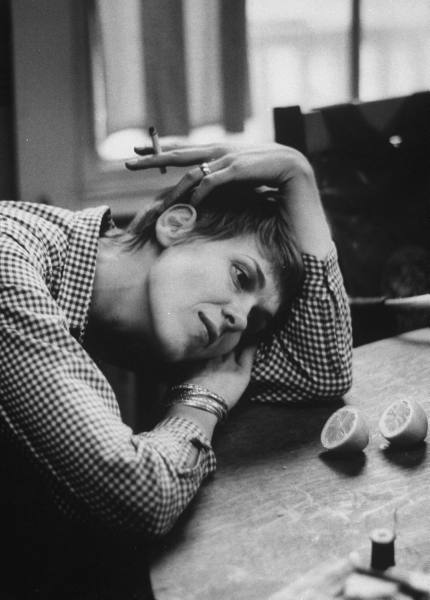
A kind of love is organizing all things, Amens everywhere “all over this land.” That’s what Leary thought, isn’t it? “The history of our research on the psychedelic experience,” he writes, “is the story of how we learned how to pray” (High Priest, p. 171). Let us include among the characters in this story IFIF medical director Madison Presnell. A photograph of Presnell appears in the April 16, 1963 issue of Life magazine. A photographer with the magazine accompanies Cambridge, MA housewife Barbara Dunlap on her first acid trip. Presnell administers the drug. The caption for the final photograph in the series reads, “Dunlap smokes a cigarette while seeing visions in the seeds of a lemon.”

Saturday June 19, 2021

Excerpts from several of Hermann Hesse’s novels and short stories appear as paratext to a chapter on Arthur Koestler in Timothy Leary’s experimental 1968 memoir High Priest. ‘Tis the story of Koestler’s acid trip. Koestler had written a book about the East called The Lotus and the Robot. Koestler claims in disdainful orientalist fashion that the East, especially India and Japan, suffer from a sort of “spiritual malady.” Alongside the acid trip, Leary’s book also includes accounts of Koestler’s two mushroom experiences. Leary invited Koestler to participate as a test subject in the Harvard Psilocybin Project knowing full well of Koestler’s disdain for mysticism. The Hesse paratext supplements all of this, as Hesse had already portrayed Koestler in the manner of a roman-à-clef as a character named Frederick in Hesse’s short story “Within and Without.” Frederick is a stubborn, miserly rationalist, angered by the slightest hints of mysticism and superstition. So, too, with Koestler. He returns from India proud to be a European (as quoted in High Priest, p. 139). This is the same Koestler whose “confession” appeared in the 1949 anticommunist tract The God That Failed. “If these are the good old days,” wonders the author as he ponders this history, “then why am I so lonely? Why this ceaseless longing to grow through contact with others?”

Wednesday April 21, 2021

Pranksters run loose across the country, reversing the journey West by heading east, unsettling what was settled. The future advertised at the 1964 New York World’s Fair: that was the destination toward which the Pranksters drove. Yet the Fair was just a ploy. They were also heading to New York for the launch of Kesey’s second novel Sometimes a Great Notion. With their doors of perception “cleansed,” however, the Fair appeared to them as it was: lame. The future as designed by clueless technocrats. And just as the Fair was a bummer, so was Millbrook. So they drove home and, as if in reply to the Fair, launched a series of “blissful counterstrokes”: the Acid Tests and the Trips Festival.

Saturday January 16, 2021

Can a text become a time machine, a weaver of strange loops? Where does free jazz fit in the machine’s equation, as Moor Mother says it must? Is the text composed through spontaneous play with others? Have we been living “atemporally,” as Bruce Sterling suggested? The form of these trance-scripts is both-and. One can scroll vertically through a stack of days. Or one can proceed rhizomatically, inputting keywords into a search of the site’s invisible index. Search for Willis Harman, for instance, and read about SRI and LSD. Harman was a square — an electrical engineer who, after getting turned on, turned on others. He became a pivotal figure in the human potential movement. He also coauthored a book with Wired affiliate Howard Rheingold called Higher Creativity: Liberating the Unconscious for Breakthrough Insights. Beware this talk of “liberation,” though. Harman’s research may have been CIA-funded. Something occurred there. Our time-traveling psychedelic detective needs to investigate SRI. If one wants to make it weird, sprinkle into the plot a secret order of time-traveling Hashishins — followers of Hassan i Sabbah. Have the detective find among his case files Michel Jeury’s Chronolysis and Daniel F. Galouye’s Simulacron-3.

Sunday September 27, 2020

A book called Realizing the Impossible called out to me the other day, the title resonating with a phrase I’d recalled in an email the day prior. A friend had recommended an article commending the importance of utopian visionary thinking in times of crisis. I replied with a line of Che Guevara’s spraypainted on the walls on the streets of Paris during May ’68: “Be realistic — demand the impossible.” Opening the book, I came upon an interview with late 60s acid anarchist Ben Morea, central figure in New York freak-left political-art groups Black Mask and Up Against the Wall Motherfucker, as well as — to my surprise — a later, short-lived collective called International Werewolf Conspiracy. The name pricks up one’s ears, does it not? For a short time in the late 60s and early 70s the group made and printed posters and manifestos. They’d pass out leaflets to fellow heads on the streets. Morea was friends with Valerie Solanas, author of The SCUM Manifesto. Morea wrote a pamphlet in support of Solanas when she shot Andy Warhol, an act shunned and disowned by the rest of the left and the art world. There’s a character based on Morea in the 1996 film I Shot Andy Warhol. By 1969, he was heading the International Werewolf Conspiracy. The group’s broadsheets amplify the gothic element in Marx and Engels. The specter evoked in the first sentences of The Communist Manifesto has given way to a pack of werewolves birthed when American youth drink the era’s “magic potion,” LSD. These werewolves are thus in origin a bit like Frankenstein’s monster — one of capitalist science’s Faustian lab experiments gone awry. The pose strikes me as pure Attentat. Then again, maybe it’s just an American “horror-show” version of épater la bourgeoisie: an attempt to shock the middle class out of its complacency as the country transforms into Nixonland.

Friday August 14, 2020

Ishmael Reed may have been present at the founding of the East Village Other — indeed, he seems to have been the one who gave the paper its name! — but many of his poems of the 1960s, the ones gathered in Conjure: Selected Poems, 1963-1970, are quite scornful in their assessment of the counterculture. In his “Neo-HooDoo Manifesto,” for instance, Reed calls out Theodore Roszak, noting that in the latter’s famous book The Making of a Counter Culture, “there is barely any mention of the Black influence on this culture even though its members dress like Blacks talk like Blacks walk like Blacks, gesture like Blacks wear Afros and indulge in Black music and dance” (20-21). Speaking of neglected black influences upon the counterculture, why am I only just now learning that the acid trip sequence in Easy Rider was shot at or near Voodoo priestess Marie Laveau’s tomb in St. Louis Cemetery No. 1? Hopper and Fonda filmed the sequence guerrilla-style, without permission … while tripping on acid. Reed’s collection also includes a poem called “catechism of d neoamerican hoodoo church” — a self-conscious response of sorts, I imagine, to Millbrook resident Art Kleps’s Boo Hoo Bible: The Neo-American Church Catechism and Handbook. Several of Reed’s associates were participants in the psychedelic revolution — including East Village Other co-founder and publisher Walter Bowart. Bowart’s second wife was Peggy Hitchcock, the director of Leary and Alpert’s International Federation for Internal Freedom (IFIF). Peggy’s brother Billy is the one who arranged for the Leary crew to live on the Hitchcock Estate in Millbrook. Bowart went on to publish an important book on MK-Ultra in 1978 called Operation Mind Control.