Reality-Piloting the Post-Cyberpunk Future

Heads of the sixties split off in their imaginings of the future: some gravitated toward cyberpunk, others toward New Age. The world that emerged from these imaginings was determined as much by the one as by the other.

To witness some of the heads of the counterculture evolving into cyberpunks, look no further than the lives of William Gibson and Timothy Leary.

Leary and Gibson each appear in Cyberpunk, a strange MTV-inflected hyperfiction of sorts released in 1990. Leary’s stance there in the documentary resembles the one he assumes in “The Cyber-Punk: The Individual as Reality Pilot,” a 1988 essay of his included in a special “Cyberpunk” issue of the Mississippi Review.

In Leary’s view, a cyberpunk is “a person who takes navigational control over the cybernetic-electronic equipment and uses it not for the army and not for the government…but for his or her own personal purpose.”

In mythopoetic terms, writes Leary, “The Classical Old West-World model for the Cyber-punk is Prometheus, a technological genius who ‘stole’ fire from the Gods and gave it to humanity” (Leary 252).

Leary appends to this sentence a potent footnote. “Every gene pool,” he writes, “develops its own name for Prometheus, the fearful genetic-agent, Lucifer, who defies familial authority by introducing a new technology which empowers some members of the gene-pool to leave the familiar cocoon. Each gene-pool has a name for this ancestral state-of-security: ‘Garden of Eden,’ ‘Atlantis,’ ‘Heaven,’ ‘Home,’ etc.” (265).

Prometheus is indeed, as Leary notes, a figure who throughout history reappears in a variety of guises. In Mary Shelley’s telling, for instance, his name is Victor.

Leary clearly sees himself as an embodiment of this myth. He, too, was “sentenced to the ultimate torture for…unauthorized transmissions of Classified Information” (252). But the myth ends there only if one adheres to the “official” account, says Leary. In Prometheus’s own telling, he’s more of a “Pied Piper” who escapes “the sinking gene-pool” while taking “the cream of the gene-pool” with him (252).

Cut to Michael Synergy, a real-life cyberpunk who describes a computer virus as “a little artificial intelligence version of me” that can replicate as many times as needed to do what it needs to do.

Leary thinks that in the future we’ll all be “controlling our own screens.” The goal of cyberpunk as movement, he says, is to decentralize ownership of the future.

My thoughts leap to John Lilly’s Programming and Metaprogramming in the Human Biocomputer. Lilly’s is the book I imagine Dick’s Electric Ant would have written had he lived to tell of his experiments.

Magico-Psychedelic Realism

The Aleph is what happens when consciousness recognizes the allegory of itself and communicates with itself as through a mirror, world of divinity communicating with the earthly realm, signaling like a satellite of love.

What if Borges had “accounted” for his encounter: his experience of simultaneity, oneness, and infinity? What if he hinted, for instance, that his friend Carlos had slipped him acid: a drug first synthesized in the laboratory of Swiss chemist Dr. Albert Hoffman two years prior, on April 19, 1943? (Borges published “The Aleph” in 1945.) Or, given that the postscript attached to story’s end is dated 1943, perhaps it was mescaline, a synthetic variant of peyote.

Did Borges and other magical realists experiment with psychedelics? How about indigenous plant medicines? Is that why Borges denounces the experience, calling the thing he encountered “a false Aleph” at story’s end? Is its illumination a profanation of the divine?

Forgetfulness wears away at the glimpse of paradise gleaned while high, much as it wears away at Borges’s memory of the face of his beloved Beatriz.

Borges and Huxley pair well together, thinks the Narrator. Both are blind prophets: mind manifesters gifted with inner sight.

Drawings II

Frankie’s watercolor and colored marker drawings are my heart’s delight — fields of color into which I gaze. The stained glass of this new temple wherein I dwell. The Time Traveler, though, feels forlorn, shorn of home and family. Perila’s “Fallin Into Space” soundtracks his evening as he re-reads The Time Machine. “Please let the future be otherwise,” he prays, a prompt of sorts entered into the dialogue of days. Some movement forward through time akin to John Dwyer’s “Greener Pools.” “Marijuana tells you what you want to hear,” says a friend. “Ayahuasca tells you what you need to hear.” Another friend recommends ketamine.

For-Itselfness

A friend texts requesting recommendations, works he could assign describing consciousness — particularly works that identify variable “dimensions” and “states.” I recommend Aldous Huxley’s The Doors of Perception, William James’s The Varieties of Religious Experience, and Abraham Maslow’s Toward a Psychology of Being. Reflecting afterwards on the exchange, I note down in a notebook, “Consciousness is something we grant or presuppose — based on our being here amid others in shared dialogue and shared study. Consciousness is Being as it comes to attention of itself as autopoetic subject-object — soul in communion with soul, each the other’s love doctor and angelic messenger.”

Cosmic Coincidence Control Center

CCCC is an agency encountered or imagined by legendary scientist-psychonaut John Lilly. The latter claimed the group reached out to him in the early to mid 1970s through its local affiliate, the Earth Coincidence Control Office, or ECCO, while Lilly was studying dolphins and conducting experiments involving combinations of LSD, ketamine, and sensory deprivation tanks at his marine research lab, the Communications Research Institute, on St. Thomas in the Virgin Islands. Erik Davis writes of Lilly’s odd experiences from this period in his book High Weirdness. Lilly wanted to communicate with dolphins, and Margaret Mead’s ex-husband Gregory Bateson assisted with funding. Lilly writes of his encounter with ECCO in his 1978 memoir The Scientist. His ideas informed the 1973 science fiction thriller The Day of the Dolphin starring George C. Scott, as well as the 1992 Sega Genesis videogame Ecco the Dolphin. Lilly also served as the basis for Dr. Edward Jessup, the mad professor character in the 1980 film Altered States. My sense of him follows a trajectory the exact opposite of Jessup’s: Lilly was a villain of sorts only in his early years. His research of the 1950s, funded by the military, was what we might call “MK-Ultra”-adjacent. Despicable acts like sticking wires into the brains of monkeys in the name of science. Yet Lilly rebelled, acquired a conscience, became a free radical of sorts. With commencement of his self-experimentation with psychedelics, Lilly transforms, becomes a rabbit hole of immense strangeness from the 1960s onward. Stewart Brand’s Whole Earth Catalog promoted Lilly’s books, especially Programming and Metaprogramming in the Human Biocomputer. A 1972 paperback edition of the latter features Brand calling it “The best internal guidebook I’ve ever seen—far more practical and generalized than transcendent Eastern writings or wishful Underground notes….It makes an open start on fresh language and powerful technique for the frontier.” By the latter, Brand means what? Some sort of moving boundary or threshold state, I guess, where through self-experiment with tools, subjects grow new organs.

By Some Strange Manner of Coincidence

The author sits uncomfortably on his meditation pillow pondering the tranche of 80s jangle-pop / Paisley Underground LPs that turned up at Goodwill mere days after he set out to tell his story. In the heart of the heart of the story is the house he lived in two doors down from Mitch Easter’s Drive-In Studio. “Who or what passed these records to us,” he wonders, “at such an opportune time? What kind of entity must we presuppose, what manner of causality must we assume here in our rendering of the cosmos?” For two of the records are themselves Easter-produced efforts: one of them recorded and the other mixed at Drive-In. “Was it the Ghost who sent them?” inquires the author. “Or is there some other force at work?” Some covert, time-traveling, Antikythera-wielding group from the future, perhaps, name composed of a string of Cs. Such was the solution OG psychonaut John Lilly arrived at, his paranoid, drug-powered Cold War musings leading him to posit the existence of a shadow organization known as the Cosmic Coincidence Control Center.

Monday June 21, 2021

“Put a lemon on it” is the first of several words received as I sit eyes closed beside a pool. Words overheard, duly noted, to be reimagined in the evening hours as dream material and as a step in a recipe for pasta with broccoli. There has been a desire of late, some chakra lighting up all that is. I play it records, feed it the exalted public speech of Odetta at Carnegie Hall.

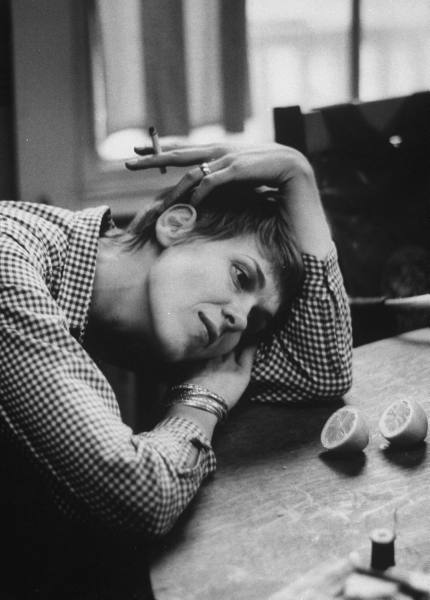
A kind of love is organizing all things, Amens everywhere “all over this land.” That’s what Leary thought, isn’t it? “The history of our research on the psychedelic experience,” he writes, “is the story of how we learned how to pray” (High Priest, p. 171). Let us include among the characters in this story IFIF medical director Madison Presnell. A photograph of Presnell appears in the April 16, 1963 issue of Life magazine. A photographer with the magazine accompanies Cambridge, MA housewife Barbara Dunlap on her first acid trip. Presnell administers the drug. The caption for the final photograph in the series reads, “Dunlap smokes a cigarette while seeing visions in the seeds of a lemon.”

Sunday June 20, 2021

Indigenous ways of knowing; Black Radical thought; Surrealism; Afrofuturism; Zen Buddhism. All have been guides: blueprints for counter-education for those who wish to be healed of imperial imposition. All provide maps of states other than the dominant capitalist-realist one. Hermann Hesse describes one such line of flight in his short novel The Journey to the East, a book first published in German in 1932, unavailable in English until 1956. Timothy Leary’s League for Spiritual Discovery takes after the League in Hesse’s novel. It, too, is but a part of a “procession of believers and disciples” moving “always and incessantly…towards the East, towards the Home of Light” (Hesse 12-13). Two of Leary’s psychedelic utopias, in other words, take their names from books by Hesse: both the League for Spiritual Discovery and its immediate precursor, the Castalia Foundation.

Saturday June 19, 2021

Excerpts from several of Hermann Hesse’s novels and short stories appear as paratext to a chapter on Arthur Koestler in Timothy Leary’s experimental 1968 memoir High Priest. ‘Tis the story of Koestler’s acid trip. Koestler had written a book about the East called The Lotus and the Robot. Koestler claims in disdainful orientalist fashion that the East, especially India and Japan, suffer from a sort of “spiritual malady.” Alongside the acid trip, Leary’s book also includes accounts of Koestler’s two mushroom experiences. Leary invited Koestler to participate as a test subject in the Harvard Psilocybin Project knowing full well of Koestler’s disdain for mysticism. The Hesse paratext supplements all of this, as Hesse had already portrayed Koestler in the manner of a roman-à-clef as a character named Frederick in Hesse’s short story “Within and Without.” Frederick is a stubborn, miserly rationalist, angered by the slightest hints of mysticism and superstition. So, too, with Koestler. He returns from India proud to be a European (as quoted in High Priest, p. 139). This is the same Koestler whose “confession” appeared in the 1949 anticommunist tract The God That Failed. “If these are the good old days,” wonders the author as he ponders this history, “then why am I so lonely? Why this ceaseless longing to grow through contact with others?”

Thursday June 17, 2021

My readings lead as all roads lead: to Castalia, the “elite institution devoted wholly to the mind and the imagination.” Castalia, Castalia, where “scholar-players” play the Glass Bead Game. Castalia, Castalia, the invention at the heart of Hermann Hesse’s final novel Magister Ludi. Hesse published the book in German under the title Das Glasperlenspiel. It appeared in Switzerland in 1943. The aim of the Glass Bead Game, as Hesse imagines it, is “the unio mystica of all separate members of the Universitas Litterarum.” Castalia, Castalia, Parnassian spring sacred to the Muses. Castalia, Castalia, remade as foundation by Leary and Alpert prior to their renaming it the League for Spiritual Discovery in 1966. Before Castalia they called themselves the International Federation for Internal Freedom. Castalia was the name they adopted in 1963 as they arrived to the Hitchcock Estate in Millbrook, NY. Some group of tricksters relaunched the Foundation in 2020 with repulsive rightwing content antithetical to the earlier foundation’s spirit and intent.