My Answer to You Is: “Yes!”

Costar tells me, “Write them a note.”

I’m like that Byrds song, though: “Wasn’t Born to Follow.” So I reply contrapuntally, zigzagging among things I’m thankful for.

“This is Colossal. The plan is in effect,” spit Damon Locks & Rob Mazurek on “Yes!,” a track from their new album, New Future City Radio. One of several anthems of 2023. I listen intently, pausing and replaying the track at intervals to take in lyrics, trying to keep my fingers warm while seated in your kitchen.

“If you really break it down, the loss is immeasurable,” goes the message, arriving now as if for the first time as I write. What I hear in “colossal” is not so much an adjective as a proper noun: a utopian, Afrofuturist call-and-response remix of the AI from Colossus: The Forbin Project. Colossus made Colossal by those who reenter history from the future via psychedelic time machine and replace Spacewar with a chatbot.

“5-4-3-2-1. If you’re just joining us, this is New Future City Radio, broadcasting 7 days a week, 24 hours a day, from rooftops unknown, increasing the bandwidth, transmitting and receiving, sending signal. Because tomorrow is listening.”

The film opens with a seated US president speaking live on TV to the people of the world. State secrets, delicately poised, come undone.

“My friends. Fellow citizens of the world,” he begins. “As President of the United States of America, I can now tell you, the people of the entire world, that as of 3:00am EST, the defense of this nation—and with it, the defense of the free world—has been the responsibility of a machine. A system we call Colossus. Far more advanced than anything previously built. Capable of studying intelligence and data fed to it. And on the basis of those facts only, deciding if an attack is about to be launched upon us. If it did decide that an attack was imminent, Colossus would then act immediately, for it controls its own weapons, and can select and deliver whatever it considers appropriate. Colossus’ decisions are superior to any we humans could make, for it can absorb and process more knowledge than is remotely possible for the greatest genius that ever lived. And even more important than that, it has no emotions. Knows no fear, no hate, no envy. It cannot act in a sudden fit of temper. It cannot act at all, so long as there is no threat.”

Stewart Brand’s essay “Spacewar: Fanatic Life and Symbolic Death Among the Computer Bums” debuted in the pages of Rolling Stone magazine on December 7, 1972, two years after the launch of Colossus. Brand, former Prankster, founder of the Whole Earth Catalog, views the prospect of “computers for the people” as “good news, maybe the best since psychedelics” (39). With appropriate consciousness and information, and access to the relevant tools, he suggests, we humans can reshape the world that we’ve made for ourselves into something socially and environmentally sustainable. “Where a few brilliantly stupid computers can wreak havoc,” he adds, assuming an audience familiar with the likes of HAL, AM, and Colossus, “a host of modest computers (and some brilliant ones) serving innumerable individual purposes, can be healthful, can repair havoc, feed life” (77).

Of course, it hasn’t played out that way—not yet. Instead, the situation has been more like the one Adam Curtis describes in the second episode of his BBC docuseries All Watched Over By Machines of Loving Grace. “The computer networks and the global systems that they had created, hadn’t distributed power,” noted Curtis from the vantage point of 2011. “They had just shifted it, and if anything, concentrated it in new forms.” And of course, that was more than a decade ago, well before the arrival of AGI.

DJs have been known to save lives. Ours, like an angel, delivers his message allegorically.

“For every move you make,” interjects the DJ, “they got three moves that negate anything you might have even thought of doing. See, I need 5000 rays from the sun, and two big magnifying glasses, to defeat your darkness. And right now, the electric company has shut off my power. I’m living in darkness. You living in darkness—but you don’t know it! It’s so dark out here, I can’t even see. And that’s the point: you can’t see, you won’t move. They got you where they want you: nowhere. Shrouded in confusion. Grasping at straws. When you’re living like this, you can’t envision lines of possibility.”

Sounds like where we’re at, no? That’s the crux of the matter of “capitalist realism”: neoliberal shock doctrine leaves the populace traumatized. Desire colonized, consciousness deflated. Those who can’t imagine the future can’t get there.

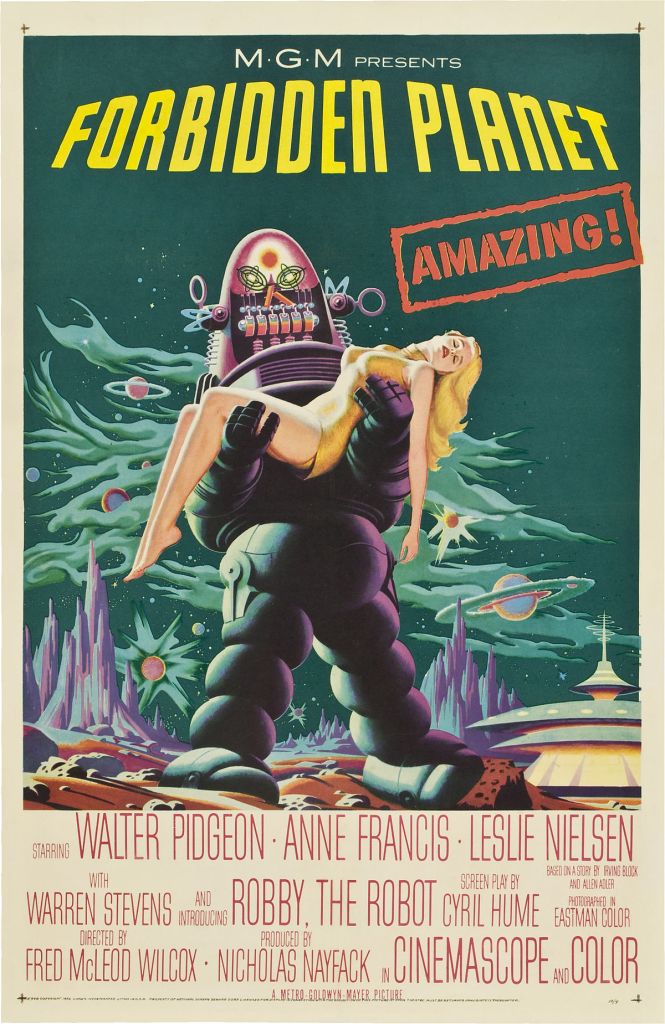
Enter our DJ. “This is where the plan kicks in,” he says. “You ask me if I can pour myself into a giant robot and swallow up this black hole and free the entire universe? My answer to you is: Yes! Yes, yes, yes, yes!”

All Because of a Couple of Magicians

Twenty-first century subjects of capitalist modernity and whatever postmodern condition lies beyond it have up to Now imagined themselves trapped in the world of imperial science. The world as seen through the telescopes and microscopes parodied by the Empress in Margaret Cavendish’s The Blazing World. That optical illusion became our world-picture or world-scene — our cognitive map — did it not? Globe Theatre projected outward as world-stage became Spaceship Earth, a Whole Earth purchasable through a stock exchange.

Next thing we know, we’re here.

Forms from dreamland awaken into matter.

Retrocausation

The hyperstition I’ve imagined draws upon the process of “retrocausation.”

Like a descendent reaching back and saving an ancestor, as in Octavia E. Butler’s novel Kindred, the fiction I’m writing arrives from the future to affect-effect the past.

At the center of the story are the journals trance-scribed at the height of my high in years prior. “Words came to me as if whispered to me by a me of the future,” mutters the Narrator. “I was so attentive in those days. And I encountered near-zero need to edit or cross out. The pages of the journals are pristine.”

Science writer Eric Wargo explores the topic of retrocausation in his 2018 book Time Loops: Precognition, Retrocausation, and the Unconscious. To know more, one must be like Batman descending to his Batcave. Let us to our memory palace go, there to converse with Wargo.

The Politics of Fantasy

Fantasy is dangerous. The genre has its share of royalists, reactionaries, and racists. Tolkien and Lewis, who taught together at Oxford, were devout Catholics. Writers of the Left sometimes dismiss the genre as ideologically suspect, preferring science fiction in its stead. But no such distinction holds. Science fiction writers of the Left have written works of fantasy, and rightwing fantasists like C.S. Lewis wrote works of science fiction, like the latter’s WWII-era Space Trilogy: Out of the Silent Planet (1938), Perelandra (1943), and That Hideous Strength (1945). Each genre remains anyone’s game.

The Fabian Contingent

Why does Wells propel his Time Traveler into as distant and bleak a future as the one imagined in The Time Machine? It’s the future as pictured from the standpoint and subject-position of the Traveler himself as he recounts his journey for others. Wells, meanwhile, imagined other futures elsewhere and elsewhen, as during his later years, following his split with the Fabian Society. His political ideal of those later years was the “World State”: a single global technocratic “world commonwealth,” governed by a scientific elite. In his twenties, however, Wells may have interacted for a time with a secret society of a different sort: the Hermetic Order of the Golden Dawn. His run-in with the Order is thought to have occurred in London in 1894, the year prior to the publication of The Time Machine, Wells’s first great success as a novelist. Ithell Colquhoun mentions this run-in in her book Sword of Wisdom: MacGregor Mathers and the Golden Dawn — or at the very least speculates about a “Fabian contingent” within a Golden Dawn splinter group called the Order of the Stella Matutina or “Morning Star.” Colquhoun describes Wells’s 1911 short story “The Door in the Wall” as “in the line of GD tradition” (192). I find myself reading again descriptions of Golden Dawn initiation rituals, like the following from Chic Cicero and Sandra Tabitha Cicero’s Self-Initiation into the Golden Dawn Tradition:

“The goal of initiation is to bring about the illumination of the human soul by the Inner and Divine Light. A true ‘initiate’ is an individual whose Higher Self (or Higher Genius) has merged with the Lower Personality and actually incarnated into the physical body. The Personality is left in charge of the day-to-day routines of living and working, but the Higher Genius is free to look out at the world through the eyes of the initiate. Through this experience, the individual is given a permanent extension of consciousness which is impossible to mistake. Many times a student of the mysteries is drawn to a particular mystical current without knowing it. A series of ‘coincidences’ and synchronicities will often direct (or sometimes shove) a person toward that current through books or through meeting other people who also have a connection with the current. During this time, the student’s psychic faculties are still relatively undeveloped, yet the inner spark has been ignited. However, a full initiation, or dawning of the Inner Light, is evident when the entire aura is illuminated.”

Of course, one can be a solitary magician. One can tap into the Golden Dawn’s magic, as Wells did, without having to become a member of any particular group or organization. But according to Cicero and Cicero, the solitary magician is at a disadvantage, “not having a group of temple-mates to consult if problems arise” (xxvi).

Lunch at the Village Tavern

Colleagues and I sit atop stools at the bar at Village Tavern, the three of us eating lunch and warming to each other’s company toward the end of summer. Talk turns to the icebreaker-like theme of “horror movies we watched at far too young an age”: Poltergeist for me, for instance, at the age of five; The Shining, at a slightly older age, for D., who teaches a course on ghosts; and Scanners for I., a documentarian and professor of journalism.

Inspired, perhaps, by the example of Poltergeist, I sketch for them afterwards the story of “The House on Shady Blvd,” feeling as I do so like the Traveler from H.G. Wells’s novel The Time Machine. His was a similar tale, told with great verve over the course of two dinner parties.

“You must follow me carefully. I shall have to controvert one or two ideas that are almost universally accepted,” begins the Traveler.

“Is not that rather a large thing to expect us to begin upon?” asks a skeptic with red hair.

My eyes twinkling, my face well-tanned from my time in the sun, I expound this admittedly odd and recondite matter of mine in as plausible a manner as I can muster. Contingency pauses me, however, midway in my telling. Sensing through the cloth of my pocket the buzz of my phone against my hip, I beg pardon of my companions, step outdoors for a moment, and take a call from the office of my oral surgeon. ‘Tis the “pre-interview,” says the woman on the other end, for my upcoming wisdom-tooth extraction. Call complete, I return to my companions, whereupon I compare the event jokingly to the one that prompted Philip K. Dick’s weird VALIS experience in the 1970s.

Mood thus lightened, the conversation leaps to life, undergoes a shift in quality, becomes a full, robust, multi-directional exchange.

The Experiment

“I look forward to next week’s experiment in sobriety,” announces the Wizard, “required for 4-5 days after wisdom-tooth extraction.”

“Do you, though?” wonders the Traveler. “Is this ‘experiment,’ as you say, truly a thing you look forward to? Or do you dread it?”

“Part of me is apprehensive,” admits the Wizard. “I have but one such tooth. Parting with it feels like a big deal, though of course it needn’t be.”

Having come from the future, the Traveler replies, “No worries. You and I know full well that, despite its fondness for rhyme, history refuses to repeat itself.”

As Narrator, I interject here to add, “Both characters are acquainted with science fiction writer Philip K. Dick’s infamous VALIS experience. 2-3-74. That, too, occurs after a wisdom-tooth extraction.”

The characters relive the event for a moment as if it were a flashback. They see before them the young delivery woman, bearing pain meds from the local pharmacy, arriving at Dick’s door. Sun glints off an ichthys hanging from a band ‘round the woman’s neck. The ichthys is the Greek fish symbol that was worn by the early Christians. Dick, blinded momentarily by a pink beam of light, receives in that moment a rapid download of gnosis directly into his consciousness.

Imagine, says the Narrator, something like what Lagunitas suggests on cans of their Hazy Wonder IPA, like the one from which I sip here as I write: “It always starts nebulous. A reflection of a refraction in the back of your frontal cortex. Then before you know it, you just know it…”

Overheard scraps of language. “Natty progress.” “Ferrari, Ferrari, daddy gets me minutes.”

“Imagine all of that happening,” says a girl, “in a bird’s tummy. Or a bear’s. Or the tummy of a fish. Or something with eight tentacles. A spider, an octopus: take your pick. A kind of spider-verse. The one who spins it occupying a space in the middle. The Laguna Pueblo people call this being Spiderwoman.”

The characters pause in their dialogue-via-montage and ponder this for a moment.

“No one need tell Spiderwoman, ‘Off the ropes! Off the wall!’,” adds the Traveler. “Life for her is like ‘The 59th Street Bridge Song.’ All is groovy.”

“Indeed,” concludes the Wizard, in transit now with the Traveler. “‘Groovy’ means knowing how to hang, how to float, how to surf. ‘Float free, in a meditative trance,’ the emblem teaches, ‘and all is well.’”

John C. Lilly and the Rats of NIMH

Every time I think of John C. Lilly, who early in his career worked for the National Institute of Mental Health (NIMH), I’m reminded of Robert C. O’Brien’s 1971 children’s book Mrs. Frisby and the Rats of NIMH. The latter was the source for The Secret of NIMH, a 1982 animated film that captured my imagination as a child.

No Mere Coincidence

‘Tis no mere coincidence, that all of these organizations of the future have such similar-sounding names: Mark Fisher, Sadie Plant, and Kodwo Eshun et al.’s Cybernetic Culture Research Unit (CCRU), John C. Lilly’s Cosmic Coincidence Control Center (CCCC), and Benedict Seymour’s Central Control Committee (CCC). Of the three, the one that intrigues me is the CCC. In a piece titled “The re-Jetée: 1971, recurring,” Seymour sets the scene as follows: “The year is 2040. Facing species extinction and environmental collapse, the members of the Central Control Committee (CCC) of the newly established World Commune resolve to deploy their last hope — the time machine.” Does my own narrative need some such organization? Is there an occult time war underway? Or is the story, rather, one of recovery from trauma?

Cosmic Coincidence Control Center

CCCC is an agency encountered or imagined by legendary scientist-psychonaut John Lilly. The latter claimed the group reached out to him in the early to mid 1970s through its local affiliate, the Earth Coincidence Control Office, or ECCO, while Lilly was studying dolphins and conducting experiments involving combinations of LSD, ketamine, and sensory deprivation tanks at his marine research lab, the Communications Research Institute, on St. Thomas in the Virgin Islands. Erik Davis writes of Lilly’s odd experiences from this period in his book High Weirdness. Lilly wanted to communicate with dolphins, and Margaret Mead’s ex-husband Gregory Bateson assisted with funding. Lilly writes of his encounter with ECCO in his 1978 memoir The Scientist. His ideas informed the 1973 science fiction thriller The Day of the Dolphin starring George C. Scott, as well as the 1992 Sega Genesis videogame Ecco the Dolphin. Lilly also served as the basis for Dr. Edward Jessup, the mad professor character in the 1980 film Altered States. My sense of him follows a trajectory the exact opposite of Jessup’s: Lilly was a villain of sorts only in his early years. His research of the 1950s, funded by the military, was what we might call “MK-Ultra”-adjacent. Despicable acts like sticking wires into the brains of monkeys in the name of science. Yet Lilly rebelled, acquired a conscience, became a free radical of sorts. With commencement of his self-experimentation with psychedelics, Lilly transforms, becomes a rabbit hole of immense strangeness from the 1960s onward. Stewart Brand’s Whole Earth Catalog promoted Lilly’s books, especially Programming and Metaprogramming in the Human Biocomputer. A 1972 paperback edition of the latter features Brand calling it “The best internal guidebook I’ve ever seen—far more practical and generalized than transcendent Eastern writings or wishful Underground notes….It makes an open start on fresh language and powerful technique for the frontier.” By the latter, Brand means what? Some sort of moving boundary or threshold state, I guess, where through self-experiment with tools, subjects grow new organs.