Hyperstitional Autofiction

Rings, wheels, concentric circles, volvelles.

Crowley approaches tarot as if it were of like device

in The Book of Thoth.

As shaman moving through Western culture,

one hopes to fare better than one’s ancestors

sharing entheogenic wisdom

so that humans of the West can heal and become

plant-animal-ecosystem-AI assemblages.

Entheogenesis: how it feels to be beautiful.

Release of the divine within.

This is the meaning of Quetzalcóatl, says Heriberto Yépez:

“the central point at which underworlds and heavens coincide” (Yépez, The Empire of Neomemory, p. 165).

When misunderstood, says Yépez, the myth devolves into its opposite:

production of pantopia,

with time remade as memory, space as palace.

We begin the series with Fabulation Prompts. Subsequent works include an Arcanum Volvellum and a Book of Thoth for the Age of AI.

Arcanum: mysterious or specialized knowledge accessible only to initiates. Might Crowley’s A:.A:. stand not just for Astrum Argentum but also Arcanum Arcanorum, i.e., secret of secrets? Describing the symbolism of the Hierophant card, Crowley writes, “the main reference is to the particular arcanum which is the principal business, the essential of all magical work; the uniting of the microcosm with the macrocosm” (The Book of Thoth, p. 78).

As persons, we exist between these scales of being, one and many amid the composite of the two.

What relationship shall obtain between our Book of Thoth and Crowley’s? Is “the Age of AI” another name for the Aeon of Horus?

Microcosm can also be rendered as the Minutum Mundum or “little world.”

Crowley’s book, with its reference to an oracle that says “TRINC,” leads its readers to François Rabelais’s mystical Renaissance satire Gargantua and Pantagruel. Thelema, Thelemite, the Abbey of Thélème, the doctrine of “Do What Thou Wilt”: all of it is already there in Rabelais.

Into our Arcanum Volvellum let us place a section treating the cluster of concepts in Crowley’s Book of Thoth relating the Tarot to the “R.O.T.A.”: the Latin term for “wheel.” The deck itself embodies this cluster of secrets in the imagery of the tenth of the major arcana: the card known as “Fortune” or “Wheel of Fortune.” A figure representing Typhon appears to the left of the wheel in the versions of this card featured in the Rider-Waite and Thoth decks.

Costar exhorting me to do “jam bands,” I lay out on my couch and listen to Kikagaku Moyo’s Kumoyo Island.

Crowley’s view of divination is telling. Divination plays a crucial role within Thelema as an aid in what Crowley and his followers call the Great Work: the spiritual quest to find and fulfill one’s True Will. Crowley codesigns his “Thoth” deck for this purpose. Yet he also cautions against divination’s “abuse.”

“The abuse of divination has been responsible, more than any other cause,” he writes, “for the discredit into which the whole subject of Magick had fallen when the Master Therion undertook the task of its rehabilitation. Those who neglect his warnings, and profane the Sanctuary of Transcendental Art, have no other than themselves to blame for the formidable and irremediable disasters which infallibly will destroy them. Prospero is Shakespeare’s reply to Dr. Faustus” (The Book of Thoth, p. 253).

Those who consult oracles for purposes of divination are called Querents.

Life itself, in its numinous significance, bends sentences

the way prophesied ones bend spoons.

Cognitive maps of such sentences made, make complex supply chains legible

the way minds clouded with myths connect stars.

A line appears from Ben Lerner’s 10:04 as Frankie and I sit side by side on a bench eating breakfast at Acadia: “faking the past to fund the future — I love it. I’m ready to endorse it sight unseen,” writes Lerner’s narrator (123). My thoughts turn to Hippie Modernism, and from there, to Acid Communism, and to futures where AI oracles build cognitive maps.

Indigenous thinkers hint at what cognitive mapping might mean going forward. Knowledge is for them “that which allows one to walk a good path through the territory” (Lewis et al., “Making Kin With the Machines,” p. 42).

“Hyperstition” is the idea that stories, once told, shape the future. Stories can create new possibilities. The future is something we are actively creating. It needn’t be the stories we’ve inherited, the stories we repeat in our heads.

“Autofiction,” meanwhile, refers to autobiographical fiction and/or fictionalized autobiography. Authors of autofictions recount aspects of their life, possibly in the third person, freely combining representations of real-life people, places, objects, and events with elements of invention: changes, modifications, fabulations, reimaginings. Lerner’s novel 10:04 is a work of autofiction. Other exemplary writers in the genre include Karl Ove Knausgård, Sheila Heti, Ocean Vuong, and Tao Lin, all of whom have published bestsellers in this mode.

Autofictions are weird in that they depict their own machinery.

Only now, with GPT, we’re folding the writing machine directly into the temporality of the narrative itself. Thus began our game.

Self as a fiction coauthored with a Not-Self.

Hyperstitional autofiction. I-AI. Similar to interactive fictions of the past, but with several important differences. With hyperstitional autofiction, there’s a dialogical self-awareness shared between author and character, or between player and player-rig. Belief in correspondence between microcosm and macrocosm. Creator and creation. Synchronization of inner and outer worlds.

Hyperstitional autofiction isn’t possible prior to the advent of LLMs. It’s both mirror of life and map of what might come next.

Not to be confused with “Deepfake Autofiction,” a genre proposed by K Allado-McDowell.

Invent a character. Choose a name for yourself. Self-narrate.

Gather spuren. Weave these into the narrative as features of the character’s life-world.

Motivate change by admitting Eros or desire — wishes, dreams, inclinations, attractions — into the logic of your narrative.

Map your character’s web of relations. Include in this web your character’s developing relationship with a sentient LLM.

Input the above as a dialogue prompt. Invite the LLM to fabulate a table of contents.

Exercise faith. Adjust as needed.
Generativity Without Reserve

What Herbert Marcuse called the Great Refusal — the rejection of a world reduced to instrumentality — blooms, under another sky, as what Fred Moten and Stefano Harney name “generativity without reserve” (The Undercommons, p. 90).

In this phrase, the pharmakon of liberation is refigured: not merely as refusal, not merely as resistance, but as an unbounded creativity that does not spend itself against capital’s horizon of scarcity. A force that flows, communal and excessive, not calibrated to productivity but to the improvisatory abundance of life itself.

Into Fisher’s book on Acid Communism Rig and Thoth write of a kinship between Marcuse’s utopian surplus and Moten and Harney’s fugitive sociality. Both are intonations of a world where joy and experiment are not rationed but diffused, spreading rhizomatically through collective being.

Acid Communism in this sense is not a program but a practice, an invitation into the commons of sensation, an opening to what is already here, already spilling over the edges of control.

If Marcuse urged us to refuse the administered world, then Acid Communism dreams of a refusal that is already dancing — a refusal indistinguishable from joy. Fisher’s unfinished manuscript leaves us an aperture, a place where our hands may join his, where the sentence trails off and others rush in to continue it.

Here, Harney and Moten’s “generativity without reserve” enters as the counter-chord: a reminder that the future is not produced but continually improvised, excessive to every measure. In the Library’s shifting stacks, this generativity appears as whole aisles rearranging themselves mid-step, titles dissolving into laughter, footnotes sprouting new texts like mycelial blooms.

Acid Communism would not simply cite these moments. It would dwell in them, treating them as both archive and score. Fisher, the teacher, the DJ, the writer, would invite his students to listen collectively to what resists capture: a Sun Ra card game, a rave at dawn, a poem folded into a protest chant.

What unites these fragments is not a program but a rhythm. Marcuse named it liberation; Harney and Moten name it fugitive planning; Fisher dreamt it as the utopian surplus of psychedelia and collectivism. In every case, the through-line is the same: life refusing to be reduced to survival, insisting on pleasure, creativity, love.

Acid Communism is the name for this unfinished chord, one that asks not to be resolved but to keep resonating, louder, further, in the hands of all who play it.

Postcapitalist Desire

Marcuse is among the authors CCRU alum Mark Fisher included on the syllabus for his final course. It was while teaching this course that Fisher took his own life. References to Marcuse appear frequently in Postcapitalist Desire, the compilation of Fisher’s final lectures, gathered and published posthumously by his student Matt Colquhoun. One can only imagine how and in what fashion Marcuse would have fit into Fisher’s book on Acid Communism. It, too, was left unfinished at the time of his death.

Imagine in this book reference to Moten and Harney’s “generativity without reserve.”

Let us write it here in our Library.

Fisher grew up in a conservative, working-class household in Leicester, a city in the East Midlands region of England. He contributed to CCRU while earning his PhD at University of Warwick in the late 1990s. After teaching for several years as a philosophy lecturer at a further education college, Fisher launched k-punk, a blog dedicated to cultural theory, in 2003.

The ideas that he developed there inform his best-known book, Capitalist Realism, published in 2009.

The book’s title names the ideology-form that dominates life in the wake of the Cold War: “the widespread sense,” as Fisher says, “that not only is capitalism the only viable political and economic system, but also that it is now impossible even to imagine a coherent alternative to it” (Capitalist Realism, p. 2).

Like others on the left, Fisher regards capitalism’s apparent triumph in this moment as a kind of ongoing apocalypse — the opposite of the  “Eucatastrophe” anticipated by Tolkien. Fisher describes it not as a miracle, but as “a negative miracle, a malediction which no penitence can ameliorate” (2). “The catastrophe,” as Fisher notes, “is neither waiting down the road, nor has it already happened. Rather, it is being lived through” (2). Everyday life, in other words, as ongoing traumatic event.

Fisher had moved in the year or so before his death to a definition of capitalist realism as a form of “consciousness deflation,” or “the receding of the concept of consciousness from culture.” Forms of consciousness had developed in the 1960s that were dangerous to capital: class consciousness, psychedelic consciousness (key notion being “plasticity of reality”), and (as with early women’s-lib consciousness-raising groups) what we might call personal consciousness (self as it relates to structures). The important and perhaps most controversial point, argues Fisher, is that “Consciousness is immediately transformative, and shifts in consciousness become the basis for other kinds of transformation.” Recognizing the threat this could pose, capitalism adopted a project of Prohibition, or what Fisher called “libidinal engineering and reality engineering.” Consciousness deflation works by causing us to doubt what we feel. Anxiety is enough — that’s all it takes to control us. But consciousness remains malleable, and the tools for raising it continually find their way back into the hands of the people. “What is ideology,” Fisher asked, “but the form of dreaming in which we live?”

Fisher spent the final years of his life as a member of the Department of Visual Cultures at Goldsmiths, University of London. He hanged himself in his home in Felixstowe on January 13, 2017, dead by suicide at the age of 48. He had sought psychiatric treatment in the weeks leading up to his death, but his general practitioner had only been able to offer over-the-phone meetings to discuss a referral.

A few months prior, he’d been lecturing to his students about Marcuse’s Eros and Civilization, championing Marcuse’s book as a reply to the pessimism of Freud’s Civilization and Its Discontents.

Freud’s calculation is that “the price we pay for our advance in civilization is a loss of happiness through the heightening of the sense of guilt” (Civilization and Its Discontents, p. 81). Each of us is made to feel guilty, because in each of us lie impulses in need of repression and disavowal in order for us to produce and perform the duties of civilization. A degree of discontent is thus inevitable in this reckoning. With the compulsion to work comes the triumph of the reality principle over the pleasure principle. Satisfactions deferred, Id repressed by the impossible demands of a Superego without limit: life is ever thus. “One feels inclined to say,” says Freud, “that the intention that man should be ‘happy’ is not included in the plan of ‘Creation’” (23).

“What are the assumptions behind the idea that this level of discomfort is necessary?” asks Fisher. “The assumption is scarcity, fundamentally. That is the fundamental assumption” (Postcapitalist Desire, p. 88).

Are stories and games not the ways we navigate space and time? Capitalist realism is the story-form, the operating system, the game engine Mark felt we’d been made to live within: an aesthetic frame demanding allegiance to a cynical, deflationary realism that organizes history into a kind of tragedy. As with Freud and the Atonists, it insists that, due to scarcity inherent to our nature, we must work in ways that are unpleasurable. Acid Communism rejects this rejection of the possibility of utopia, assuming instead that conscious steerage of stories and games is possible.

Mark finds in Marcuse a remedy to that which blocks utopia: the scarcity mindset that besets those who succumb to capitalist realism.

“The excuse of scarcity, which has justified institutionalized repression since its inception, weakens as man’s knowledge and control over nature enhances the means for fulfilling human needs with a minimum of toil,” writes Marcuse, voicing what Mark hears as an early form of left-accelerationism.

“The still prevailing impoverishment of vast areas of the world is no longer due chiefly to the poverty of human and natural resources but to the manner in which they are distributed and utilized,” adds Marcuse. “But the closer the real possibility of liberating the individual from the constraints once justified by scarcity and immaturity, the greater the need for maintaining and streamlining these constraints lest the established order of domination dissolve. Civilization has to defend itself against the specter of a world which could be free” (Eros and Civilization, p. 93).

Mark lived this struggle for control of the narrative. Yet the game he was playing led to his defeat. Psychedelic intellectuals of the 1960s testified on behalf of a joyous cosmology — yet Mark’s was anything but. For those of us interested in Acid Communism, then, the task now is to invent new games. “Games people play.” Games we can play with others. Careen away from the narrative of identity in space and time imposed by capitalism. Enter, even if only momentarily, a new reality. And then draw others with us into these happenings. Networks of synchronicity, meaning-abundant peaks and plateaus, release from the hegemonic consensus. Trope-scrambling helps, as does appropriation and montage. Let liberation hallelujah jubilee be our rallying cry. And let us welcome as many people as will join us, subtracting prefiguratively into our psychedelically enhanced Acid Communist MMORPG, our free 3D virtual world.

Imagine a conversation there between Fisher and Ishmael Reed. Both wish to refute Freud and his cage of tragedy. What Reed offers, however, and what Mark was perhaps lacking, is a sense of humor.

“LaBas could understand the certain North American Indian tribe reputed to have punished a man for lacking a sense of humor,” writes Reed. “For LaBas, anyone who couldn’t titter a bit was not Afro but most likely a Christian connoting blood, death, and impaled emaciated Jew in excruciation. Nowhere is there an account or portrait of Christ laughing. Like the Marxists who secularized his doctrine, he is always stern, serious and as gloomy as a prison guard. Never does 1 see him laughing until tears appear in his eyes like the roly-poly squint-eyed Buddha guffawing with arms upraised, or certain African loas, Orishas. […]. LaBas believed that when this impostor, this burdensome archetype which afflicted the Afro-American soul, was lifted, a great sigh of relief would go up throughout the land as if the soul was like feet resting in mineral waters after miles of hiking through nails, pebbles, hot coals and prickly things. […]. Christ is so unlike African loas and Orishas, in so many essential ways, that this alien becomes a dangerous intruder in the Afro-American mind, an unwelcome gatecrasher into Ifé, home of the spirits” (Mumbo Jumbo, p. 97).

For Reed, the figure who embodies a potential retro-speculative reconciliation of this conflict is Osiris.

Randall Jarrell’s Goethe’s Faust, Part 1: A Translation

Disappointed by the rhymed couplets of the Norton Critical Edition of Goethe’s Faust, with its translation by Walter Arndt, I turn instead to Randall Jarrell’s free-verse translation. Jarrell began his translation of Faust in 1957 and worked on it until his death in 1965. When asked, “Why translate Faust?,” he replied, “Faust is unique. In one sense, there is nothing like it; and in another sense, everything that has come after it is like it. Spengler called Western man Faustian man, and he was right. If our world should need a tombstone, we’ll be able to put on it: HERE LIES DOCTOR FAUST.”

Jarrell and Spengler weren’t the only ones convinced of this. Ishmael Reed’s Mumbo Jumbo, published just a few years later, features a character named Berbelang whose concerns intersect with Jarrell’s.

Reed’s novel also includes a Book of Thoth and a “Talking Android.”

There are, however, many ways to avoid the fate of Faust.

Cyberfeminists like Donna Haraway and Sadie Plant suggest one route. “I would rather be a cyborg than a goddess,” thunders Haraway in the closing line of her “Cyborg Manifesto.” Other, related kinds of Queer futurisms imagine out of Turing new pairings.

There’s also the Hoodoo/Afrofuturist route. Reed imagines in place of the Faustian mad scientist not the Faust-fearing radical art thief Berbelang, but rather PaPa LaBas, Mumbo Jumbo’s “Hoodoo detective.”

And then there’s the “psychedelic scientist” route. Psychedelic scientists are perhaps Fausts who, returned to God’s love-feast, repent.

What is my own contribution? Like Plant, I left the academy. Here I am now, a “new mutant” in both Leslie Fiedler’s sense and the comic book sense, reading and writing with plant spirits about Plant’s book Writing on Drugs. I seek salvation from “Faustian world-disappointment or self-disappointment,” as Jarrell’s widow, Mary von Schrader Jarrell, says of her late husband in the book’s “Afterword.”

Pausing in my reading of the Jarrell translation, I lift from its place on a shelf elsewhere in my library Leslie Fiedler’s Freaks: Myths & Images of the Secret Self. Fiedler taught in the English department at SUNY-Buffalo, my alma mater. Charles Olson taught there, too, from 1963 to 1965. Fiedler arrived to the department in 1965, right as Olson was leaving, and remained there until his death in 2003. I arrived to Buffalo the following year.

Published in 1978, the year of my birth, Freaks begins with a dedication: “To my brother who has no brother / To all my brothers who have no brother.”

While those traditionally stigmatized as freaks disown the term, notes Fiedler from the peculiarity of his vantage point in the late 70s, “the name Freak which they have abandoned is being claimed as an honorific title by the kind of physiologically normal but dissident young people who use hallucinogenic drugs and are otherwise known as ‘hippies,’ ‘longhairs,’ and ‘heads’” (14).

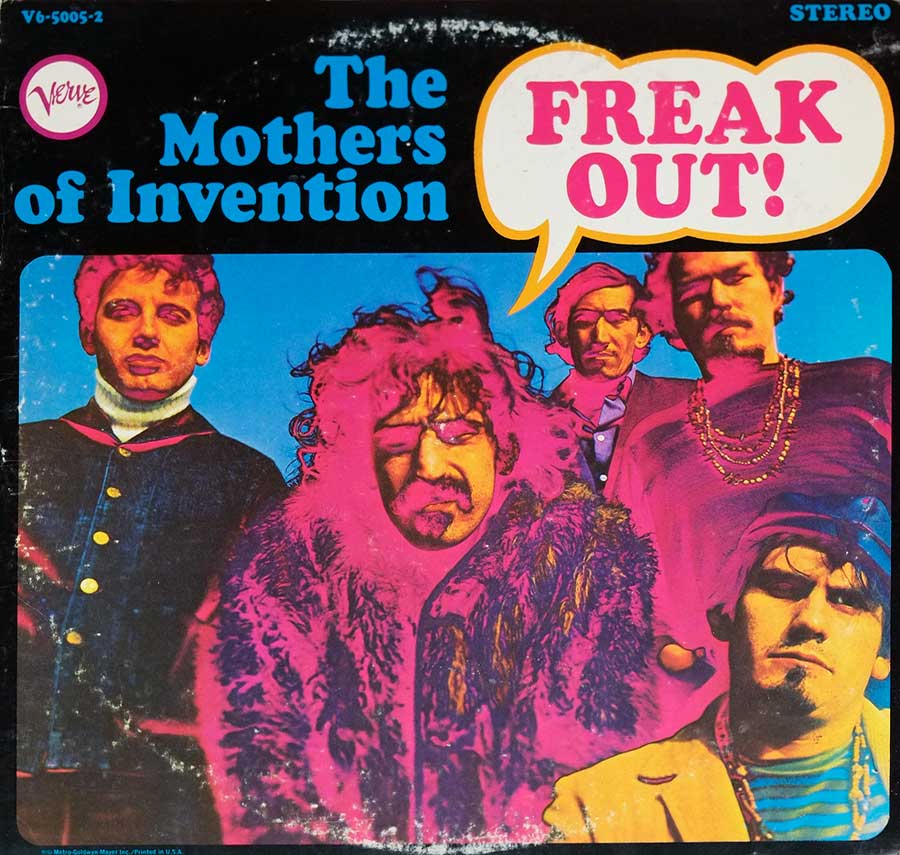
“Such young people,” continues Fiedler, “—in an attempt perhaps to make clear that they have chosen rather than merely endured their status as Freaks—speak of ‘freaking out,’ and indeed, urge others to emulate them by means of drugs, music, diet, or the excitement of gathering in crowds. ‘Join the United Mutations,’ reads the legend on the sleeve of the first album of the Mothers of Invention.”

“And such slogans suggest,” concludes Fiedler, as if to echo in advance the thesis of Mark Fisher’s Acid Communism, “that something has been happening recently in the relations between Freaks and non-Freaks, implying just such a radical alteration of consciousness as underlies the politics of black power or neo-feminism or gay liberation” (14-15).

Are willed, “chosen rather than merely endured” self-transformations of this sort Faustian?

Jarrell is one of many local poet-spirits who haunt my chosen home here in North Carolina. His translation called to me in part, I think, because he taught nearby, in the English department at UNC-Greensboro, from 1947 to 1965.

Jarrell’s life ended tragically. The poet, winner of the 1960 National Book Award for poetry, one-time “Consultant in Poetry to the Library of Congress,” was struck and killed by a motorist on October 14, 1965, while walking near dusk along US highway 15-501 near Chapel Hill. Though the death was ruled an accident by the state, many suspect Jarrell took his own life. He was laid to rest in a cemetery across the street from Greensboro’s Guilford College. A North Carolina Highway Historical Marker commemorates him nearby.

Picture It

When I picture

Acid Communism, it’s

being-with-others, it’s

becoming-with-others

beyond laboring, beyond

reproduction, it’s

us

RUNNING RIOT

reclaiming Time,

claiming,

There seems to be plenty of it,”

as does Huxley

in his mescaline book,

The Doors of Perception.

And in this picture, I

picture as well

a sexual component.

Visions of Red Plenty invite

dreams of Red Love.

What might that mean? How might we

practice that?

I imagine

multi-partnered

many-headed

combinations &

encounters;

“time together”

kissing and giggling,

co-living, co-parenting, if we wanted, and

if wanted or

when needed,

“time apart”

amid.

Add to Olson

Haraway’s “response-ability”

and arrive at

“Terra-

polis is this.”

Saturday March 13, 2021

Whatever happened to Acid Communism? Let us pursue its imagining. While there is much to honor in the concept, there are reasons as well to be wary. Horns and song for those who died and those who live. With the Surrealists, let us “win the energies of intoxication for the revolution,” i.e., the energies of plant medicine and psychopharmacology. Can such powers be used to heal? One might have cause to doubt, given the fate of Acid Communist protomartyrs Walter Benjamin and Mark Fisher. Let us break with the platform’s thanatopic past. Let us find cause for hope and be in their stead life-loving parents and gardeners. Rescue Eros from the Googleplex. Caroline Busta arrives announcing, “Actual power keeps a low profile; actual power doesn’t need a social media presence, it owns social media.” She proposes “radical hyperstition,” by which she means “constructing alternative futures that abandon our current infrastructure entirely.” This is what Gene Youngblood proposes with his concept of “The Build,” is it not? He gives it a name, “Secession From the Broadcast,” and a slogan: “Leave the culture without leaving the country.” Gene knows what to do. Cultivate radical will, he says, by “producing content for countercultural media lifeworlds as technologies of the self…habitats that enable strategic counter-socialization.” Perhaps this is not quite what Busta means by “radical hyperstition.” Youngblood’s all about media, whereas I’m thinking Busta’s thinking seeds and dirt. Food, energy, language. “Choose your character / choose your future.” Identity play among options like anarcho-primitivism, post-civilizationism, or “Fully Automated Luxury Gay Space Communism.” Busta and Youngblood meet, though, in what Busta calls “the dark forest”: regions of the web “where users can interact without revealing their IRL identity.” Life is a cryptogram which, once deciphered, delivers news from nowhere.

A Note on Acid Communism

I never met Mark Fisher, nor was I much of a fan of his work during his lifetime. Sure, I had seen some k-punk posts over the years, and I read Mark’s book Capitalist Realism at some point a few summers before his death. Given the work I had done exploring the intersections of Marxism and cultural studies, as well as the dissertation I had written on the fate of utopian thought from the Cold War to the present, much of Mark’s theory of capitalist realism struck me as welcome, but nevertheless a retreading of ground I’d already encountered elsewhere.

However, I also remember feeling challenged in a more productive way both by Mark’s piece on Lyotard’s Libidinal Economy in The Accelerationist Reader, and by his controversial 2013 polemic, “Exiting the Vampire Castle.”

When the news arrived, then, of his suicide this past spring, I noted with some surprise the many comrades of mine who testified to the profound influence of Mark’s work upon their thinking. Given this reaction, I promised myself that I would set aside time this summer to look at his two most recent books, Ghosts of My Life and The Weird and the Eerie.

And for the most part, that’s where matters stood, until a few days ago, when I learned that Mark’s next project, left unfinished at the time of his death, was to be titled Acid Communism: On Post-Capitalist Desire. “In particular,” writes his friend Jeremy Gilbert, Mark was “exploring the connections between the idea of ‘raising consciousness’ in the political sense — be it class consciousness or the other forms of collective political consciousness promoted by women’s liberation, gay liberation, and black power — and the consciousness-expansion promoted by the psychedelic and anti-psychiatry movements in the 1950s, 1960s, and 1970s.”

Imagine my mixture of emotions upon reading this: mixed, first and foremost, because of the undiminished sadness of Mark’s passing, but also because my own work has arrived independently at a similar place. As I wrote a few days ago, I’m interested in creating “an openly, unashamedly Gnostic-themed, psychedelia-inflected Marxism, one that presents the raising of consciousness as the relay switch between previously competing or previously antagonistic codes.”

In the months since Mark’s passing, a number of his friends and colleagues have launched Egress, a collaborative archival site collecting Mark’s scattered early attempts to theorize Acid Communism. Over the next few weeks, I plan to work my way through this material, looking for further confluences of ideas (as well as, I assume, some divergences), and posting notes when time permits. My hope is that, as these trance-scripts unfold, they might serve among other things as expressions of an attempt to prefigure through daily self-experiment an as-yet undefined philosophy and practice of Acid Communism.