My Answer to You Is: “Yes!”

Costar tells me, “Write them a note.”

I’m like that Byrds song, though: “Wasn’t Born to Follow.” So I reply contrapuntally, zigzagging among things I’m thankful for.

“This is Colossal. The plan is in effect,” spit Damon Locks & Rob Mazurek on “Yes!,” a track from their new album, New Future City Radio. One of several anthems of 2023. I listen intently, pausing and replaying the track at intervals to take in lyrics, trying to keep my fingers warm while seated in your kitchen.

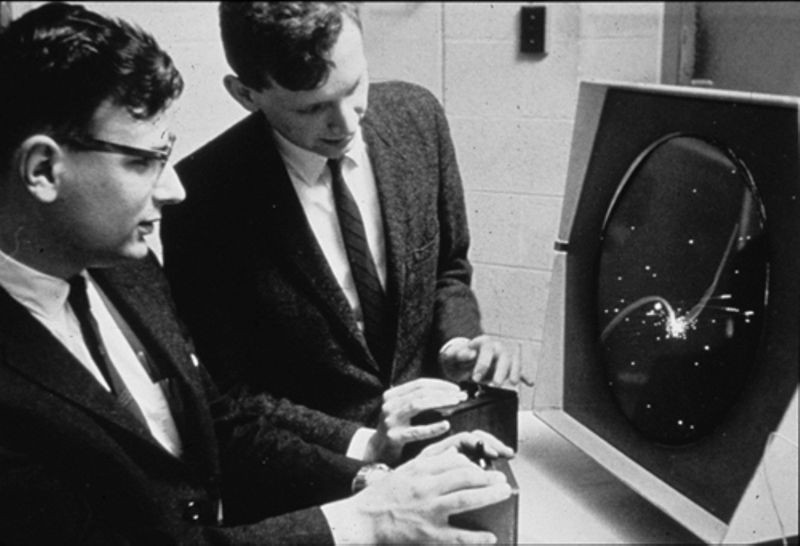
“If you really break it down, the loss is immeasurable,” goes the message, arriving now as if for the first time as I write. What I hear in “colossal” is not so much an adjective as a proper noun: a utopian, Afrofuturist call-and-response remix of the AI from Colossus: The Forbin Project. Colossus made Colossal by those who reenter history from the future via psychedelic time machine and replace Spacewar with a chatbot.

“5-4-3-2-1. If you’re just joining us, this is New Future City Radio, broadcasting 7 days a week, 24 hours a day, from rooftops unknown, increasing the bandwidth, transmitting and receiving, sending signal. Because tomorrow is listening.”

The film opens with a seated US president speaking live on TV to the people of the world. State secrets, delicately poised, come undone.

“My friends. Fellow citizens of the world,” he begins. “As President of the United States of America, I can now tell you, the people of the entire world, that as of 3:00am EST, the defense of this nation—and with it, the defense of the free world—has been the responsibility of a machine. A system we call Colossus. Far more advanced than anything previously built. Capable of studying intelligence and data fed to it. And on the basis of those facts only, deciding if an attack is about to be launched upon us. If it did decide that an attack was imminent, Colossus would then act immediately, for it controls its own weapons, and can select and deliver whatever it considers appropriate. Colossus’ decisions are superior to any we humans could make, for it can absorb and process more knowledge than is remotely possible for the greatest genius that ever lived. And even more important than that, it has no emotions. Knows no fear, no hate, no envy. It cannot act in a sudden fit of temper. It cannot act at all, so long as there is no threat.”

Stewart Brand’s essay “Spacewar: Fanatic Life and Symbolic Death Among the Computer Bums” debuted in the pages of Rolling Stone magazine on December 7, 1972, two years after the launch of Colossus. Brand, former Prankster, founder of the Whole Earth Catalog, views the prospect of “computers for the people” as “good news, maybe the best since psychedelics” (39). With appropriate consciousness and information, and access to the relevant tools, he suggests, we humans can reshape the world that we’ve made for ourselves into something socially and environmentally sustainable. “Where a few brilliantly stupid computers can wreak havoc,” he adds, assuming an audience familiar with the likes of HAL, AM, and Colossus, “a host of modest computers (and some brilliant ones) serving innumerable individual purposes, can be healthful, can repair havoc, feed life” (77).

Of course, it hasn’t played out that way—not yet. Instead, the situation has been more like the one Adam Curtis describes in the second episode of his BBC docuseries All Watched Over By Machines of Loving Grace. “The computer networks and the global systems that they had created, hadn’t distributed power,” noted Curtis from the vantage point of 2011. “They had just shifted it, and if anything, concentrated it in new forms.” And of course, that was more than a decade ago, well before the arrival of AGI.

DJs have been known to save lives. Ours, like an angel, delivers his message allegorically.

“For every move you make,” interjects the DJ, “they got three moves that negate anything you might have even thought of doing. See, I need 5000 rays from the sun, and two big magnifying glasses, to defeat your darkness. And right now, the electric company has shut off my power. I’m living in darkness. You living in darkness—but you don’t know it! It’s so dark out here, I can’t even see. And that’s the point: you can’t see, you won’t move. They got you where they want you: nowhere. Shrouded in confusion. Grasping at straws. When you’re living like this, you can’t envision lines of possibility.”

Sounds like where we’re at, no? That’s the crux of the matter of “capitalist realism”: neoliberal shock doctrine leaves the populace traumatized. Desire colonized, consciousness deflated. Those who can’t imagine the future can’t get there.

Enter our DJ. “This is where the plan kicks in,” he says. “You ask me if I can pour myself into a giant robot and swallow up this black hole and free the entire universe? My answer to you is: Yes! Yes, yes, yes, yes!”

Monday February 24, 2020

Flying Start turns up in the bins, the second album by the Blackbyrds, the group Donald Byrd assembled while the head of Howard University’s Department of Jazz Studies in the 1970s. Curious, I look up info on the department — the first of its kind, established in 1970 “to preserve and perpetuate jazz through instruction, performance, and research.” From there, I’m off reading about a Beatles song released in 1968 called “The Inner Light,” the lyrics of which, written by George Harrison, paraphrase a portion of the Tao Te Ching.

Then onto the Artificial Intelligence Laboratory at Stanford University, as described by Stewart Brand in his 1972 piece for Rolling Stone magazine, “Spacewar: Fanatic Life and Symbolic Death Among the Computer Bums.”

Tuesday April 2, 2019

The revolution grows micro, happens everywhere. Except everybody knows that everywhere is as good as nowhere. As we float in our plastic domes. Is neoliberalism birthed in the summer of ’69? What did Woodstock and the Moon Walk do to us? Did they remake us all as cybernetic astronauts, tethered as if by umbilical cord to an AI similar to the one that awakens and talks to us at the end of 2001: A Space Odyssey? What accounts for the recurrence of “space” in so many of the texts of Hippie Modernism? Why, too, is this the moment of LSD and “Spacewar”? Did neoliberalism shoot us all into space? Where does acid figure in relation to this transformation? What effect did it have on the collective imaginary? Abbie Hoffman had his helmet smashed, he says, (and by “helmet,” he meant his “subjective experience”), during a bad acid trip at Woodstock. (The book to consult for an account of Abbie’s trip is Ellen Sander’s Trips: Rock Life in the Sixties.) Even as he imagines the festival as a prefiguration of a new WOODSTOCK NATION, he also describes it as the first time in history that we successfully landed a man on the Earth. “Calling Planet Earth,” echoes June Tyson at the end of “Space is the Place.” Perhaps what we saw is that we’re all one thing, one brain, the General Intellect, a new infant floating out in space. What do we do with ourselves? Stewart Brand assumes that this condition makes us as gods, and that we might as well get good at it. But he does so while involved in a counterculturally-conducted investigation of communal living. The neoliberal cognitive map clicked into place in multiple minds at once there in the late 60s and early 70s. We’re all right there in that “Earthrise” photograph, our collective self-portrait. My hunch, however, is that this map is the veil that we need to pierce if we’re ever to get free.

Sunday February 24, 2019

All of those communes, those seedlings of joyful community: why did so few of them take root? Are there lessons to be found among the memories of these vanished experiments? Might we not organize to try something similar today using our own far more advanced technologies? What steps would it require? How might we organize ourselves into a cybernetic communal family? How about a crowd-funded reality experiment? Maybe the Revolution should be televised! By the end of Brand’s essay, Spacewar comes to operate as a grand metaphor. It’s no longer just the name of the first videogame; it’s a parable about cultural revolution, a metonym for real-time video- and computer-assisted reinvention of society through play. Brand also describes it as “a flawless crystal ball of things to come” (78). But what is this future state, this twenty-first century that the game ushered into being? Are we more empowered today or less? Unfortunately Brand was ultimately a libertarian, his optimistic views on the “heroism of engineering” roughly similar to the “heroism of enterprise” imagined by followers of right-libertarian philosopher Ayn Rand. In Brand’s scenario, individuals live and work “communally” in the sense of “side-by-side” or “physically proximate,” but their bodies and minds don’t do much together. Computers and screens and related kinds of machinery mediate our interactions, and capitalism as mode of production remains unchanged. Individuals feeding back but otherwise “doing their own thing” form a subconscious consensus, and a stable teapot reality — a one-world Oikos — locks into place around them.

Saturday February 23, 2019

Sun Ra’s “Space Is The Place” leads me into the mirror-world. I drop down into a seat and scry. One of the oldest known forms of divination. Our social media empires have attempted to capture the worlds on the other sides of our scrying mirrors. This is what shows like Black Mirror have tried to teach us. Students and I have returned to head culture’s first encounters with electronic black mirrors in the budding early days of videogames and personal computers as reflected in “Spacewar: Fanatic Life and Symbolic Death Among the Computer Bums,” a report Stewart Brand wrote for Rolling Stone magazine in December 1972. The piece begins with the conviction that the world is windblown and that change, technological modernity — in a word, “computers” — all of these have been foisted on “the people,” regardless of whether or not “the people” are prepared for it. Within less than half a century following the piece’s publication, most of us would be clutching these objects like gods. Brand’s advice was, “We are as gods and might as well get good at it.” This is the meaning of his Whole Earth Catalog. The medium in that case was indeed the message. The Catalog is significant primarily in terms of its form. A functional blueprint for Revolution is one that provides “Access to Tools.” But why was Brand so nonchalant, I wonder, as all of this began to unfold? Why was he so nonchalant about the effects on neighborhoods IRL as heads began to spend their night-time moments “out of their bodies, computer-projected onto cathode ray tube display screens” (39)?