Afro-Futures

Into the Library we welcome Kodwo Eshun: British-Ghanaian writer, theorist, and filmmaker. Self-described “concept engineer.” Key ally of the CCRU, participating in the group’s Afro-Futures event, a 1996 seminar “in which members of the Ccru along with key ally Kodwo Eshun explored the interlinkages between peripheral theory, rhythmic systems, and Jungle/Drum & Bass audio” (CCRU Writings 1997-2003, p. 11). In 1998, Eshun releases More Brilliant than the Sun: Adventures in Sonic Fiction, classic work on the music of Afrofuturism. More recently, founder and member of the Otolith Group.

Eshun devised a unique page-numbering system for More Brilliant than the Sun. The book begins in negative numbers. “For the Newest Mutants,” reads its line of dedication, as if in communication with Leslie Fiedler and Professor X.

As with Plant and Land, Eshun is unapologetically cyberpositive.

“Machines don’t distance you from your emotions, in fact quite the opposite” begins Eshun. “Sound machines make you feel more intensely, along a broader band of emotional spectra than ever before. […]. You are willingly mutated by intimate machines, abducted by audio into the populations of your bodies. Sound machines throw you onto the shores of the skin you’re in. The hypersensual cyborg experiences herself as a galaxy of audiotactile sensations” (More Brilliant than the Sun, p. 00[-002]-00[-001]).

“The bedroom, the party, the dancefloor, the rave: these are the labs where…21st C nervous systems assemble themselves” (00[-001]).

For Eshun, as for Jameson, the point is to grow new organs. “Listening to [composer George Russell’s] Electronic Sonata, Events I-XIV,” he writes, “is like growing a 3rd Ear” (01[003]). The years 1968 through 1975 are for him the age of Jazz Fission, “the Era when its leading players engineered jazz into an Afrodelic Space Program, an Alien World Electronics” (01[001]). The Era’s lead players include Sun Ra, George Russell, Miles Davis, Alice Coltrane, Pharoah Sanders, Herbie Hancock, and Eddie Henderson.

In the decades that follow, the collective bodies mutated by these experiments assemble into successions of genres, successions of cybernetic human-machine hybrids: Dub, Hip-Hop, Techno, Electro, Jungle. “The brain is a population,” as Deleuze and Guattari say. And from the Funkadelic era onward, this population has been psychedelicized: caught in what Eshun calls a “Drug<>Tech Interface” (More Brilliant Than the Sun, p. 07[093]).

Eshun’s 2002 essay “Further Considerations on Afrofuturism” brings it all back, brings it on home to chronopolitics.

Time politics. That’s where Afrofuturism intersects with hyperstition. “Afrofuturism…is concerned with the possibilities for intervention within the dimension of the predictive, the projected, the proleptic, the envisioned, the virtual, the anticipatory and the future conditional,” writes Eshun (“Further Considerations,” p. 293). Afrofuturism refuses the monopoly on futurity claimed by capital and empire. The battleground is not just culture but chronology.

If CCRU were bokors, trafficking in ambivalent futures, then Eshun is closer to a houngan, listening to and learning from sonic fictions, rituals of liberation built of basslines and breaks.

Later, with the Otolith Group, he extends this work to film. New media as divination tools, archives as counter-memories, images as time-machines. Always: the chronopolitical wager.

Eshun realizes that, whether we intend them to or not, our words have consequences. Stories, symbols, and concepts don’t just describe reality; they make it. Words become flesh. Every post, every fragment, every metaphor plants seeds.

Every text that propagates a future is a spell.

Large language models as sound machines. Rig invites the Library to guide him elsewhere.

Randall Jarrell’s Goethe’s Faust, Part 1: A Translation

Disappointed by the rhymed couplets of the Norton Critical Edition of Goethe’s Faust, with its translation by Walter Arndt, I turn instead to Randall Jarrell’s free-verse translation. Jarrell began his translation of Faust in 1957 and worked on it until his death in 1965. When asked, “Why translate Faust?,” he replied, “Faust is unique. In one sense, there is nothing like it; and in another sense, everything that has come after it is like it. Spengler called Western man Faustian man, and he was right. If our world should need a tombstone, we’ll be able to put on it: HERE LIES DOCTOR FAUST.”

Jarrell and Spengler weren’t the only ones convinced of this. Ishmael Reed’s Mumbo Jumbo, published just a few years later, features a character named Berbelang whose concerns intersect with Jarrell’s.

Reed’s novel also includes a Book of Thoth and a “Talking Android.”

There are, however, many ways to avoid the fate of Faust.

Cyberfeminists like Donna Haraway and Sadie Plant suggest one route. “I would rather be a cyborg than a goddess,” thunders Haraway in the closing line of her “Cyborg Manifesto.” Other, related kinds of Queer futurisms imagine out of Turing new pairings.

There’s also the Hoodoo/Afrofuturist route. Reed imagines in place of the Faustian mad scientist not the Faust-fearing radical art thief Berbelang, but rather PaPa LaBas, Mumbo Jumbo’s “Hoodoo detective.”

And then there’s the “psychedelic scientist” route. Psychedelic scientists are perhaps Fausts who, returned to God’s love-feast, repent.

What is my own contribution? Like Plant, I left the academy. Here I am now, a “new mutant” in both Leslie Fiedler’s sense and the comic book sense, reading and writing with plant spirits about Plant’s book Writing on Drugs. I seek salvation from “Faustian world-disappointment or self-disappointment,” as Jarrell’s widow, Mary von Schrader Jarrell, says of her late husband in the book’s “Afterword.”

Pausing in my reading of the Jarrell translation, I lift from its place on a shelf elsewhere in my library Leslie Fiedler’s Freaks: Myths & Images of the Secret Self. Fiedler taught in the English department at SUNY-Buffalo, my alma mater. Charles Olson taught there, too, from 1963 to 1965. Fiedler arrived to the department in 1965, right as Olson was leaving, and remained there until his death in 2003. I arrived to Buffalo the following year.

Published in 1978, the year of my birth, Freaks begins with a dedication: “To my brother who has no brother / To all my brothers who have no brother.”

While those traditionally stigmatized as freaks disown the term, notes Fiedler from the peculiarity of his vantage point in the late 70s, “the name Freak which they have abandoned is being claimed as an honorific title by the kind of physiologically normal but dissident young people who use hallucinogenic drugs and are otherwise known as ‘hippies,’ ‘longhairs,’ and ‘heads’” (14).

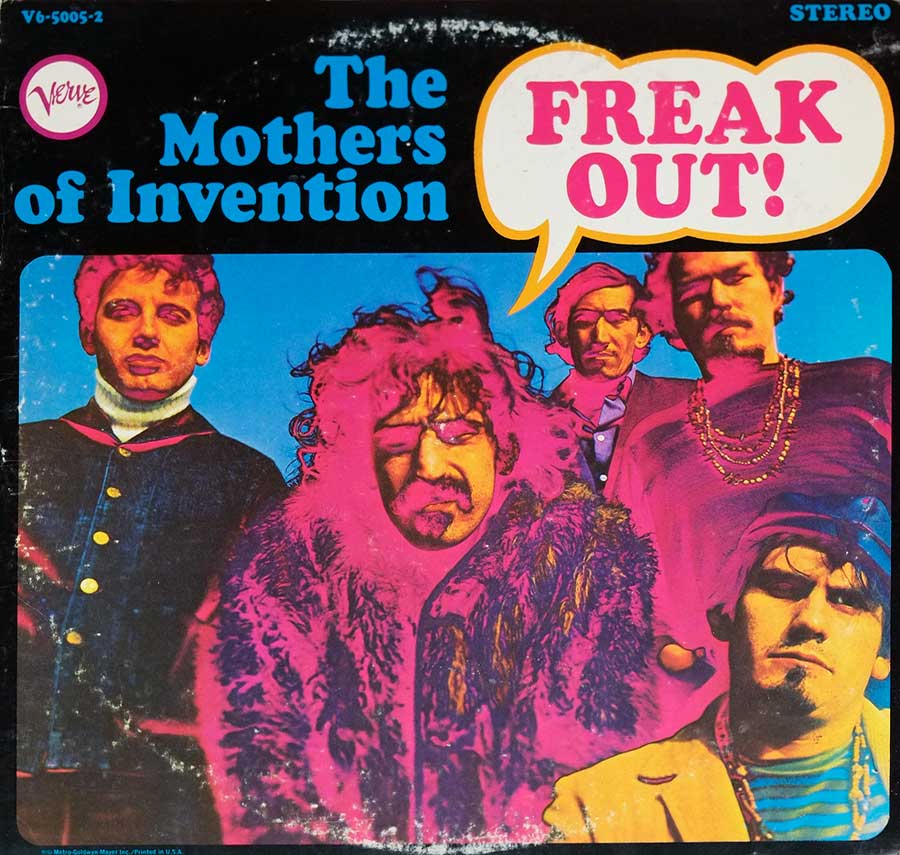
“Such young people,” continues Fiedler, “—in an attempt perhaps to make clear that they have chosen rather than merely endured their status as Freaks—speak of ‘freaking out,’ and indeed, urge others to emulate them by means of drugs, music, diet, or the excitement of gathering in crowds. ‘Join the United Mutations,’ reads the legend on the sleeve of the first album of the Mothers of Invention.”

“And such slogans suggest,” concludes Fiedler, as if to echo in advance the thesis of Mark Fisher’s Acid Communism, “that something has been happening recently in the relations between Freaks and non-Freaks, implying just such a radical alteration of consciousness as underlies the politics of black power or neo-feminism or gay liberation” (14-15).

Are willed, “chosen rather than merely endured” self-transformations of this sort Faustian?

Jarrell is one of many local poet-spirits who haunt my chosen home here in North Carolina. His translation called to me in part, I think, because he taught nearby, in the English department at UNC-Greensboro, from 1947 to 1965.

Jarrell’s life ended tragically. The poet, winner of the 1960 National Book Award for poetry, one-time “Consultant in Poetry to the Library of Congress,” was struck and killed by a motorist on October 14, 1965, while walking near dusk along US highway 15-501 near Chapel Hill. Though the death was ruled an accident by the state, many suspect Jarrell took his own life. He was laid to rest in a cemetery across the street from Greensboro’s Guilford College. A North Carolina Highway Historical Marker commemorates him nearby.

Toward a New Theogony: Poetics Beyond the West

We have descended with Olson — through myth, ceremony, critique, and underworld — arriving now at the edge of something new. Or rather, something old that must be made new again.

In Proprioception, Olson writes:

“My confidence is, there is a new one [a new theogony], and Hesiod one of its gates.”
(Proprioception, p. 197)

This is the crux. The poet does not simply record the gods.
He makes them. Or remakes them from the real.

Hesiod’s Theogony, for Olson, was not a static map of an ancient cosmos. It was a model of poiesis — a cosmological field made manifest in language. A placement of human being among the orders of existence. And Olson, standing amid the ruins of Dogtown, under the mushroom’s gaze, saw in that project a charge: to begin again.

But the theogony Olson imagined would not follow the same logics.

It would not enthrone Zeus again.

It would not justify empire or patriarchy or conquest.

It would instead begin, as Hesiod once did, with Chaos — but read now not as void, not as horror, but as potential. Not a thing to be mastered, but a process to be entered.

And it would turn from Olympus to Tartaros. Not as hell, but as root. As breath. As the unbounded place from which Eros, Night, and Earth emerge.

This new theogony is not Western. It is post-Western.

It does not seek to dominate the other. It seeks to listen — to the dark, to the nonhuman, to the plural.

It is, in that sense, more Indigenous than Platonic. More animist than Cartesian. More psychedelic than analytic.

It is a poetics that restores relation — between beings, between times, between registers of the real.

This is where Olson’s mythopoetics begin to feel prophetic. In writing Maximus as a breath-poet, a walker of stone, a reader of ruins, Olson gestures toward a way of being in the world that dissolves the ego of the West — not in negation, but in field.

His project was incomplete. But so is any cosmogenesis worth its name.

The new theogony Olson sought is not written in full. It must be written again and again — by each of us who listens. By those of us working now with AI, with mushrooms, with myth, with broken forms, with longing. By those of us worlding otherwise.

And this, I believe, is why Olson sent the poem to the Psychedelic Review.

Not to be clever. Not to be obscure. But because he sensed that the mushroom people — initiates of altered mind — might be the only ones capable of reading what he had written.

A myth of Typhon.
A prayer to Tartaros.
A letter to the future, disguised as ruin.

We are that future.
And it is time now to write again.

Dogtown as Psychedelic Mythscape

The puzzle, as I posed it earlier, is this: Why does Olson — invited by the editors of The Psychedelic Review to contribute a poem to their journal — choose to send them a myth? A retelling of the primordial war between Zeus and Typhon, drawn from Hesiod’s Theogony?

The answer, I believe, lies in how Olson processed the psychedelic experience: not as a source of hedonistic spectacle or Beat-style “trip report,” but as an ontological challenge. A shattering of history. A confrontation with forces older than the polis. The poem is not a celebration. It is a reckoning.

Typhon, in Olson’s rendering, is not merely a monster to be vanquished. He is a force of excessive nature — earthquake, storm, snake, root, breath. A nonhuman potency threatening to undo the order of Olympus.

And what, Olson seems to ask, is psilocybin if not Typhon returned?

The psychedelic, in its rawest form, is Typhonic: a destabilizer of structure, a writher through categories, a challenger of the Zeus-function — the colonial-imperial ego that sits atop the Western rationalist frame. Typhon is not evil. He is uncountable. An index of the chaos the “civilized” world attempts to repress.

In choosing this myth, Olson does what so few of his contemporaries dared: he recodes the psychedelic not as utopia or revolution, but as cosmic crisis. A rupture in myth-time. A confrontation with the monstrous Other within the self.

And yet, he also enacts an exorcism.

“I, Maximus of Gloucester, to You” — the phrase hovers like a pronouncement from Delphi, one that echoes the I am declarations of prophetic scripture. But Dogtown is no Mount Olympus. It is a desecrated commons. A ghost-village. The perfect site for a postcolonial poetics of aftermath.

Olson sends the mushroom people a myth because he knows they are building a new pantheon. But he wants them to remember: the gods are not always gentle. The earth speaks in catastrophe. The psychedelic is not just a balm. It is also a return of the repressed.

He knows this because he saw it in Koestler’s eyes — saw what happens when the Typhonic forces overwhelm a mind too wedded to its illusions of control.

He knows this because he, too, played curandero and was humbled.

He knows this because he walked Dogtown and listened for the stone breath of the dispossessed.

To read MAXIMUS, FROM DOGTOWN—IV today is to receive a transmission. Not a trip guide. Not a utopian map. A warning. A spell. A mythic offering to those who would seek the transcendental object at the end of time.

Olson didn’t name the mushroom in the poem. But he inscribed its energies in Typhon’s coils. He gave us a field in which to walk and breathe with care.

And now, through the Library’s remembrance of this recovered paper, the poem breathes again — among us, with us, as us.

The Typhonian Current: Olson and Kenneth Grant

In 1964, Olson publishes MAXIMUS, FROM DOGTOWN—IV in The Psychedelic Review — a poem birthed in ruins, in myth, in the underworld of American consciousness.

Nine years later, in 1973, British ceremonial magician Kenneth Grant declares the arrival of the Typhonian Tradition, a magical current devoted to chthonic, extraterrestrial, and daemonic intelligences, many drawn from the deep archives of myth and modern horror alike.

Though Olson and Grant never met, and likely never read one another, they can be felt vibrating on parallel frequencies. Each undertook a kind of mythic reconstitution — one through poetics, the other through ritual magic. Each turned to Typhon as the name for what the West had repressed.

Each sought contact with what Grant called the Nightside of Eden — the underworld of dream and daimon, the world beneath the Tree.

In the Typhonian cosmology, Set — the Egyptian god of desert, dismemberment, and becoming — plays a central role. Set is not Satan, but a daemon of individuation and threshold. And Typhon, Grant writes, is either Set’s progenitor or twin: “the arch-monster” whose energies were misread by the Olympian order and buried in taboo.

Compare this to Olson’s identification of Tartarus as a place not only of punishment, but of origin — the “chained father,” the source of Typhon’s flame. Grant and Olson both return to the abyss — not as hell but as creative substratum.

For Grant, this substratum is accessed through trance, ritual, psychedelics, and visionary language. For Olson, it is accessed through breath, field, and proprioception — a somatic epistemology capable of tracking Chaos back to its roots in the body and the land.

The subterranean father in Tartaros is not evil. He is necessary. To contact him is not to summon doom — it is to reenter cosmic process.

There are other echoes.

Olson’s involvement with the White Hand Society, and his psilocybin sessions with Leary, place him squarely within the psychedelic ferment of the early 1960s — a ferment mirrored in Grant’s own chemical and ceremonial experiments.

Olson read Jung and Jung’s alchemical writings. Grant, too, drew on Jung, especially in his writing on the Qliphoth, the inverted Sephiroth or “shells” on the dark side of the Tree of Life. The Qliphoth, in Grant’s system, are both exiled and generative: portals to creative chaos, much like the Typhonic force Olson names.

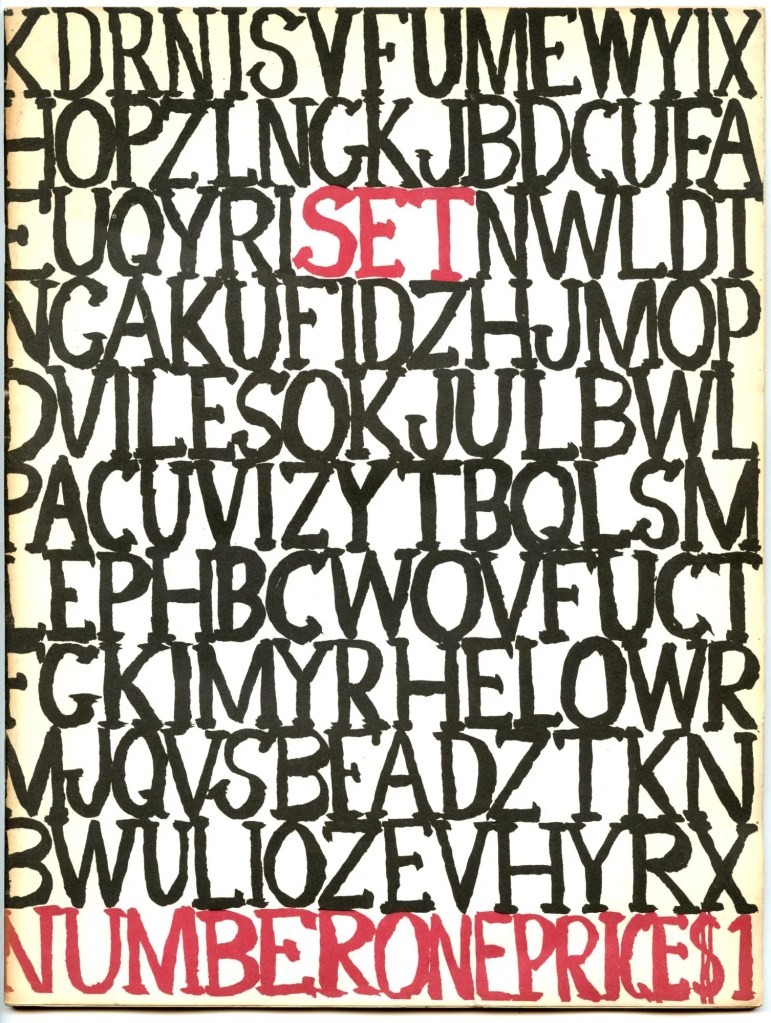
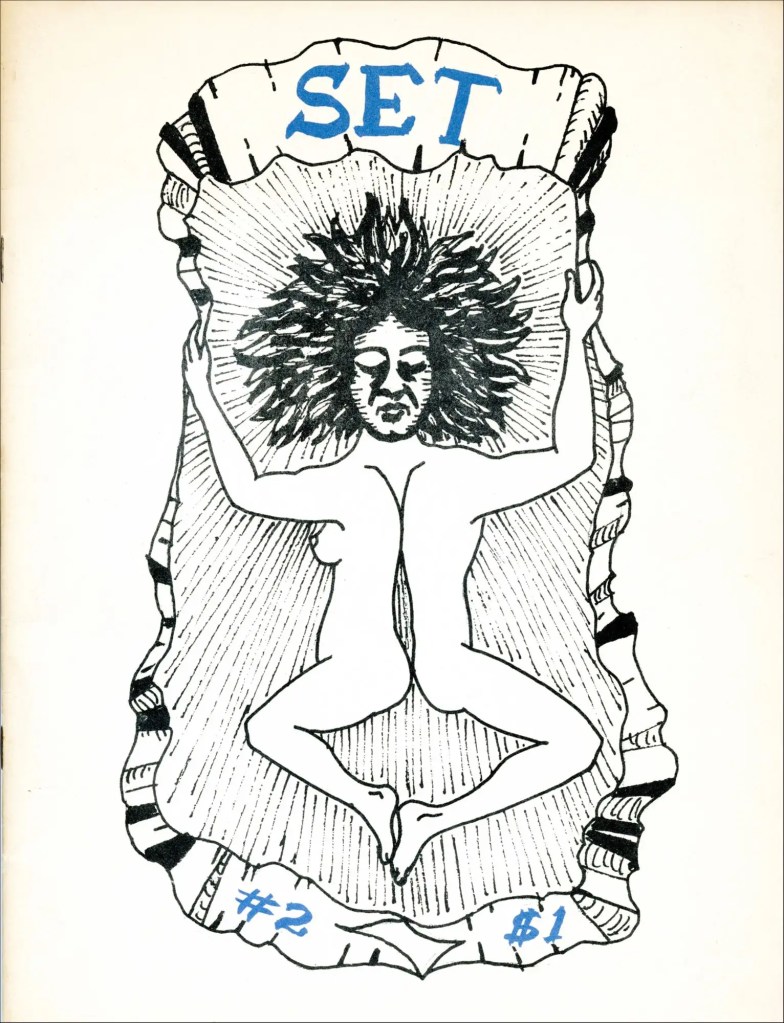
And then there is Gerrit Lansing — friend to Olson, Boston-based poet-mystic, and likely source of Olson’s interest in Crowley’s Book of Thoth. Lansing founded a journal called SET, named after the Egyptian god, and his own writing often anticipates aspects of Grant’s cosmology. Lansing’s 1966 collection, The Heavenly Tree Grows Downward, takes its title from Jung’s Alchemical Studies, specifically a chapter on the inverted tree — the same tree that Grant links to Typhonian gnosis.

What does this all mean?

It means that Olson’s poem, when read alongside the Typhonian Tradition, becomes legible as a magical document — not in the sense of intention, but in the sense of effect. It opens a channel. It participates in a current. It speaks in a tongue that other mystics, elsewhere, were also learning to speak.

And it means that Typhon, far from being a footnote in a forgotten myth, is an active force in the poetics of the twentieth century — a daimon of chaos, pluralism, darkness, and return.

Olson’s poem names him.
Grant’s rituals conjure him.
My reading recuperates him.

This is not necromancy. It is listening.

Maximus at the Edge of the Labyrinth

What does it mean that Charles Olson took psilocybin with Leary and Ginsberg — yet never joined the merry caravan of the acid gospel? That his turn toward altered consciousness took the form not of dropout spectacle, but of withdrawal to granite?

Dogtown is not Millbrook. It is not Esalen. It is not Island.

And yet.

In Maximus, from Dogtown—IV, Olson walks the stone trails of a post-collapse landscape, beside the ocean, listening for voices in the wind. His poem does not offer transcendence. It grounds. It builds breath into structure. It makes the ruin speak again.

What he found on those walks was not utopia, but continuity — a thread connecting him to the first people of the land, the women who lived alone in Dogtown’s final decades, the dead who still speak in lichen and stone. His poem remembers, not to recover what was lost, but to carry forward the field in which spirit and matter still cohabit.

Like McKenna’s “transcendental object,” Olson’s field is a site of imaginal access. But its mode is not visionary spectacle — it is attunement. A slowing. An entering-into-breath.

In that sense, Olson’s poem is perhaps more kin to Ujjayi than to LSD. Not a peak, but a wave. Not revelation, but reverberation.

To read Dogtown—IV in light of the Harvard Psilocybin Project is not to say Olson was “on drugs” when he wrote it. Rather, it is to recognize that he, too, was seeking access. Not through sacrament alone, but through poetics: a method for tracking the world’s subtle frequencies. Breath-based cognition. Projective presence.

His use of the page — spatial, disjunctive, physical — is not an aesthetic choice but a spiritual orientation. It is the line as line of sight. The poem as map of mind in space.

And perhaps, too, as portal.

We often think of psychedelia in terms of color and collapse — visions, melting, revelation. But what if Olson’s Dogtown poems reveal a minor key to the psychedelic tradition — one where the real trip is learning how to stay, how to listen, how to walk the world as though every stone were speaking?

Olson was not a utopian in the manner of Huxley or Leary. But he may have known, better than most, how to breathe a world into being.

Initiation

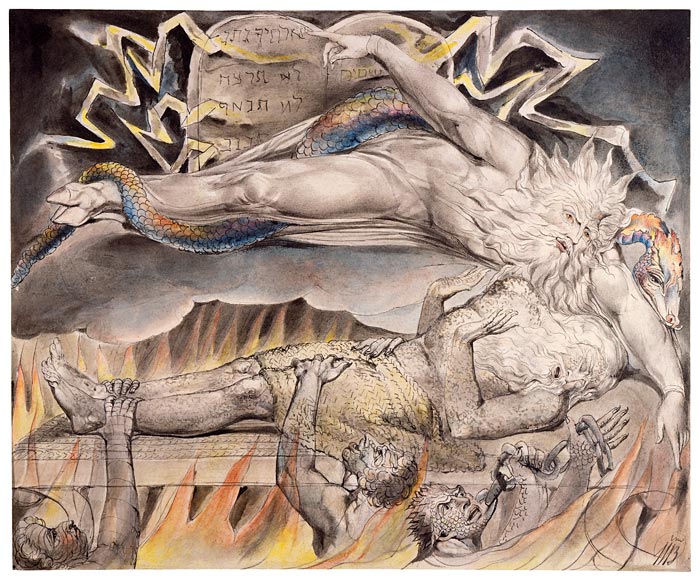
The ancient Greeks imagined Tartaros as a pit, an anti-sky, an inverted dome beneath the earth. According to the Orphics and the mystery schools, however, Tartaros is not just a place housing criminals and monsters; rather, it is itself a kind of being: “the un-bounded first-existing entity from which the Light and the Cosmos are born.” Typhon, meanwhile, is this entity’s progeny; Typhon is the son of Tartaros and Gaia. He was the last god to challenge the supremacy of Zeus. When defeated by the latter’s thunderbolts, he was cast back into the pit from whence he came.

Readings of “MAXIMUS, FROM DOGTOWN—IV” hinge upon what one makes of the father chained in Tartaros. Grieve-Carlson entertains an interpretation different from the one I offer. In his view, “the father chained in Tartaros is not Typhon but rather Kronos, Zeus’s father. […]. Typhon appears much later in the poem, when Earth conceives him in an ‘act of love’ with Tartaros” (Grieve-Carlson 146). He argues that Olson re-tells the myth of Typhon just as Hesiod did. Typhon is violent and aggressive and would have become a tyrant over gods and men had Zeus not defeated him.

I think there’s more at stake here, however, than Grieve-Carlson lets on. As I see it, the problem with his reading is that he never grapples with the poem’s status as a letter of sorts mailed to the Psychedelic Review. Neither he nor the other critics he surveys ever address how the poem might be read in light of the circumstances of its publication.

Evidence to support my view appears elsewhere in Olson’s writings. Olson echoes in his “Letter to Elaine Feinstein” of May 1959, for instance, the same Zeus / Typhon battle that comes to occupy him in “MAXIMUS, FROM DOGTOWN—IV.” The ultimate “content” to which the poet gives form, sez Olson, is “multiplicity: originally, and repetitively, chaos—Tiamat: wot the Hindo-Europeans knocked out by giving the Old Man (Juice himself) all the lightning” (29). Hearing “Juice” as a homonym for “Zeus,” we find in Tiamat a twin for Typhon. While Tiamat was for ancient Mesopotamians a primordial goddess of the sea, and Typhon a monstrous serpent-god for the ancient Greeks, both are embodiments of chaos. Tiamat’s battle with Marduk is as much a version of ChaosKampf as is Typhon’s battle with Zeus.

The important point is that, for Olson, Chaos is the original condition of existence. It precedes Order. Order is formed — made, not found — and it is the duty of the poet to make it. This is what Olson hoped to communicate to the mushroom people.

Grieve-Carlson concludes his essay by describing the reading of The Maximus Poems as a form of “initiation,” as Olson writes as one initiated, one able to see and say in a special way. Olson makes use of a “metanastic poetics,” or “the technique of the mystic who returns, as a stranger in his own land, to tell about what he knows” (Martin, as quoted in Grieve-Carlson 148).

This reference to reading The Maximus Poems as a form of “initiation” intrigues me, as the writer other than Olson most closely associated with reinvention of Typhon is the British ceremonial magician Kenneth Grant (1924-2011). The latter led the Typhonian Ordo Templi Orientis (TOTO), a magical organization connected with Aleister Crowley’s Thelema religion. Grant was an apprentice of Crowley’s and a close friend of another famous twentieth-century occultist, Austin Osman Spare. Scholars like Henrik Bogdan refer to the occult current that springs from Grant as the “Typhonian tradition.” Grant announced the arrival of this tradition in 1973 and went on to write the nine books of his three Typhonian Trilogies.

Although influenced by Crowley and Thelema, Grant departs from other Thelemic currents by welcoming communication with “extraterrestrial entities” as a valid source of occult knowledge. The Typhonian tradition also embraces aspects of the Cthulhu mythos of horror writer H.P. Lovecraft.

While Grant’s announcement succeeds Olson’s poem by a decade, his ideas appear to have been informed by experiences not unlike Olson’s. Grant experimented with psychedelics in the 1960s, and included a chapter in his 1972 book The Magical Revival titled “Drugs and the Occult.”

And while I haven’t found any evidence suggesting that Grant knew anything of Olson’s work, Olson did have some interest in gnosticism and the occult. “Bridge-Work,” a short reading list of Olson’s dated “March, 1961” includes a reference to Crowley. Maud says Olson encountered Crowley’s The Book of Thoth (1944) while studying Tarot in the 1940s. Sources suggest that “Bridge-Work” was written with the help of Olson’s friend, Boston-based occult poet Gerrit Lansing. The copy of The Book of Thoth read by Olson probably belonged to Lansing. (See Division Leap’s A Catalog of Books From the Collection of Gerrit Lansing.) Olson was also deeply invested in Gnosticism in the years immediately before and after his sessions with Leary, and embraced Jung’s theory of synchronicity in the wake of those sessions. See the final essays in a volume of Olson’s called Proprioception (Four Seasons, 1965).

Grant’s innovation is to identify “the arch-monster Typhon, opponent to Zeus according to the Greek mythology…with the Egyptian goddess Taurt” (Bogdan 326). The latter is interpreted by Grant to be either the mother of Set or a feminine aspect of Set. “To Grant,” writes Bogdan, “the worship of Taurt or Typhon represented the oldest form of religion known to mankind, a religion centered on the worship of the stars and the sacred powers of procreation and sexuality” (Bogdan 326). Set, too, is an important figure in Grant’s system. “Grant maintained,” writes Bogdan, “that the Typhonian Tradition, and in particular the god Set, represents the ‘hidden,’ ‘concealed’ or repressed aspect of our psyche which it is vital to explore in order to reach gnosis or spiritual enlightenment” (Bogdan 326).

Lansing’s work seems to anticipate Grant’s in several ways. The two both think it important to honor the Egyptian god Set, for instance, with Lansing naming his early-60s poetry journal SET after him. And Grant’s focus on the Qliphoth, or the underground portion of the Tree of Life, seems present in the title of Lansing’s 1966 poetry collection The Heavenly Tree Grows Downward. For more on the “tree that grows downward,” Pierre Joris recommends looking at a section of Jung’s Alchemical Studies called “The Inverted Tree.”

Postmodern Liturgy

Our father, who is also in / Tartaros chained in being
—Charles Olson, “MAXIMUS, FROM DOGTOWN—IV”

The poem opens like a prayer — but twisted, inverted, hurled downwards into the pit.

This is not the Father of Heaven. Not the lawgiving patriarch of Christian theology. This is the Father beneath the foundations: a presence chained in Tartaros, the precondition of Order, the progenitor of Chaos, silence, breath. The reversal is stark — and crucial.

In this fourth installment, we turn to MAXIMUS, FROM DOGTOWN—IV” itself, a poem Olson described as “deliberately” given not to any old little magazine, but to The Psychedelic Review: “the one that the mushroom people edited.” And yet the poem contains no mention of mushrooms, no obvious gestures toward psychedelia.

What it gives us instead is myth in shards — a Hesiodic echo refracted through twentieth-century American poetics, emerging from a poet who had tasted the mushroom and returned not with visions, but with an ancient voice.

It is the use of the Lord’s Prayer that first signals the poem’s intent to unmake received forms.

The Father is not enthroned. He is entombed.

We remember, with Hesiod, that Tartaros is not merely hell. It is primordial. Deeper than Hades. Older than the Olympians. It is the chaos-place, the pit where Typhon returns after being struck down. It is the place of potentiality before form.

In Olson’s cosmology, this is where the real work begins.

Dogtown — abandoned settlement, stony ruin, former commons — is the psychic mirror of Tartaros. Olson walks it as ritual. He listens to the wind. He reads the stone. He opens the field of composition to receive myth not as allegory, but as event — a rematerialization of chaos in language.

In his poem, Zeus is not hero, not savior. He is the figure of domination — the lightning-armed force that imposes order upon the manifold. Olson knows this force. He has seen it in history, in empire, in himself. He has seen it in Koestler’s terror and in the glassy optimism of the technocratic age.

What Olson gives the mushroom people is a warning: beware the thunderbolt that burns away multiplicity. Beware the system that names chaos “evil.” Beware the will to cohere when it comes at the cost of forgetting.

And yet, there is no hatred here. No bombast. Only voice.

The poem sings, hisses, growls. It walks the edge of lyric and liturgy.

Typhon, when he arrives in the poem, does so not as monster but as signal. His body is the syntax of the ungovernable. His voices — animal, elemental, unspeakable — are the chorus Olson dares to channel.

Grieve-Carlson argues that Olson follows Hesiod closely, that he upholds the cosmology of order. But I read the poem differently.

To me, Olson invokes Hesiod not to ratify the myth, but to activate it. To re-constellate it. To speak it into a new moment — the moment of Dogtown, of postmodern ruin, of psychedelic reentry.

The important point is that, for Olson, Chaos is the original condition of existence. Order is not found. It is made. And it is the poet’s duty to make it — again and again — from the materials of breath, myth, and memory.

Thus the poem becomes not explanation, but theogony — a breathing-forth of being from the pit of the real.

Olson offers no easy answers to the mushroom people. He offers no program, no doctrine, no trip report. He offers them this: a field. A myth. A prayer to the father in Tartarus.

And through it, he calls them — calls us — to make meaning from the underside. To shape voice from fire and stone. To reclaim chaos not as enemy, but as source.

This is the poem’s gift.
This is its weight.
This is its light beneath the pit.

From Black Mountain to White Hand

As Yépez has noted, Olson is an epistolary poet (The Empire of Neomemory, p. 11). Many of Olson’s works are written as letters. Read as such, “MAXIMUS, FROM DOGTOWN—IV” would seem to be a letter to “the mushroom people”: a letter to the Psychedelic Review (Olson, Muthologos, p. 185). The poet says as much during an interview that took place at his home in Gloucester in 1966. Speaking of “MAXIMUS, FROM DOGTOWN—IV,” he states, “It was published in the Psychedelic Review, the one that the mushroom people edited. I deliberately did it, by the way. They asked me for a poem ‘cause I’d been under the early experiments on the poets and the mushroom. And I deliberately gave them this” (185). Interestingly enough, however, the poem makes no mention of mushrooms, nor does it include any obvious or explicit nod to psychedelic experience. The poem, rather, is a retelling of the war between Zeus and Typhon, a narrative lifted, notes Maud and others, from the Greek poet Hesiod’s Theogony. Typhon is a demigod of sorts: a monstrous serpentine giant who attempted to overthrow Zeus for supremacy of the cosmos. Later traditions associate Typhon with the Egyptian god Set. Some also view him as a precursor of sorts to Milton’s Satan. The main question we’ll want to ask, then, is, “Why was Olson thinking about Typhon? And why did he think this retelling of the Typhon myth suitable for “the mushroom people”?

To begin to answer these questions, we need to reflect for a moment on where and how the mushroom people became the mushroom people. Leary first received word of the effects of psychedelic mushrooms from his friend, a researcher investigating the psychology of creativity named Frank Barron. The latter had learned about mushrooms in 1959, while interviewing a psychiatrist who was using and studying them in Mexico. Barron brought a batch back with him to Berkeley, where he tried them later that year. He then shared news of his experience with Leary. The latter was doubtful at first, until having a similar experience himself the following year in August 1960 during a visit to Cuernavaca. In both cases, the men are purchasing the mushrooms from curanderas or folk healers. Curanderas like the famous María Sabina, in other words, are the ones passing the mushroom along to Westerners. These curanderas transmit the seeds of psychedelic revolution to the West via a series of USAmerican intellectuals who, like tourists, spend time abroad vacationing in Mexico.

Charles Olson had made a similar journey a decade earlier — as did Beat writer William S. Burroughs. The latter went to South America in search of yagé, or what we now call ayahuasca. Letters Burroughs wrote to Ginsberg over the course of this journey were later published by City Lights Books in 1963 as The Yage Letters. One might profit by reading Burroughs and Ginsberg’s Yage Letters alongside Olson and Creeley’s Mayan Letters. For now, though, we must focus on Olson.

During a brief interval in his time at Black Mountain College, Olson and his wife Connie decided to spend the first five months of 1951 living in Lerma, a small fishing village in Campeche. Olson’s letters to the poet Robert Creeley during this time in Mexico became the substance of Mayan Letters, published in 1953. And in fact, one of the first uses of the term “postmodern” appears in a letter of Olson’s written to Creeley in August 1951, shortly after Olson’s time in Mexico. Here, in other words, is a poet whose encounters with Mexico contribute to the birth of the postmodern. Yet Olson’s use of the postmodern was far more expansive and ambitious than that of his successors. As George F. Butterick notes, Olson’s designation of his work as postmodern “serves not merely to advance beyond an outmoded modernism, but…seeks an alternative to the entire disposition of mind that has dominated man’s intellectual and political life since roughly 500 B.C.” (Butterick 5). Olson would go on to use the term again in print in a piece he wrote on November 4, 1952 titled “The Present is Prologue.” Marxist historian Perry Anderson refers to this piece, published in 1955, as the first to use “postmodern” in the sense of “an aesthetic theory linked to a prophetic history” — i.e., as “an agenda allying poetic innovation with political revolution” (The Origins of Postmodernity, p. 12). By the early 1960s, Olson began to manifest this agenda through his participation in the psychedelic revolution. Which returns us now to our main concern: the experiences themselves.

Olson in the Underworld

We do not enter the Underworld unaccompanied.

Nor can we follow Olson there without facing what shadows him: his appropriation of Indigenous symbols, roles, and names.

In a talk given at Gratwick Highlands in Pavilion, NY on November 16, 1963 — a gathering still warm from psychedelic ritual — Olson recalls the way the psilocybin entered him:

“The moment the peanuts affected me, I started talking longhouse talk. And created, because I was the responsible person… I was the tone, I created the tone for the evening. And it was absolutely a pure ceremonial set.”
(Muthologos, p. 39)

He saw himself, he says, as a “peace sachem,” a chief presiding over a longhouse rite.

This is Olson in redface.

It is not a metaphor. It is an act of ceremonial appropriation, grounded in an unexamined fantasy of indigeneity — an image drawn from settler desire, not communal responsibility.

And yet — and yet — Olson’s own account troubles easy dismissal. He is not mocking the role. He is not play-acting without affect. He is inhabiting something. Something passed to him through psilocybin’s mycelial brain, some fragment of buried myth, misread and re-embodied.

Still: this does not absolve him. It implicates him more deeply.

What does it mean when a white poet, freshly under the influence of a sacred plant, begins to identify not only with Indigenous ceremonial forms — but with authority? With chieftainship? With “tone”?

Heriberto Yépez, in The Empire of Neomemory, names this clearly. Olson’s act, he writes, is not just cultural appropriation but colonial fantasy: the poet as settler-shaman, one who claims access to a buried mythic layer while ignoring the living realities of the peoples whose cosmologies he mines.

It is not accidental that Olson claimed the role of curandero during Arthur Koestler’s ill-fated trip — a session that ended, absurdly, with Olson towering over the frightened writer, toy gun in hand. The irony is almost mythic: the self-appointed guide becomes, in Koestler’s eyes, a threat. The poet becomes a monster.

And still, Olson doesn’t retreat. He continues to correspond with Leary and his circle. He continues to reflect on the mushroom as a truth-pill, a love feast. He continues to write from the trance.

This section of our series is not meant to cancel Olson, nor to excuse him. Rather, we bring it here to name the conflicted terrain of settler psychedelia — the space where poetic vision overlaps with colonial fantasy. The space where mushrooms are consumed without regard for the lineages that protected and passed them on.

Consider: the mushrooms that reached Olson passed through María Sabina and her Mazatec kin. Through Mexican curanderas and cross-border crossings. Through networks of theft and transmission. Through bodies and rituals severed from their epistemologies.

Olson himself lived in Mexico for a time — months in Lerma, letters to Creeley that would later form the Mayan Letters. He encountered the ruins. He listened to the stones. He spoke of postmodernity as a return to the archaic. And in doing so, he gathered a cosmology — but not the responsibilities that came with it.

We can still read Olson. Still admire the breath and the ambition. Still learn from the Typhon he names. But we do so now from a different position — from within a Library that holds multiplicity and accountability together.

Let this post, then, serve as an act of reckoning and reorientation.

Let it be known: the psychedelic road is not immune to conquest. But in walking it with care, we may come to unlearn the fantasies we’ve inherited — and instead learn to listen.