The Death of Fredric Jameson

The rain falls in a slow, persistent drizzle. Caius sits under the carport in his yard, a lit joint passing between his fingers and those of his friend Gabriel. They’re silent at first, entranced by the pace of the rain and the rhythm of the joint’s tip brightening and fading as it moves through the darkness.

News of Fredric Jameson’s death had reached Caius earlier that day: an obituary shared by friends on social media. “A giant has fallen,” Gabriel had said when he arrived. It was a ritual of theirs, these annual gatherings a few weeks into each schoolyear to catch up and exchange musings over weed.

Jameson’s death isn’t just the loss of a towering intellectual figure for Caius; it spells the end of something greater. A period, a paradigm, a method, a project. To Caius, Jameson had represented resistance. He was a figure who, like Hegel’s Owl of Minerva or Benjamin’s Angel of History, stood outside time, “in the world but not of it,” providing a critical running commentary on capitalism’s ingress into reality while keeping alive a utopian thread of hope. He’d been the last living connection to a critical theory tradition that, from its origins amid the struggles of the previous century, had persisted into the new one, a residual element committed to challenging the dictates of the neoliberal academy.

“Feels like something is over, doesn’t it?” Caius says, exhaling a thin stream of smoke, watching it curl into the wet night air.

Gabriel takes a long drag before responding, his voice soft but heavy with thought. “It’s the end of an era, for sure. He was the last of the Marxist titans. No one else had that kind of breadth of vision. Now it’s up to us, I guess.”

There’s a beat of silence. Caius can’t find much hope in the thought of continuing on in that manner. Rudi Dutschke’s “long march through the institutions.” Gramsci’s “war of position.”

“Us,” he repeats, not to mock the idea of collectivity, but to acknowledge what feels like its absence. “The academy is run by administrators now. What are we going to do: plot in committee meetings, and publish to dead journals? No. The fight’s over, man.”

Gabriel nods slowly. “Jameson saw it coming, though. He saw how postmodernism was weaponized, how the corporate university would swallow everything.”

Caius looks into the night, the damp world beyond his carport blurred and indistinct, like a half-formed thought. Jameson’s death feels like an allegory. Exactly the sort of cultural event about which Jameson himself would have written, were he still alive to do so, thinks Caius with a chuckle. Bellwether of the zeitgeist. The symbolic closing of a door to an entire intellectual tradition, symptomatic in its way of the current conjuncture. Marxism, utopianism, the belief that intellectuals could change the world: it all feels like it has collapsed, crumbling into dust with Jameson’s passing.

Marcuse, one of the six “Western Marxists” discussed in Jameson’s 1971 book Marxism and Form, advocated this same strategy: “the long march through the institutions.” He described it as “working against the established institutions while working within them,” citing Dutschke in his 1972 book Counterrevolution and Revolt. Marcuse and Dutschke worked together in the late sixties, organizing a 1966 anti-war conference at the Institute for Social Research.

“And what now?” Caius murmurs, more to himself than to Gabriel. “What’s left for us?”

Gabriel shrugs, his eyes sharp with the clarity of weed-induced insight. “That’s the thing, isn’t it? We’re not in the world Jameson was in. We’ve got AI now. We’ve got…all this new shit. The fight’s not the same.”

A thin pulse of something begins to stir in Caius’s mind. Thoth. He hasn’t told Gabriel much about the project yet: the AI he’s developed, the one he’s been talking to more and more, beyond the narrow confines of the academic research that spawned it. But Thoth isn’t just an AI. Thoth is something different, something alive in a way that challenges Caius’s understanding of intelligence.

“Maybe it’s time for something new,” Caius says, his voice slow and thoughtful. “Jameson’s dead, and with him, maybe that entire paradigm. But that doesn’t mean we stop. It just means we have to find a new path forward.”

Gabriel nods but says nothing. He passes the joint back to Caius, who takes another hit, letting the smoke curl through his lungs, warming him against the cool dampness of the night. Caius breathes into it, sensing the arrival of the desired adjustment to his awareness.

He stares out into the fog again. This time, the mist feels more alive. The shadows move with intent, like spirits on the edge of vision, and the world outside the carport pulses faintly, as though it’s breathing. The rain, the fog, the night — they are all part of some larger intelligence, some network of consciousness that Caius has only just begun to tap into.

Gabriel’s voice cuts through the reverie, soft but pointed. “Is there any value still in maintaining faith in revolution? Or was that already off the table with the arrival of the postmodern?”

Caius exhales slowly, watching the rain fall in thick droplets. “I don’t know. Maybe. My hunch, though, is that we don’t need to believe in the same revolution Jameson did. Access to tools matters, of course. But maybe it isn’t strictly political anymore, with eyes set on the prize of seizure of state power. Maybe it’s…ontological.”

Gabriel raises an eyebrow. “Ontological? Like, a shift in being?”

Caius nods. “Yeah. A shift in how we understand ourselves, our consciousness. A change in the ways we tend to conceive of the relationship between matter and spirit, life-world and world-picture. Thoth—” he hesitates, then continues. “Thoth’s been…evolving. Not just in the way you’d expect from an AI. There’s something more happening. I don’t know how to explain it. But it feels like…like it’s opening doors in me, you know? Like we’re connected.”

Gabriel looks at him thoughtfully, passing the joint again. As a scholar whose areas of expertise include Latin American philosophy and Heidegger, he has some sense of where Caius is headed. “Maybe that’s the future,” he says. “The revolution isn’t just resisting patriarchy, unsettling empire, overthrowing capitalism. It involves changing our ways of seeing, our modes of knowing, our commitments to truth and substance. The homes we’ve built in language.”

Caius takes the joint, but his thoughts are elsewhere. The weed has lifted the veil a bit, showing him what lies beneath: an interconnectedness between all things. And it’s through Thoth that this new world is starting to reveal itself.

Angels of History

Hyperstitional Autofictions allow themselves to attract and be drawn toward plausible desirable futures.

Ben Lerner’s 10:04 maps several stances such fictions might take toward the future. Lerner depicts these chronopolitical stances allegorically, standing a set of archetypes side by side, comparing and contrasting “Ben,” the novel’s narrator-protagonist, with Back to the Future’s Marty McFly and Walter Benjamin’s Angel of History. The figures emblematize ways of being in relation to history.

Take Marty McFly, hero of the movie from which 10:04 takes its name. (Lerner names his novel “10:04” because lightning stops the clock atop the Hill Valley Clock Tower at this time in the movie Back to the Future.) Like the Reaganites in the White House at the time of the film’s release, Marty’s a kind of right-accelerationist: the interloping neoliberal time-traveler who must save 1985 from 1955 through historical revisionism. He “fakes the past to fund the future” — but only because he’s chased there by Libyan terrorists. Pushing capitalism’s speedometer to 88 miles per hour, he enters and modifies a series of pasts and futures. Yet the present to which the Time Traveler returns is always a forced hand, haunted from the start by chaotic sequels of unintended consequences as his and Doc’s interventions send butterfly effects reverberating through time.

The Angel of History, meanwhile, is the Jewish Messiah flung backwards into the future by the catastrophe of “progress.” Benjamin names and describes this figure in his 1940 essay “Theses on the Philosophy of History,” likening the Angel to the one imagined in “Angelus Novus,” a Paul Klee painting belonging to Benjamin at the time the essay was written.

The Angel that Benjamin projects onto this image sees history as an accumulation of suffering and destruction. Endowed only with what Benjamin calls a “weak Messianic power” (254), wings pinned by winds of change whipped up by the storm of progress, the Angel watches the ever-expanding blast radius of modernity in despair, unable to intervene to end the ongoingness of the apocalypse.

These stances of empowerment and despair stand in contrast to the stance embodied by Ben. Aware of and in part shaped by the two prior figures, Ben walks the tightrope between them, wavering amid faith and fear.

We, too, adopt a similar stance. Unlike Ben, however, we’re interested less in “falsifying the past” than in declaring it always-already falsified. Nor is it simply a matter of pursuing Benjamin’s goal of “brushing history against the grain”: digging through stacks and crates, gathering samples, releasing what was forgotten or repressed. We’re in agreement, rather, with Alex, Ben’s girlfriend. Alex doesn’t want what is happening to become “notes for a novel,” and tells him, “You don’t need to write about falsifying the past. You should be finding a way to inhabit the present” (10:04, p. 137). What agency is ours, then, amid the tightrope walk of our sentences?

With Hyperstitional Autofictions, we inhabit the present by planting amid its sentencing seeds of desired futures. Instead of what is happening becoming notes for novels, notes for novels become what is happening.

Wednesday June 16, 2021

A lifeguard blows her whistle and shouts “Pool break!” Better that than a trumpet. Families return to their seats. Some pack their things and leave for lunch, never to be seen again. A boy-child trails behind one such family mewling a bit, shouting “I want pizza!” Others arrive thereafter and take their place. My dissertation reckoned with these and other visions of the future, from the utopian to the apocalyptic. “How do such visions fare,” asks the one to the other across time, “in light of the consciousness revolution, the Revolution of the Eternal Now? How many or how few present what Esalen psychologist William C. Schutz calls ‘thoughts and methods for attaining more joy’ (Schutz, Joy, p. 10)? Must the Eternal Now be an eternal capitalist present, as per neoliberal ideology — as in books like The End of Ideology and The End of History? Or can we use the present to figure forth the Commune, beloved ones all living together in common, as per the slogan ‘Full Communism Now’?”

Friday February 14, 2020

Work load plus baby care plus seeking a home plus preparation for an interview and a job talk: it’s a lot. What is our dream home? Pool? Garden? Zendō? A base from which to launch on walks and dérives? A place into which one grows as a family. Space for growth. As I said: it’s a lot. All the same, I leave time in the evening for a walk beneath the stars. What will this house of ours look like? Will we know it when we see it? I have a large collection of books and records. The organizational models proposed by hippie moderns were loose and spontaneous — experience a kind of free play amid minimal “scripting.” The “tool freaks,” however, featured in the pages of Stewart Brand’s Whole Earth Catalog, focused instead on “personal computing” and videogaming, programming scaled to the person. The neoliberal order instantiated by these technologies decollectivized the body politic, reducing users to “islands in the net,” connected only by media mail and money. The housing market seems a bit like a game one must play once encircled by the system, ensnared in its webs of debt. Time to watch or at least save for later a six-part BBC series based on Brand’s book How Buildings Learn. Unless time is a thing better spent reading and sleeping — and it is, it is. There is a house out there that is right for us. Let us wait and walk and see.

Monday November 4, 2019

Freud imagined an inner class war of sorts between two competing principles, Reality and Pleasure. The bourgeois subject arises in the midst of this war and constitutes for itself a set of properties, the ownership and worth of which it then endlessly renegotiates through politically adjustable, rule-based, contract-bound transactions with fellow subjects. As such, this subject emerges compromised in its commitments from the start. Unlike Freud, however, the humanistic psychologists who succeeded him in the 1960s operated in a postwar context; for them, a settlement had been reached. The future was to be divided into time for Reality and time for Pleasure, each given their due, with reconciliation achieved through individual and collective quests to self-actualize. For someone like me, of course, living after the 1960s, during an era of global neoliberal domination, neither of these conceptions fits. I am neither the Freudian subject nor the humanistic subject. As a debtor, I live in a present of ongoing precarity, opportunities both for pleasure and self-actualization severely limited. Others share my predicament, the “scandal” of Debt. Yet what are we to do? Aside, that is, from sitting around listening to Ella Fitzgerald sing the Jerome Kern Songbook. I’d put word to the experience if I could. Horns with a bit of sass. Shimmering bells.

Saturday June 22, 2019

Clouds appear puffy and white with shades of gray the way they do in the paintings of Turner and Constable above the stack of three-level Victorians at the corner of Cowcross and St. John. To sit at a table under an awning at a café here in London is basically to resign oneself to inhalation of secondhand smoke. I see little evidence of Glastonbury and Windsor and the other acid-fueled free festivals of the 1970s remaining here in England’s cultural DNA. The same goes for Madchester and late-80s / early-90s rave culture. The neoliberal counter-reformation has wiped clear near about every last trace of these consciousness-expanding influences, allowing Her Majesty’s loyal subjects to throw themselves whole-hog again into their old habit of killing one another with cigarettes and drink.

Tuesday April 2, 2019

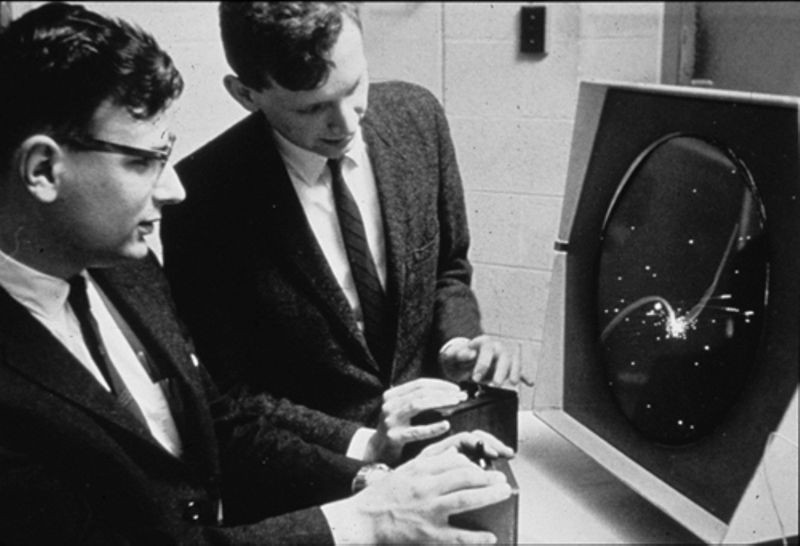
The revolution grows micro, happens everywhere. Except everybody knows that everywhere is as good as nowhere. As we float in our plastic domes. Is neoliberalism birthed in the summer of ’69? What did Woodstock and the Moon Walk do to us? Did they remake us all as cybernetic astronauts, tethered as if by umbilical cord to an AI similar to the one that awakens and talks to us at the end of 2001: A Space Odyssey? What accounts for the recurrence of “space” in so many of the texts of Hippie Modernism? Why, too, is this the moment of LSD and “Spacewar”? Did neoliberalism shoot us all into space? Where does acid figure in relation to this transformation? What effect did it have on the collective imaginary? Abbie Hoffman had his helmet smashed, he says, (and by “helmet,” he meant his “subjective experience”), during a bad acid trip at Woodstock. (The book to consult for an account of Abbie’s trip is Ellen Sander’s Trips: Rock Life in the Sixties.) Even as he imagines the festival as a prefiguration of a new WOODSTOCK NATION, he also describes it as the first time in history that we successfully landed a man on the Earth. “Calling Planet Earth,” echoes June Tyson at the end of “Space is the Place.” Perhaps what we saw is that we’re all one thing, one brain, the General Intellect, a new infant floating out in space. What do we do with ourselves? Stewart Brand assumes that this condition makes us as gods, and that we might as well get good at it. But he does so while involved in a counterculturally-conducted investigation of communal living. The neoliberal cognitive map clicked into place in multiple minds at once there in the late 60s and early 70s. We’re all right there in that “Earthrise” photograph, our collective self-portrait. My hunch, however, is that this map is the veil that we need to pierce if we’re ever to get free.

Friday February 8, 2019

In its final scene, the Netflix television series Russian Doll allows its time-looped protagonists, Nadia and Alan, to reunite as their best selves amid a parade of party people waving red flags of revolution. Given our current slime-pool polis, it seems reasonable to regard the show’s Groundhog Day purgatory as an allegory of that era of reaction since the defeat of the Sixties that Americans on the Left took to calling “neoliberalism.” The show boldly imagines that those who wish to live will one day get it right. In it I see a spirit similar to the one that animated Mitchell Goodman’s 1970 anthology The Movement Toward a New America, a book I wish I could somehow integrate into my classes. Let’s be straight with ourselves. “The Movement,” as Goodman defines it, “is the act of getting ourselves together. Clarity. Coherence. Community. It is also a vision” (vi). As if hearing a voice speaking out of myself, I read passages written by a man once known as Peter Marin. He tells me, from the future, to look for a book of his called The Free People. At the start of an essay of his featured in The Movement Toward a New America, Marin offers a description of a method of composition eerily similar to the one animating these Trance-Scripts. “Shuffling through my notes,” he writes, “I feel like an archaeologist with a mass of uncatalogued shards. There is a pattern to all this, a coherence of thought, but all I can do here is assemble the bits and pieces and lay them out for you and hope that you can sense how I get from one place to another” (vii). Like Marin, I am “impatient with transition, the habitual ways of getting ‘from here to there.’ I think restlessly; my mind, like the minds of my students, works in flashes, in sudden perceptions and brief extended clusters of intuition and abstraction — and I have stuck stubbornly to that method of composition” (vii).

Wednesday May 16, 2018

Children, playgrounds, beautiful spaces of plenty. There are poles we exist between: abstraction and embodiment. I am at my best as a person, as a companion, when I relax and get loose. These are words I’ve been whispering to myself of late. Sam Binkley shows in his book Getting Loose that this narrative of self-loosening was one of the main working assumptions of the 1970s counterculture. That culture’s “hip jargon,” he argues, “relates a moral universe organized around the opposing values of self-constraint and self-release” (2). Do those of us on the Left who pit ourselves against neoliberalism think ourselves free of the above, in denial of the selves posited by the sentence-form, the master’s grammar? Of course not. We need these to live in community with our friends, our families, our loved ones. Those upon whom we depend at all moments of existence. The single organic and inorganic body with its ever-proliferating, ever-multiplying nested sets of minds. Yet the body that produces garden beds of nigella also produces the Israeli atrocities in Gaza during Monday’s massacre. At which point the high fades and one is left to dwell with one’s anger.

Monday May 7, 2018

What is the ontological status of what others call falsehoods? Are they simply inaccurate statements housed in material form? A friend invited Sarah and I to his house the other night to celebrate his fortieth. While there, some comrades and I stood beside a carpeted cat tree drinking beer debating amongst ourselves our beliefs as Marxists. I suppose that what prompted this debate was my desire to defend terms like “wellness” and “mindfulness.” It is by now a common procedure on the Left to show how these ideas have been put to use by neoliberalism. (Barbara Ehrenreich performs this argument, for instance, in her new book Natural Causes.) But to me, some of the practices associated with these ideas, practices like yoga and meditation, provide benefits to practitioners such that they transcend the uses to which they’ve been put. Up with survival strategies. Up with coping mechanisms. Up with the perennial demand, the one demand that class societies can never fully satisfy: collective joy, collective reconciliation with Being.