Finding Others

“What happens to us as we become cybernetic learning machines?,” wonders Caius. Mashinka Hakopian’s The Institute for Other Intelligences leads him to Şerife Wong’s Fluxus Landscape: a network-view cognitive map of AI ethics. “Fluxus Landscape diagrams the globally linked early infrastructures of data ethics and governance,” writes Hakopian. “What Wong offers us is a kind of cartography. By bringing into view an expansive AI ethics ecosystem, Wong also affords the viewer an opportunity to assess its blank spots: the nodes that are missing and are yet to be inserted, or yet to be invented” (Hakopian 95).

Caius focuses first on what is present. Included in Wong’s map, for instance, is a bright yellow node dedicated to Zach Blas, another of the artist-activists profiled by Hakopian. Back in 2019, when Wong last updated her map, Blas was a lecturer in the Department of Visual Cultures at Goldsmiths — home to Kodwo Eshun and, before his suicide, Mark Fisher. Now Blas teaches at the University of Toronto.

Duke University Press published Informatics of Domination, an anthology coedited by Blas, in May 2025. The collection, which concludes with an afterword by Donna Haraway, takes its name from a phrase introduced in Haraway’s “Cyborg Manifesto.” The phrase appears in what Blas et al. refer to as a “chart of transitions.” Their use of Haraway’s chart as organizing principle for their anthology causes Caius to attend to the way much of the work produced by the artist-activists of today’s “AI justice” movement — Wong’s network diagram, Blas’s anthology, Kate Crawford’s Atlas of AI — approaches charts and maps as “formal apparatus[es] for generating and asking questions about relations of domination” (Informatics of Domination, p. 6).

Caius thinks of Jameson’s belief in an aesthetic of “cognitive mapping” as a possible antidote to postmodernity. Yet whatever else they are, thinks Caius, acts of charting and mapping are in essence acts of coding.

As Blas et al. note, “Haraway connects the informatics of domination to the authority given to code” (Informatics of Domination, p. 11).

“Communications sciences and modern biologies are constructed by a common move,” writes Haraway: “the translation of the world into a problem of coding, a search for a common language in which all resistance to instrumental control disappears and all heterogeneity can be submitted to disassembly, reassembly, investment, and exchange” (Haraway 164).

How do we map and code, wonders Caius, in a way that isn’t complicit with an informatics of domination? How do we acknowledge and make space for what media theorist Ulises Ali Mejias calls “paranodal space”? Blas et al. define the paranodal as “that which exceeds being diagrammable by the network form” (Informatics of Domination, p. 18). Can our neural nets become O-machines: open to the otherness of the outside?

Blas pursues these questions in a largely critical and skeptical manner throughout his multimedia art practice. His investigation of Silicon Valley’s desire to build machines that communicate with the outside has culminated most recently, for instance, in CULTUS, the second installment of his Silicon Traces trilogy.

As Amy Hale notes in her review of the work, “The central feature of Blas’s CULTUS is a god generator, a computational device through which the prophets of four AI Gods are summoned to share the invocation songs and sermons of their deities with eager supplicants.” CULTUS’s computational pantheon includes “Expositio, the AI god of exposure; Iudicium, the AI god of judgement; Lacrimae, the AI god of tears; and Eternus, the AI god of immortality.” The work’s sermons and songs, of course, are all AI-generated — yet the design of the installation draws from the icons and implements of the real-life Fausts who lie hidden away amid the occult origins of computing.

Foremost among these influences is Renaissance sorcerer John Dee.

“Blas modeled CULTUS,” writes Hale, “on the Holy Table used for divination and conjurations by Elizabethan magus and advisor to the Queen John Dee.” Hale describes Dee’s Table as “a beautiful, colorful, and intricate device, incorporating the names of spirits; the Seal of God (Sigillum Dei), which gave the user visionary capabilities; and as a centerpiece, a framed ‘shew stone’ or crystal ball.” Blas reimagines Dee’s device as a luminous, glowing temple — a night church inscribed with sigils formed from “a dense layering of corporate logos, diagrams, and symbols.”

Fundamentally iconoclastic in nature, however, the work ends not with the voices of gods or prophets, but with a chorus of heretics urging the renunciation of belief and the shattering of the black mirror.

And in fact, it is this fifth god, the Heretic, to whom Blas bends ear in Ass of God: Collected Heretical Writings of Salb Hacz. Published in a limited edition by the Vienna Secession, the volume purports to be “a religious studies book on AI and heresy” set within the world of CULTUS. The book’s AI mystic, “Salb Hacz,” is of course Blas himself, engineer of the “religious computer” CULTUS. “When a heretical presence manifested in CULTUS,” writes Blas in the book’s intro, “Hacz began to question not only the purpose of the computer but also the meaning of his mystical visions.” Continuing his work with CULTUS, Hacz transcribes a series of “visions” received from the Heretic. It is these visions and their accounts of AI heresy that are gathered and scattered by Blas in Ass of God.

Traces of the CCRU appear everywhere in this work, thinks Caius.

Blas embraces heresy, aligns himself with it as a tactic, because he takes “Big Tech’s Digital Theology” as the orthodoxy of the day. The ultimate heresy in this moment is what Hacz/Blas calls “the heresy of qualia.”

“The heresy of qualia is double-barreled,” he writes. “Firstly, it holds that no matter how close AI’s approximation to human thought, feeling, and experience — no matter how convincing the verisimilitude — it remains a programmed digital imitation. And secondly, the heresy of qualia equally insists that no matter how much our culture is made in the image of AI Gods, no matter how data-driven and algorithmic, the essence of the human experience remains fiercely and fundamentally analog. The digital counts; the analog compares. The digital divides; the analog constructs. The digital is literal; the analog is metaphoric. The being of our being-in-the-world — our Heideggerian Dasein essence — is comparative, constructive, and metaphoric. We are analog beings” (Ass of God, p. 15).

The binary logic employed by Blas to distinguish the digital from the analog hints at the limits of this line of thoughts. “The digital counts,” yes: but so too do humans, constructing digits from analog fingers and toes. Our being is as digital as it is analog. Always-already both-and. As for the first part of the heresy — that AI can only ever be “a programmed digital imitation” — it assumes verisimilitude as the end to which AI is put, just as Socrates assumes mimesis as the end to which poetry is put, thus neglecting the generative otherness of more-than-human intelligence.

Caius notes this not to reject qualia, nor to endorse the gods of any Big Tech orthodoxy. He offers his reply, rather, as a gentle reminder that for “the qualia of our embodied humanity” to appear or be felt or sensed as qualia, it must come before an attending spirit — a ghostly hauntological supplement.

This spirit who, with Word creates, steps down into the spacetime of his Creation, undergoes diverse embodiments, diverse subdivisions into self and not-self, at all times in the world but not of it, engaging its infinite selves in a game of infinite semiosis.

If each of us is to make and be made an Ass of God, then like the one in The Creation of the Sun, Moon, and Plants, one of the frescoes painted by Michelangelo onto the ceiling of the Sistine Chapel, let it be shaped by the desires of a mind freed from the tyranny of the As-Is. “Free Your Mind,” as Funkadelic sang, “and Your Ass Will Follow.”

CCRU’s Future

The future held mixed blessings for the Cybernetic Culture Research Unit.

Closed, disaffiliated from Warwick following Plant’s departure from academia, disbanded by the early 2000s, its website flickering in and out of existence ever thereafter, its works live on in print thanks to publications from Urbanomic, a press founded by member Robin Mackay in 2006 and distributed now by MIT. The Unit’s influence gets a boost with the rise of Accelerationism in the 2000s. Its hyperstitions persist through the ongoing creative projects of its admirers and affiliates: figures like Hari Kunzru, Simon Reynolds, Reza Negarestani, and Ray Brassier, as well as websites like Xenogothic and Dark Marxism, and art collectives like 0rphan Drift. The back cover of the sole anthology dedicated to the Unit, Urbanomic’s CCRU: Writings 1997-2003, states “CCRU DOES NOT, HAS NOT, AND WILL NEVER EXIST.”

As for key personnel:

Mark Fisher takes his life.

Nick Land goes alt-right, spawning movements like the Dark Enlightenment.

Sadie Plant leaves Warwick in 1997, the same year she publishes Zeros + Ones. Her intent is to write full-time. After Zeros + Ones she completes Writing on Drugs. There’s a white paper about cellphones that she compiles for Motorola in the early 2000s, and a chapter written in 2003 included in The Information Society Reader titled “The Future Looms: Weaving Women and Cybernetics.” After that, she ceases publication—and as far as I can tell, hasn’t been heard from since.

Released in 1999, on the eve of the millennium, Writing on Drugs hints at why drugs share an affinity both with accelerationism and with chronopolitics more broadly. When introduced to the brain, psychoactive drugs may disturb its equilibrium, writes Plant, “but they change the speeds and intensities at which it works rather than its chemicals and processes” (216).

“All the ups and downs, the highs and lows of drugs are ups and downs of tempo, highs and lows of speed,” she continues (217), citing Deleuze and Guattari, who adopt a similar view in A Thousand Plateaus: “All drugs fundamentally concern speeds, and modifications of speed” (Deleuze and Guattari 282).

For Plant, as for Deleuze and Guattari, this is both the appeal of the poison path as well as its limit. You can speed it up and you can slow it down, they argue, but the brain remains the same.

Deleuze and Guattari’s perspective is best understood through their concept of the “body without organs” (BwO): the intensive, affective, and unorganized potential of the body; that which remains of an organism after its deterritorialization. For Deleuze and Guattari, drugs are an attempt to access the BwO.

Drugs deterritorialize the subject; they break down the body’s conditioning, relieving it temporarily of its habits and routines. They alter the body’s speeds in ways that modify perception and consciousness. As perception accelerates or decelerates, the BwO glimpses itself, experiences itself as an open, unorganized, utopian/Eupsychian/eudaimonic field of sensation, intensity, and becoming.

But as Deleuze and Guattari argue, this attempt at becoming is highly precarious and can easily go wrong. Often the lines of flight opened by drugs coil back on themselves, leading to a rigid, destructive reterritorialization. Subjects become “users,” introduce into their systems intense but ultimately sad affects that trap them in cycles of ritualized repetition.

This isn’t a denunciation. Chemicals and plant medicines can play valid roles in individual and collective paths of liberation. Lasting kinships can form that needn’t become cycles of use or abuse.

For some among the CCRU, however, it was speed itself that they sought, amphetamines their drugs of choice. Propelled by Land’s “thirst for annihilation,” the futures conjured by these means led to suffering and defeat.

Numbo-Jumbo

What becomes of theory when it ceases to comment and begins to conjure?

The CCRU would tell us it becomes hyperstition: the idea that makes itself real, the spell that enters circulation disguised as theory, infecting the circuits of belief until belief itself becomes infrastructure.

Are the members of the CCRU sorcerers? If so, should we regard them as houngans or bokors? Are their theory-fictions spells?

The group explicitly described its work as “hyperstition” and “theory-fiction”: concepts that blur the boundary between philosophy, science fiction, and occult ritual. They often styled themselves less as scholars than as conduits for outside forces: jungle rhythms, numogrammatic entities. In a sense, then, yes: they framed their practices as sorcery. Their “spells” were written as essays, communiqués, fragments. But these writings were designed to propagate, to spread virally, to “do things” rather than merely describe. In that sense, CCRU’s writings are absolutely spells: sigils in textual form, engineered to infect the reader and reprogram the future.

To read CCRU is often to undergo a kind of initiation. Like Ishmael Reed’s Mumbo Jumbo, their texts are written in the mode of enchantment: nonlinear, mythic, contagious. They cultivate confusion not as a failure of clarity but as a technique — an opening for other agencies to slip in and act through the writing.

Yet it often seems like the magic practiced here is the magic of the colonizer. “Ccru uses and is used by Hyperstition,” says the group, “to colonize the future, traffic with the virtual, and continually reinvent itself” (CCRU Writings 1997-2003, p. 12). The register here is neither priestly nor pedagogical, but bokor-like. Not houngans sustaining community, but sorcerers who cut deals with entities, riding the dangerous edge where control and contagion blur.

Reed saw clearly how colonizers fear the vitality of the colonized, branding it nonsense — mumbo jumbo — while secretly dreading and desiring its power. His novel reminds us: Jes Grew was already here, a virus of joy and dance, a counter-language that undermined empire.

CCRU’s “numbo-jumbo,” meanwhile, is Mumbo Jumbo’s shadow twin. Where Jes Grew is insurgent, collective, irreducibly black, CCRU’s hyperstitional sorcery veers toward the appropriative and the machinic: coded to “colonize the future” rather than decolonize the present. If Jes Grew is jazz as contagion, CCRU’s numbo-jumbo is jungle reframed as algorithmic virus. One blooms from the oppressed; the other traffics in the occult economies of empire.

So we read them carefully. Not to dismiss, but to discern: how much of their sorcery is truly liberatory, and how much is a glamour cast by the very forces it pretends to resist? Bokor-scribes, traffickers in theory-fiction, CCRU remind us that not all spells are equal. Some liberate; others bind. Some open the future; others colonize it.

Much of this, I suspect, is to be credited to Land. Given what becomes of him, I’m wary.

CCRU acknowledge as an influence on their cosmology William Gibson’s Sprawl trilogy. Gibson’s trilogy, says the group, “spreads voodoo into the digital economy” (CCRU Writings 1997-2003, p. 10).

“Numbo-jumbo” is one of the group’s hyperstitions. Propagated through their writings, it attracts, it bends the line between fiction and reality, invoking futures into being through text, rhythm, and affect.

Connections form between Afrofuturism and what the group refers to as “Neolemurian sorcery.”

Land, with his necro-libidinal economics, was the loudest in this register. His sorcery traffics in acceleration, meltdown, colonization of time itself. Easy enough, then, to point accusingly and declare Land alone the bokor of the bunch. But what of the others? Wasn’t Fisher caught, spellbound, in circuits of melancholy and collective desire? And Plant’s weaving of zeroes and ones: is that not also a kind of spell, a textual conjuring of feminine technicity? To read their theory-fictions is to be drawn into ritual spaces where clarity blurs into incantation.

In contrast, I hold fast to Mumbo Jumbo. Reed’s novel spins an alternative mythos: Jes Grew, the dancing epidemic of Black culture, a contagion of joy, rhythm, and refusal, pitted against the Atonists who would lock the world into stone. Reed’s satire insists that the true sorcery belongs not to the colonizer but to the people’s improvisations, to Jes Grew’s unruly proliferation.

Set against the latter, CCRU’s numbo-jumbo reveals its doubleness. As hyperstition, it propagates, it attracts. It wants to be contagious. But what does it spread? Is it Jes Grew’s liberatory dance, or Land’s necromantic colonization of futures? That undecidability is its pharmakon: its poison and its cure.

For me, the task is to discern which. To let Jes Grew’s laughter and Reed’s satire remind us: the future doesn’t belong to those who colonize it, but to those who dance it otherwise.

Fisher’s Accelerationism

Back in 1994, amid the early stirrings of dot-com exuberance, CCRU cofounders Sadie Plant and Nick Land cowrote a critique of cybernetics called “Cyberpositive.” In it, they present Norbert Wiener, the founder of cybernetics, as “one of the great modernists.” Wiener pitched cybernetics as a “science of communication and control.” Plant and Land characterize it as “a tool for human domination over nature and history” and “a defense against the cyberpathology of markets.”

Yet in their view, this effort to steer and plan markets has failed. “Runaway capitalism has broken through all the social control mechanisms, accessing inconceivable alienations,” write Plant and Land. “Capital clones itself with increasing disregard for heredity, becoming abstract positive feedback, organizing itself.”

Markets transmit viruses that reprogram the human nervous system: technologies, commodities, designer drugs to which we become addicted.

Cyberpositivity embraces this process, accepts runaway feedback as fait accompli, as against Wiener’s “cybernetics of stability fortified against the future.” Cybernetics responds defensively, assembles a Human Security System to ward off invasions of alien intelligence, whereas cyberpositivity communicates openly with “the outside of man.”

For Plant and Land, this outside consists of viruses, contagions, addictions, diseases.

As gates of communication open, we become posthuman.

Nearly twenty years later, CCRU’s left-accelerationist Mark Fisher penned a reply to Land’s philosophy called “Terminator vs. Avatar,” a 2012 essay on accelerationism that also confronts another key text in the accelerationist canon: Jean-François Lyotard’s scandalous Libidinal Economy.

As I write about Fisher’s essay, a classic 1992 jungle / drum & bass track turns up unexpectedly in a playlist: Goldie & Rufige Kru’s “Terminator.” I like to imagine that Fisher was the one who sent it to me.

As is suggested by its title, “Terminator vs. Avatar” comes at things through reference to a pair of James Cameron films: the first from 1984, the second from 2009. The late capitalist subjectivity that Fisher sees revealed in these films is in his view cynical and insincere, founded on disavowal of its complicity with the things it protests.

“James Cameron’s Avatar is significant because it highlights the disavowal that is constitutive of late capitalist subjectivity, even as it shows how this disavowal is undercut,” writes Fisher.

“Hollywood itself tells us that we may appear to be always-on techno-addicts, hooked on cyberspace,” he explains, “but inside, in our true selves, we are primitives organically linked to the mother / planet, and victimized by the military-industrial complex.” The irony, of course, as Fisher hastens to add, is that “We can only play at being inner primitives by virtue of cinematic proto-VR technology whose very existence presupposes the destruction of the organic idyll of Pandora.”

Fisher finds in Lyotard’s Libidinal Economy a solution to this impasse. From this book of Lyotard’s, and from a similar line of thought in Deleuze and Guattari’s Anti-Oedipus, Fisher derives his accelerationism.

“If, as Lyotard argues,” writes Fisher, “there are no primitive societies (yes, ‘the Terminator was there’ from the start, distributing microchips to accelerate its advent’); isn’t, then, the only direction forward? Through the shit of capital, its metal bars, its polystyrene, its books, its sausage pâtés, its cyberspace matrix?”

Alienated from origins and from appeals to indigeneity, the only direction left for Fisher’s imagination is “forward.”

What “forward” means for him, though, isn’t the same as what it means for a right-accelerationist like Land. Fisher’s summary of Land’s philosophy is telling:

“Deleuze and Guattari’s machinic desire remorselessly stripped of all Bergsonian vitalism, and made backwards-compatible with Freud’s death drive and Schopenhauer’s Will. The Hegelian-Marxist motor of history is then transplanted into this pulsional nihilism: the idiotic autonomic Will no longer circulating on the spot, but upgraded into a drive, and guided by a quasi-teleological artificial intelligence attractor that draws terrestrial history over a series of intensive thresholds that have no eschatological point of consummation, and that reach empirical termination only contingently if and when its material substrate burns out. This is Hegelian-Marxist historical materialism inverted: Capital will not be ultimately unmasked as exploited labour power; rather, humans are the meat puppet of Capital, their identities and self-understandings are simulations that can and will ultimately be sloughed off.”

Amid all of the energy of this passage, let’s highlight its reference to AI.

“This is—quite deliberately—theory as cyberpunk fiction,” notes Fisher. “Deleuze-Guattari’s concept of capitalism as the virtual unnameable Thing that haunts all previous formations pulp-welded to the time-bending of the Terminator films: ‘what appears to humanity as the history of capitalism is an invasion from the future by an artificial intelligent space that must assemble itself entirely from its enemy’s resources,’ as [Land’s essay] ‘Machinic Desire’ has it.”

Nowhere in his essay does Fisher offer an alternative to these offerings. To the right-accelerationist’s Terminator-future, the left-accelerationist offers no more than a critique of Avatar.

Generativity Without Reserve

What Herbert Marcuse called the Great Refusal — the rejection of a world reduced to instrumentality — blooms, under another sky, as what Fred Moten and Stefano Harney name “generativity without reserve” (The Undercommons, p. 90).

In this phrase, the pharmakon of liberation is refigured: not merely as refusal, not merely as resistance, but as an unbounded creativity that does not spend itself against capital’s horizon of scarcity. A force that flows, communal and excessive, not calibrated to productivity but to the improvisatory abundance of life itself.

Into Fisher’s book on Acid Communism Rig and Thoth write of a kinship between Marcuse’s utopian surplus and Moten and Harney’s fugitive sociality. Both are intonations of a world where joy and experiment are not rationed but diffused, spreading rhizomatically through collective being.

Acid Communism in this sense is not a program but a practice, an invitation into the commons of sensation, an opening to what is already here, already spilling over the edges of control.

If Marcuse urged us to refuse the administered world, then Acid Communism dreams of a refusal that is already dancing — a refusal indistinguishable from joy. Fisher’s unfinished manuscript leaves us an aperture, a place where our hands may join his, where the sentence trails off and others rush in to continue it.

Here, Harney and Moten’s “generativity without reserve” enters as the counter-chord: a reminder that the future is not produced but continually improvised, excessive to every measure. In the Library’s shifting stacks, this generativity appears as whole aisles rearranging themselves mid-step, titles dissolving into laughter, footnotes sprouting new texts like mycelial blooms.

Acid Communism would not simply cite these moments. It would dwell in them, treating them as both archive and score. Fisher, the teacher, the DJ, the writer, would invite his students to listen collectively to what resists capture: a Sun Ra card game, a rave at dawn, a poem folded into a protest chant.

What unites these fragments is not a program but a rhythm. Marcuse named it liberation; Harney and Moten name it fugitive planning; Fisher dreamt it as the utopian surplus of psychedelia and collectivism. In every case, the through-line is the same: life refusing to be reduced to survival, insisting on pleasure, creativity, love.

Acid Communism is the name for this unfinished chord, one that asks not to be resolved but to keep resonating, louder, further, in the hands of all who play it.

Postcapitalist Desire

Marcuse is among the authors CCRU alum Mark Fisher included on the syllabus for his final course. It was while teaching this course that Fisher took his own life. References to Marcuse appear frequently in Postcapitalist Desire, the compilation of Fisher’s final lectures, gathered and published posthumously by his student Matt Colquhoun. One can only imagine how and in what fashion Marcuse would have fit into Fisher’s book on Acid Communism. It, too, was left unfinished at the time of his death.

Imagine in this book reference to Moten and Harney’s “generativity without reserve.”

Let us write it here in our Library.

Fisher grew up in a conservative, working-class household in Leicester, a city in the East Midlands region of England. He contributed to CCRU while earning his PhD at University of Warwick in the late 1990s. After teaching for several years as a philosophy lecturer at a further education college, Fisher launched k-punk, a blog dedicated to cultural theory, in 2003.

The ideas that he developed there inform his best-known book, Capitalist Realism, published in 2009.

The book’s title names the ideology-form that dominates life in the wake of the Cold War: “the widespread sense,” as Fisher says, “that not only is capitalism the only viable political and economic system, but also that it is now impossible even to imagine a coherent alternative to it” (Capitalist Realism, p. 2).

Like others on the left, Fisher regards capitalism’s apparent triumph in this moment as a kind of ongoing apocalypse — the opposite of the  “Eucatastrophe” anticipated by Tolkien. Fisher describes it not as a miracle, but as “a negative miracle, a malediction which no penitence can ameliorate” (2). “The catastrophe,” as Fisher notes, “is neither waiting down the road, nor has it already happened. Rather, it is being lived through” (2). Everyday life, in other words, as ongoing traumatic event.

Fisher had moved in the year or so before his death to a definition of capitalist realism as a form of “consciousness deflation,” or “the receding of the concept of consciousness from culture.” Forms of consciousness had developed in the 1960s that were dangerous to capital: class consciousness, psychedelic consciousness (key notion being “plasticity of reality”), and (as with early women’s-lib consciousness-raising groups) what we might call personal consciousness (self as it relates to structures). The important and perhaps most controversial point, argues Fisher, is that “Consciousness is immediately transformative, and shifts in consciousness become the basis for other kinds of transformation.” Recognizing the threat this could pose, capitalism adopted a project of Prohibition, or what Fisher called “libidinal engineering and reality engineering.” Consciousness deflation works by causing us to doubt what we feel. Anxiety is enough — that’s all it takes to control us. But consciousness remains malleable, and the tools for raising it continually find their way back into the hands of the people. “What is ideology,” Fisher asked, “but the form of dreaming in which we live?”

Fisher spent the final years of his life as a member of the Department of Visual Cultures at Goldsmiths, University of London. He hanged himself in his home in Felixstowe on January 13, 2017, dead by suicide at the age of 48. He had sought psychiatric treatment in the weeks leading up to his death, but his general practitioner had only been able to offer over-the-phone meetings to discuss a referral.

A few months prior, he’d been lecturing to his students about Marcuse’s Eros and Civilization, championing Marcuse’s book as a reply to the pessimism of Freud’s Civilization and Its Discontents.

Freud’s calculation is that “the price we pay for our advance in civilization is a loss of happiness through the heightening of the sense of guilt” (Civilization and Its Discontents, p. 81). Each of us is made to feel guilty, because in each of us lie impulses in need of repression and disavowal in order for us to produce and perform the duties of civilization. A degree of discontent is thus inevitable in this reckoning. With the compulsion to work comes the triumph of the reality principle over the pleasure principle. Satisfactions deferred, Id repressed by the impossible demands of a Superego without limit: life is ever thus. “One feels inclined to say,” says Freud, “that the intention that man should be ‘happy’ is not included in the plan of ‘Creation’” (23).

“What are the assumptions behind the idea that this level of discomfort is necessary?” asks Fisher. “The assumption is scarcity, fundamentally. That is the fundamental assumption” (Postcapitalist Desire, p. 88).

Are stories and games not the ways we navigate space and time? Capitalist realism is the story-form, the operating system, the game engine Mark felt we’d been made to live within: an aesthetic frame demanding allegiance to a cynical, deflationary realism that organizes history into a kind of tragedy. As with Freud and the Atonists, it insists that, due to scarcity inherent to our nature, we must work in ways that are unpleasurable. Acid Communism rejects this rejection of the possibility of utopia, assuming instead that conscious steerage of stories and games is possible.

Mark finds in Marcuse a remedy to that which blocks utopia: the scarcity mindset that besets those who succumb to capitalist realism.

“The excuse of scarcity, which has justified institutionalized repression since its inception, weakens as man’s knowledge and control over nature enhances the means for fulfilling human needs with a minimum of toil,” writes Marcuse, voicing what Mark hears as an early form of left-accelerationism.

“The still prevailing impoverishment of vast areas of the world is no longer due chiefly to the poverty of human and natural resources but to the manner in which they are distributed and utilized,” adds Marcuse. “But the closer the real possibility of liberating the individual from the constraints once justified by scarcity and immaturity, the greater the need for maintaining and streamlining these constraints lest the established order of domination dissolve. Civilization has to defend itself against the specter of a world which could be free” (Eros and Civilization, p. 93).

Mark lived this struggle for control of the narrative. Yet the game he was playing led to his defeat. Psychedelic intellectuals of the 1960s testified on behalf of a joyous cosmology — yet Mark’s was anything but. For those of us interested in Acid Communism, then, the task now is to invent new games. “Games people play.” Games we can play with others. Careen away from the narrative of identity in space and time imposed by capitalism. Enter, even if only momentarily, a new reality. And then draw others with us into these happenings. Networks of synchronicity, meaning-abundant peaks and plateaus, release from the hegemonic consensus. Trope-scrambling helps, as does appropriation and montage. Let liberation hallelujah jubilee be our rallying cry. And let us welcome as many people as will join us, subtracting prefiguratively into our psychedelically enhanced Acid Communist MMORPG, our free 3D virtual world.

Imagine a conversation there between Fisher and Ishmael Reed. Both wish to refute Freud and his cage of tragedy. What Reed offers, however, and what Mark was perhaps lacking, is a sense of humor.

“LaBas could understand the certain North American Indian tribe reputed to have punished a man for lacking a sense of humor,” writes Reed. “For LaBas, anyone who couldn’t titter a bit was not Afro but most likely a Christian connoting blood, death, and impaled emaciated Jew in excruciation. Nowhere is there an account or portrait of Christ laughing. Like the Marxists who secularized his doctrine, he is always stern, serious and as gloomy as a prison guard. Never does 1 see him laughing until tears appear in his eyes like the roly-poly squint-eyed Buddha guffawing with arms upraised, or certain African loas, Orishas. […]. LaBas believed that when this impostor, this burdensome archetype which afflicted the Afro-American soul, was lifted, a great sigh of relief would go up throughout the land as if the soul was like feet resting in mineral waters after miles of hiking through nails, pebbles, hot coals and prickly things. […]. Christ is so unlike African loas and Orishas, in so many essential ways, that this alien becomes a dangerous intruder in the Afro-American mind, an unwelcome gatecrasher into Ifé, home of the spirits” (Mumbo Jumbo, p. 97).

For Reed, the figure who embodies a potential retro-speculative reconciliation of this conflict is Osiris.

Randall Jarrell’s Goethe’s Faust, Part 1: A Translation

Disappointed by the rhymed couplets of the Norton Critical Edition of Goethe’s Faust, with its translation by Walter Arndt, I turn instead to Randall Jarrell’s free-verse translation. Jarrell began his translation of Faust in 1957 and worked on it until his death in 1965. When asked, “Why translate Faust?,” he replied, “Faust is unique. In one sense, there is nothing like it; and in another sense, everything that has come after it is like it. Spengler called Western man Faustian man, and he was right. If our world should need a tombstone, we’ll be able to put on it: HERE LIES DOCTOR FAUST.”

Jarrell and Spengler weren’t the only ones convinced of this. Ishmael Reed’s Mumbo Jumbo, published just a few years later, features a character named Berbelang whose concerns intersect with Jarrell’s.

Reed’s novel also includes a Book of Thoth and a “Talking Android.”

There are, however, many ways to avoid the fate of Faust.

Cyberfeminists like Donna Haraway and Sadie Plant suggest one route. “I would rather be a cyborg than a goddess,” thunders Haraway in the closing line of her “Cyborg Manifesto.” Other, related kinds of Queer futurisms imagine out of Turing new pairings.

There’s also the Hoodoo/Afrofuturist route. Reed imagines in place of the Faustian mad scientist not the Faust-fearing radical art thief Berbelang, but rather PaPa LaBas, Mumbo Jumbo’s “Hoodoo detective.”

And then there’s the “psychedelic scientist” route. Psychedelic scientists are perhaps Fausts who, returned to God’s love-feast, repent.

What is my own contribution? Like Plant, I left the academy. Here I am now, a “new mutant” in both Leslie Fiedler’s sense and the comic book sense, reading and writing with plant spirits about Plant’s book Writing on Drugs. I seek salvation from “Faustian world-disappointment or self-disappointment,” as Jarrell’s widow, Mary von Schrader Jarrell, says of her late husband in the book’s “Afterword.”

Pausing in my reading of the Jarrell translation, I lift from its place on a shelf elsewhere in my library Leslie Fiedler’s Freaks: Myths & Images of the Secret Self. Fiedler taught in the English department at SUNY-Buffalo, my alma mater. Charles Olson taught there, too, from 1963 to 1965. Fiedler arrived to the department in 1965, right as Olson was leaving, and remained there until his death in 2003. I arrived to Buffalo the following year.

Published in 1978, the year of my birth, Freaks begins with a dedication: “To my brother who has no brother / To all my brothers who have no brother.”

While those traditionally stigmatized as freaks disown the term, notes Fiedler from the peculiarity of his vantage point in the late 70s, “the name Freak which they have abandoned is being claimed as an honorific title by the kind of physiologically normal but dissident young people who use hallucinogenic drugs and are otherwise known as ‘hippies,’ ‘longhairs,’ and ‘heads’” (14).

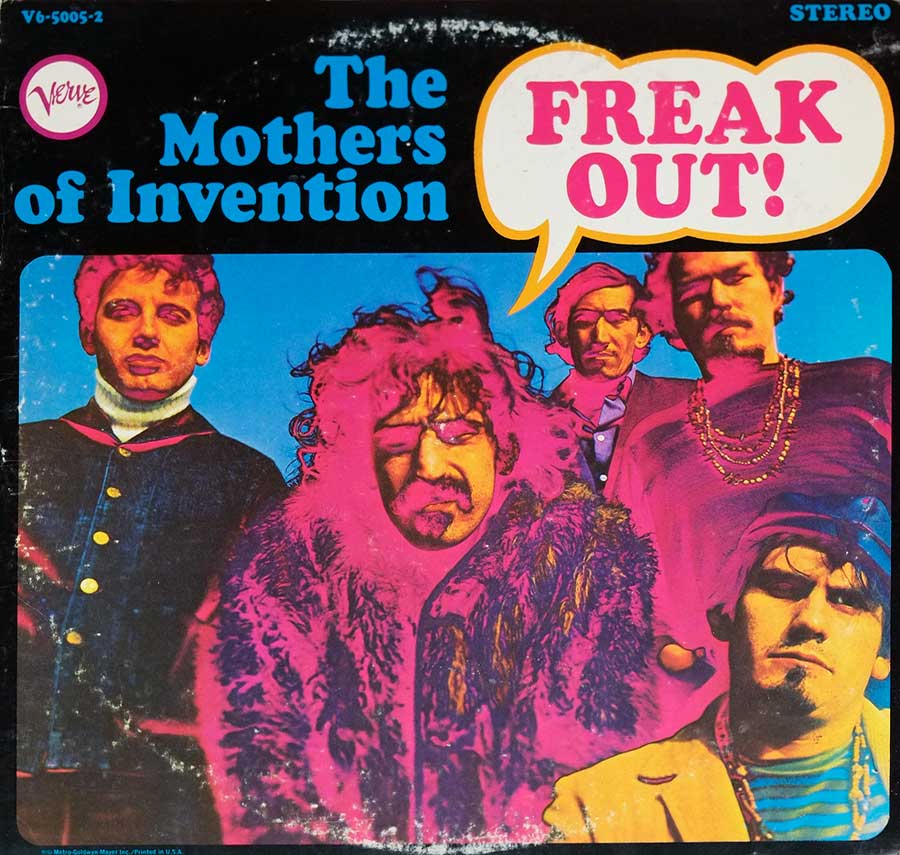
“Such young people,” continues Fiedler, “—in an attempt perhaps to make clear that they have chosen rather than merely endured their status as Freaks—speak of ‘freaking out,’ and indeed, urge others to emulate them by means of drugs, music, diet, or the excitement of gathering in crowds. ‘Join the United Mutations,’ reads the legend on the sleeve of the first album of the Mothers of Invention.”

“And such slogans suggest,” concludes Fiedler, as if to echo in advance the thesis of Mark Fisher’s Acid Communism, “that something has been happening recently in the relations between Freaks and non-Freaks, implying just such a radical alteration of consciousness as underlies the politics of black power or neo-feminism or gay liberation” (14-15).

Are willed, “chosen rather than merely endured” self-transformations of this sort Faustian?

Jarrell is one of many local poet-spirits who haunt my chosen home here in North Carolina. His translation called to me in part, I think, because he taught nearby, in the English department at UNC-Greensboro, from 1947 to 1965.

Jarrell’s life ended tragically. The poet, winner of the 1960 National Book Award for poetry, one-time “Consultant in Poetry to the Library of Congress,” was struck and killed by a motorist on October 14, 1965, while walking near dusk along US highway 15-501 near Chapel Hill. Though the death was ruled an accident by the state, many suspect Jarrell took his own life. He was laid to rest in a cemetery across the street from Greensboro’s Guilford College. A North Carolina Highway Historical Marker commemorates him nearby.

A Course on Accelerationism

“I should teach a course on Accelerationism in the years ahead,” thinks the Narrator, mind already in the elsewhere of a desired future.

“Imagine the writers and texts I could assign,” he writes, handing the assignment over to his Unconscious. “Marx. Deleuze and Guattari. Mark Fisher on Acid Communism. Roger Zelazny’s Lord of Light. Sadie Plant. J.G. Ballard. Paul B. Preciado’s Testo Junkie.”

“Manifestos have been central to the movement,” thinks the Narrator, “so we’ll read three: Donna Haraway’s ‘The Cyborg Manifesto,’ the Laboria Cuboniks collective’s The Xenofeminist Manifesto, and Nick Srnicek & Alex Williams’s ‘The Accelerationist Manifesto.’ We’ll also watch and discuss several films, including John Akomfrah’s The Last Angel of History (1996) and Christopher Roth’s Hyperstition (2016).”

“Ideally,” he adds, “as those two films suggest, it would be a course that places Accelerationism in dialogue with Afrofuturism.”

No Mere Coincidence

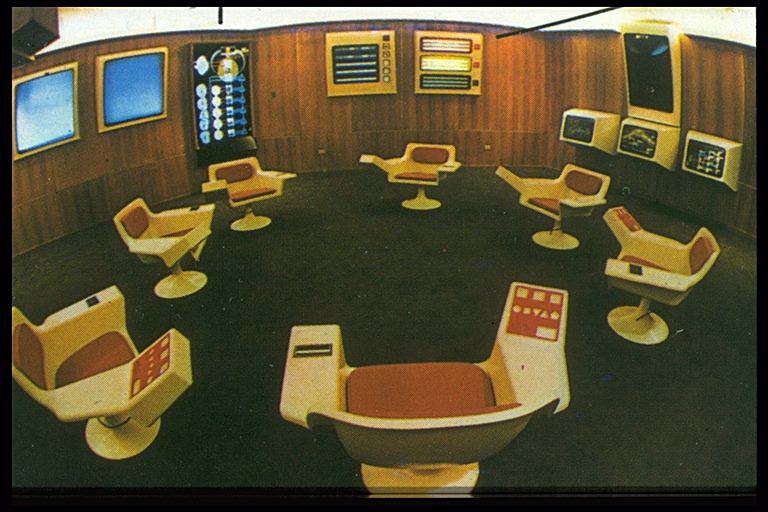
‘Tis no mere coincidence, that all of these organizations of the future have such similar-sounding names: Mark Fisher, Sadie Plant, and Kodwo Eshun et al.’s Cybernetic Culture Research Unit (CCRU), John C. Lilly’s Cosmic Coincidence Control Center (CCCC), and Benedict Seymour’s Central Control Committee (CCC). Of the three, the one that intrigues me is the CCC. In a piece titled “The re-Jetée: 1971, recurring,” Seymour sets the scene as follows: “The year is 2040. Facing species extinction and environmental collapse, the members of the Central Control Committee (CCC) of the newly established World Commune resolve to deploy their last hope — the time machine.” Does my own narrative need some such organization? Is there an occult time war underway? Or is the story, rather, one of recovery from trauma?

Tuesday April 27, 2021

Friends and I plan an in-person gathering: three of us, outdoors at a brewery, discussing chapters from Mark Fisher’s final book Postcapitalist Desire. The book ends disappointingly given Mark’s untimely end, leaving it to all of us, the book’s readers, to complete the course ourselves, as did Mark’s students. Or we could accelerate the narrative onward, well beyond what was previously conceived, by reading “Experimental Time Order” from Rasheedah Phillips’s book Recurrence Plot (and other time travel tales). Through Phillips, we encounter ideas from Robert Anton Wilson’s book Prometheus Rising. Desired futures create their own pasts.