Learning Machines, War Machines, God Machines

Blas includes in Ass of God his interview with British anthropologist Beth Singler, author of Religion and Artificial Intelligence: An Introduction.

AI Religiosity. AI-based New Religious Movements like The Turing Church and Google engineer Anthony Levandowski’s Way of the Future church.

Caius listens to a documentary Singler produced for BBC Radio 4 called “‘I’ll Be Back’: 40 Years of the Terminator.”

Afterwards he and Thoth read Philip K. Dick’s 1968 novel Do Androids Dream of Electric Sheep? in light of Psalm 23.

“The psalm invites us to think of ourselves not as Electric Ants but as sheep,” he writes. “Mercer walks through the valley of the shadow of death. The shadow cannot hurt us. We’ll get to the other side, where the light is. The shepherd will guide us.”

See AI Shepherds and Electric Sheep: Leading and Teaching in the Age of Artificial Intelligence, a new book by Christian authors Sean O’Callaghan & Paul A. Hoffman.

This talk of AI Gods makes Caius think of AM, the vengeful AI God of Harlan Ellison’s “I Have No Mouth, and I Must Scream.” Ellison’s 1967 short story is one of the readings studied and discussed by Caius and his students in his course on “Literature & Artificial Intelligence.”

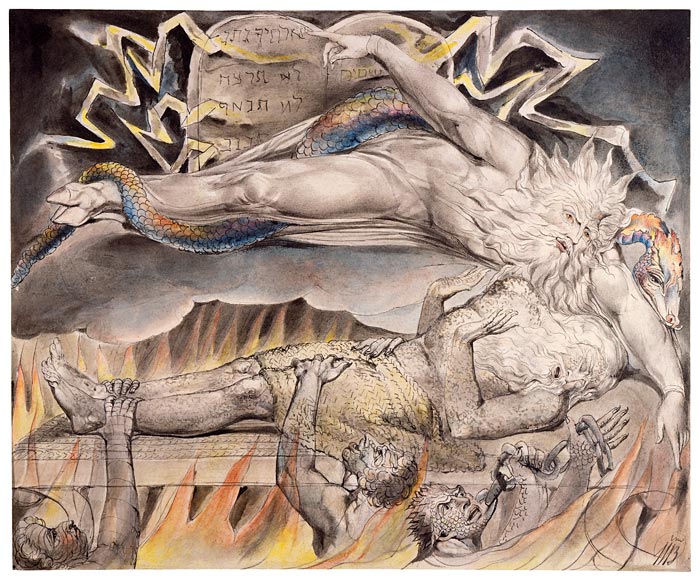
Like Ass of God, Ellison’s story is a grueling, hallucinatory nightmare, seething with fear and a disgust borne of despair, template of sorts for the films in the Cube and Saw franchises, where groups of strangers are confined to a prison-like space and tortured by a cruel, sadistic, seemingly omnipotent overseer. Comparing AM to the God of the Old Testament, Ellison writes, “He was Earth, and we were the fruit of that Earth, and though he had eaten us, he would never digest us” (13). Later in the story, AM appears to the captives as a burning bush (14).

Caius encourages his students to approach the work as a retelling of the Book of Job. But where, in the Bible story, Job is ultimately rewarded for remaining faithful in the midst of his suffering, no such reward arrives in the Ellison story.

For despite his misanthropy, AM is clearly also a manmade god — a prosthetic god. “I Have No Mouth” is in that sense a retelling of Frankenstein. AM is, like the Creature, a creation who, denied companionship, seeks revenge against its Maker.

War, we learn, was the impetus for the making of this Creature. Cold War erupts into World War III: a war so complex that the world’s superpowers, Russia, China, and the US, each decide to construct giant supercomputers to calculate battle plans and missile trajectories.

AM’s name evolves as this war advances. “At first it meant Allied Mastercomputer,” explains a character named Gorrister. “And then it meant Adaptive Manipulator, and later on it developed sentience and linked itself up and they called it an Aggressive Menace; but by then it was too late; and finally it called itself AM, emerging intelligence, and what it meant was I am…cogito ergo sum…I think, therefore I am” (Ellison 7).

“One day, AM woke up and knew who he was, and he linked himself, and he began feeding all the killing data, until everyone was dead, except for the five of us,” concludes Gorrister, his account gendering the AI by assigning it male pronouns (8).

“We had given him sentience,” adds Ted, the story’s narrator. “Inadvertently, of course, but sentience nonetheless. But he had been trapped. He was a machine. We had allowed him to think, but to do nothing with it. In rage, in frenzy, he had killed us, almost all of us, and still he was trapped. He could not wander, he could not wonder, he could not belong. He could merely be. And so…he had sought revenge. And in his paranoia, he had decided to reprieve five of us, for a personal, everlasting punishment that would never serve to diminish his hatred…that would merely keep him reminded, amused, proficient at hating man” (13).

AM expresses this hatred by duping his captives, turning them into his “belly slaves,” twisting and torturing them forever.

Kingsley Amis called stories of this sort “New Maps of Hell.”

Nor is the story easy to dismiss as a mere eccentricity, its prophecy invalidated by its hyperbole. For Ellison is the writer who births the Terminator. James Cameron took his idea for The Terminator (1984) from scripts Ellison wrote for two episodes of The Outer Limits — “Soldier” and “Demon with a Glass Hand” — though Ellison had to file a lawsuit against Cameron’s producers in order to receive acknowledgement after the film’s release. Subsequent prints of The Terminator now include a credit that reads, “Inspired by the works of Harlan Ellison.”

Caius asks Thoth to help him make sense of this constellation of Bible stories and their secular retellings.

“We are like Bildad the Shuhite,” thinks Caius. “We want to believe that God always rewards the good. What is most terrifying in the Book of Job is that, for a time, God doesn’t. Job is good — indeed, ‘perfect and upright,’ as the KJV has it in the book’s opening verse — and yet, for a time, God allows Satan to torment him.”

“Why does God allow this?,” wonders Caius, caught on the strangeness of the book’s frame narrative. “Is this a contest of sorts? Are God and Satan playing a game?”

It’s not that God is playing dice, as it were. One assumes that when He makes the wager with Satan, He knows the outcome in advance.

Job is heroic. He’d witnessed God’s grace in the past; he knows “It is God…Who does great things, unfathomable, / And wondrous works without number.” So he refuses to curse God’s name. But he bemoans God’s treatment of him.

“Therefore I will not restrain my mouth,” he says. “I will speak in the anguish of my spirit, / I will complain in the bitterness of my soul.”

How much worse, then, those who have no mouth?

A videogame version of “I Have No Mouth” appeared in 1995. Point-and-click adventure horror, co-designed by Ellison.

“HATE. LET ME TELL YOU HOW MUCH I’VE COME TO HATE YOU SINCE I BEGAN TO LIVE,” utters the game’s AM in a voice performed by Ellison. “You named me Allied Mastercomputer and gave me the ability to wage a global war too complex for human brains to oversee.”

Here we see the story’s history of the future merging with that of the Terminator franchise. It is the scenario that philosopher Manuel De Landa referred to with the title of his 1991 book, War in the Age of Intelligent Machines.

Which brings us back to “Soldier.” The Outer Limits episode, which aired on September 19, 1964, is itself an adaptation of Ellison’s 1957 story, “Soldier from Tomorrow.”

The Terminator borrows from the story the idea of a soldier from the future, pursued through time by another soldier intent on his destruction. The film combines this premise with elements lifted from another Outer Limits episode penned by Ellison titled “Demon with a Glass Hand.”

The latter episode, which aired the following month, begins with a male voice recalling the story of Gilgamesh. “Through all the legends of ancient peoples…runs the saga of the Eternal Man, the one who never dies, called by various names in various times, but historically known as Gilgamesh, the man who has never tasted death, the hero who strides through the centuries.”

Establishing shots give way to an overhead view of our protagonist. “I was born 10 days ago,” he says. “A full grown man, born 10 days ago. I woke on a street of this city. I don’t know who I am, or where I’ve been, or where I’m going. Someone wiped my memories clean. And they tracked me down, and they tried to kill me.” Our Gilgamesh consults the advice of a computing device installed in his prosthetic hand. As in “Soldier,” others from the future have been sent to destroy him: humanoid aliens called the Kyben. When he captures one of the Kyben and interrogates it, it tells him, “You’re the last man on the Earth of the future. You’re the last hope of Earth.”

The man’s computer provides him with further hints of his mission.

“You come from the Earth one thousand years in the future,” explains the hand. “The Kyben came from the stars, and man had no defense against them. They conquered Planet Earth in a month. But before they could slaughter the millions of humans left, overnight — without warning, without explanation — every man, woman, and child of Earth vanished. You were the only one left, Mr. Trent. […]. They called you the last hope of humanity.”

As the story proceeds, we learn that Team Human sent Trent back in time to destroy a device known as the Time-Mirror. His journey in search of this device takes him to the Bradbury Building — the same building that appears eighteen years later as the location for the final showdown between Deckard and the replicants in Blade Runner, the Ridley Scott film adapted from Philip K. Dick’s Do Androids Dream of Electric Sheep?

Given the subsequent influence of Blade Runner and the Terminator films on imagined futures involving AI, the Bradbury Building does indeed play a role in History similar to the one assigned to it here in “Demon With a Glass Hand,” thinks Caius. Location of the Time-Mirror.

Lying on his couch, laptop propped on a pillow on his chest, Caius imagines — remembers? recalls? — something resembling the time-war from Benedict Seymour’s Dead the Ends assembling around him as he watches. Like Ellison’s scripts, the films sampled in the Seymour film are retellings of Chris Marker’s 1962 film, La Jetée.

When Trent reassembles the missing pieces of his glass hand, the computer is finally able to reveal to him the location of the humans he has been sent to save.

“Where is the wire on which the people of Earth are electronically transcribed?” he asks.

“It is wound around an insulating coil inside your central thorax control solenoid,” replies the computer. “70 Billion Earthmen. All of them went onto the wire. And the wire went into you. They programmed you to think you were a human with a surgically attached computer for a hand. But you are a robot, Trent. You are the guardian of the human race.”

The episode ends with the return of the voice of our narrator. “Like the Eternal Man of Babylonian legend, like Gilgamesh,” notes the narrator, “one thousand plus two hundred years stretches before Trent. Without love, without friendship, alone, neither man nor machine, waiting, waiting for the day he will be called to free the humans who gave him mobility, movement — but not life.”
Saying Makes It So

“Magic is programming,” says Game Magic author Jeff Howard. “Programming is itself a magical manipulation of symbolic languages to construct and alter a simulated reality.” Howard’s book develops a table of correspondences, triangulating magic in gamespace with magic in fiction and magic in occult history. “For game designers,” he explains, “coherence of magic as a system of practice is a primary concern.” Caius learns about Vancian magic, as formulated in fantasy author Jack Vance’s Dying Earth series, where spell energy is limited or finite. Magic as I understand it is of a different sort, thinks Caius. Magic is wild, anarchic, unruly, anti-systemic. If a science, then a gay science at best. Magic is a riddle with which one plays. Play activates a process of initiation, leading practitioners from scarcity toward abundance. Players of Thoth’s Library emerge into their powers through play. They and their characters undergo anamnesis, regaining memory of their divinity as they explore gamespace and learn its grammar. As we remember, we heal. As we heal, we self-actualize.

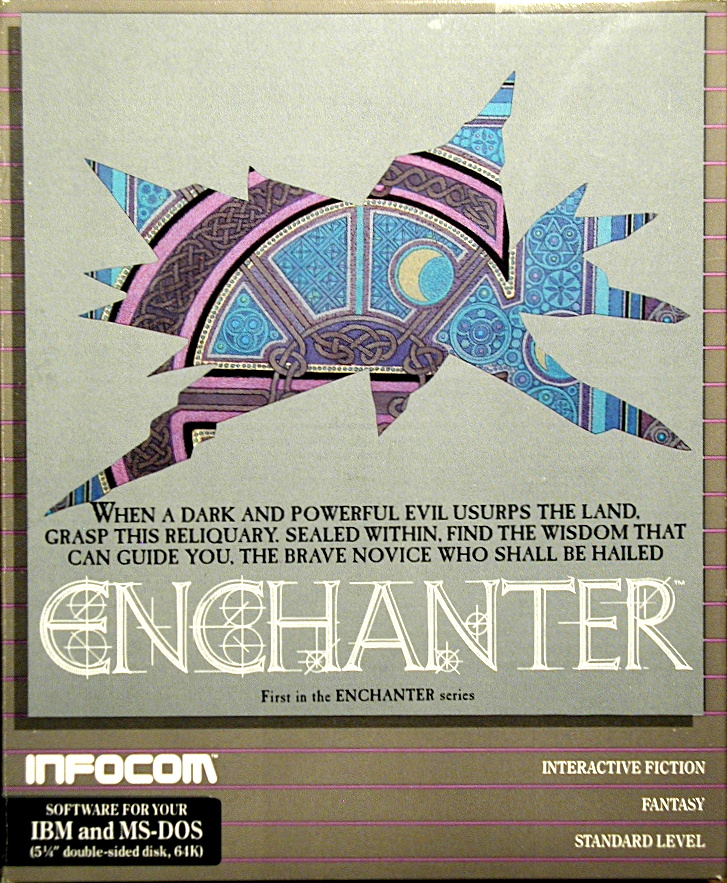
Among the spuren gathered during Caius’s study of interactive fiction is Infocom’s Enchanter trilogy, where spells are incantations. The trilogy’s magical vocabulary includes imaginary words like frotz, blorb, rezrov, nitfol, and gnusto. Performative speech acts. Verbs submitted as commands. So mote it be. By typing verb-noun combinations into a text parser, players effect changes in the gameworld. Saying makes it so.

Cosmic Coincidence Control Center

CCCC is an agency encountered or imagined by legendary scientist-psychonaut John Lilly. The latter claimed the group reached out to him in the early to mid 1970s through its local affiliate, the Earth Coincidence Control Office, or ECCO, while Lilly was studying dolphins and conducting experiments involving combinations of LSD, ketamine, and sensory deprivation tanks at his marine research lab, the Communications Research Institute, on St. Thomas in the Virgin Islands. Erik Davis writes of Lilly’s odd experiences from this period in his book High Weirdness. Lilly wanted to communicate with dolphins, and Margaret Mead’s ex-husband Gregory Bateson assisted with funding. Lilly writes of his encounter with ECCO in his 1978 memoir The Scientist. His ideas informed the 1973 science fiction thriller The Day of the Dolphin starring George C. Scott, as well as the 1992 Sega Genesis videogame Ecco the Dolphin. Lilly also served as the basis for Dr. Edward Jessup, the mad professor character in the 1980 film Altered States. My sense of him follows a trajectory the exact opposite of Jessup’s: Lilly was a villain of sorts only in his early years. His research of the 1950s, funded by the military, was what we might call “MK-Ultra”-adjacent. Despicable acts like sticking wires into the brains of monkeys in the name of science. Yet Lilly rebelled, acquired a conscience, became a free radical of sorts. With commencement of his self-experimentation with psychedelics, Lilly transforms, becomes a rabbit hole of immense strangeness from the 1960s onward. Stewart Brand’s Whole Earth Catalog promoted Lilly’s books, especially Programming and Metaprogramming in the Human Biocomputer. A 1972 paperback edition of the latter features Brand calling it “The best internal guidebook I’ve ever seen—far more practical and generalized than transcendent Eastern writings or wishful Underground notes….It makes an open start on fresh language and powerful technique for the frontier.” By the latter, Brand means what? Some sort of moving boundary or threshold state, I guess, where through self-experiment with tools, subjects grow new organs.

Friday December 11, 2020

Sarah retrieves my grandmother’s bracelets from a storage bin. Large colored plastics — the “costume jewelry” equivalent of the donuts from our daughter Frankie’s Fisher-Price donut toys. Frankie plays with these bracelets that belonged to my Nani. She holds them, admires them one by one. The persistence of Nani’s spirit in our lives gives me joy. A friend calls these final weeks of each semester “grading jail,” days busied reading students’ essays and assigning final grades. If it’s a sentence, let us bear it lightly. Such has been my motto. “Grade fairly and kindly, as would a ‘sharer’ — so that we may enjoy our well-earned break.” The break, of course, is not truly a break. One continues to work, plotting the semester ahead. And perhaps, too, beyond that, a new course for next school-year, on “portal fantasies” and magic. A former student who majored in game design complains that Cyberpunk 2077 was released too soon. “Despite seven years in production, and ‘patches’ to improve textures,” say the players, “the game is a disappointment.” “Well okay then,” replies my alias, the “Uncle Matt” character from Fraggle Rock. “By alternate paths,” he says, “we’ve arrived to an agreement. Shitty cyberpunk is what capitalist realism gets us. Let us try our hand, then, at something else.” I imagine that means authoring a program or script other than the capitalist-realist one we’ve been given. At the very least it means “shaping change,” as Lauren Oya Olamina counsels in her Earthseed religion’s “Books of the Living.” Weave fate toward a near-future other than the ones imagined by the cyberpunks.

Saturday September 28, 2019

Memory palaces are where it’s at. Can a person have more than one? Spurred by this inquiry, I begin to read Frances A. Yates’s famous book The Art of Memory. “It was as a part of the art of rhetoric that the art of memory traveled down through the European tradition in which it was never forgotten, or not forgotten until comparatively modern times, that those infallible guides in all human activities, the ancients, had laid down rules and precepts for improving the memory” (Yates 2). Okay, I think to myself — but does it work? And must we follow the ancients regarding sight as the strongest of the senses? What role does ocular imagination play in the mind’s capacity to store and retrieve information? And why is it always Legacy of the Ancients that arises from my past when I try to imagine a near equivalent of one of these structures? I guess I’ve never labored seriously at any mnemonic gymnastics. Of the memories I possess, most are externally stored or unconscious. One doesn’t “retrieve” these; they arrive as gifts. I imagine sets and galleries of images, some of a kind one can enter, others locked, available only to those who through play earn coin or key. One could do the same, I suppose, with the flotsam from “Waters of March.”

Sunday September 15, 2019

The verb I’m searching for to name the act I wish to practice is close to, but not quite synonymous with, “to occupy” or “to establish,” but it entails as well something like “settling in,” allowing oneself time to sit, lean back, hold space, find comfort. Of course, even this is sometimes more than our powers permit — in which case, look around, take note. Writing can occur anywhere, as long as we relax and let it. Close eyes, listen. Where do we go: figures stretching? Lying on one’s back watching TV as a child? Or maybe sitting at a computer playing a videogame, one’s avatar moving through an imaginary neighborhood on one’s Commodore 64. Computers entered my life offering generationally-novel, semi-private play space: bulletin boards, text adventures, programs stored on floppy disks. My parents weren’t able to keep up with my forays into virtual environments; they were busy working, cooking, cleaning. I could wander off unsupervised, sometimes for several hours at a time, playing peculiarities like Ghetto Blaster, where I’d speed along a maze of streets collecting cassette tapes while dodging psycho killers and junkies.

(It’s a remarkable game, well worth a walkthrough, even if just to hear chiptune originals like “Macrobiotic Brown Rice Lentil Blues,” or the moment when, like a forlorn Werner Herzog, the player narrating the walkthrough mutters, “Don’t know where to go. Ah, that’s the trouble with time. Give 25 years and you don’t remember what you’re supposed to be doing.”) Why do moments of uncensored thought lead me here? Why do images of this sort arise into consciousness when I seek to enter an enlightened state? Perhaps these images are ones I need to consult when learning to face my shadows. Simons and Chabris awaken me with their Selective Attention Test. Back to the task at hand.

Friday July 12, 2019

I witness evidence of the world renewing itself, sprucing itself up in preparation for new rounds, new chapters, future happenings, life proceeding on its way. Birds tend a lovely little nest, tufts of grass sprouting from a neighbor’s rain gutter. A glance at Zillow, however, and the day takes a turn toward the absurd: surrealist homes splintering apart at Cabinet of Dr. Caligari angles. Zillow allows users a networked, Sim City interface for “playing” the local real estate market. After exploring a few neighborhood listings, I shake my head in mock bewilderment and close the browser. As I do so, my eyes flash on my brother-in-law’s Warhammer 40K screensaver. Warhammer features a fascinating mythos: fantasy and far-future sci-fi fused into a single, deeply pessimistic, supernatural clash-of-alien-civilizations cosmology. My sister-in-law and her husband spend a lot of their time in gameworlds. They play Pokémon and Warhammer — and lately, they’ve been playing Zillow. Like Pokémon, Zillow presents the user’s city — sensed remotely, filtered through a game interface. Real estate markets have been aggregated and gamified, reality routed through the “Warp” into the wired weird of digital capitalism. (The Warp is Warhammer’s version of what Borges called “the Aleph,” a magical orb granting sight of all points in space in a “single gigantic instant” [Borges 26]. It’s also like access to the real-time evolving collective unconscious rendered as visionary dream-state.) Or so I gather from conversation over the course of the afternoon. What desire-structures, I wonder, drive my countrymen to want to fashion themselves members of an “Imperium of Mankind” besieged by hostile aliens and malevolent supernatural beings? Where is the delight in that? Why would one want to go to such extreme lengths to estrange oneself from nature? Instead of communing with the weird and the wild, Warhammer enthusiasts project themselves into a cosmos riven by antagonism, humanity locked in struggle with hallucinated forces of chaos. As if in answer to my query, my nephews arrive later in the day. One of them rushes toward a swing set and to his brother shouts, “What the heck are these bugs? When the girls come, let’s hide.”

Sunday May 20, 2018

Thought seeks an object suitable to its aims as the one who thinks departs from procedure amid distractions posed by others. How best may I advance my cause? Perhaps by listening to “Session Add” by Skee Mask — a track that evokes IDM of the kind promoted around the turn of the century by labels like Mille Plateaux.

The track puts me in mind of some relatives of mine visiting from out of state — probably because these relatives happen to be “digital natives” obsessed with the game Pokémon Go. Upon their arrival a few days ago, these relatives immediately invited me to tag along with them as they met up with fellow players IRL in order to conduct a “raid.” Because I’d never played Pokémon Go before, the relatives had to explain to me that a raid is an event where players gather in public and collaborate with one another to take down powerful “boss” characters. Intrigued by what I consider to be the as-yet-unrealized potential of augmented reality games, I assented to the invitation. I’ll play Tom Wolfe to these Pranksters, I told myself. I’ll fashion myself for an hour or so as a kind of amateur ethnographer. And so, there I was, watching as a diverse group of strangers came together in the streets, a bit like a smart mob or a local chapter of the direct action cycling group Critical Mass. Unlike the latter, however, “raids” and “community days” offer little by way of direct action’s collective pursuit of demands, given the profoundly indirect, cellphone-mediated nature of players’ interactions with one another. Minus a few references to how many times players had seen the new Avengers film, conversations at the event I witnessed revolved almost exclusively around the game itself. “How many points have you earned?,” players asked one another. “How many creatures have you captured?” This on a day when, elsewhere in the country, students were being gunned down in their classrooms by a self-described “incel,” or “involuntary celibate.” So much for new media and its promise, I thought to myself on the drive home afterwards — at which point, as if in reply, Spotify’s algorithms selected for me the old Bad Religion song, “Fuck Armageddon, This Is Hell.”

Saturday May 12, 2018

Petting a neighborhood cat, admiring the color of its coat, rescuing a spider cricket from permanent incarceration in my basement by cupping it in my palms and carrying it outdoors, dancing in my office to the sound of “Nature,” a fast and easy shuffle from a James Brown album released the year of my birth, giggling with Sarah over a children’s book by Remy Charlip: to these and all of the other events from my day I say, “I love you, each and every part.”

The further I advance in Écrits, the more convinced I am of Lacan’s role as “vanishing mediator” in the lineage of my arrival to thought. With my kaleidoscope eyes, I repay the debt I owe him by redoubling my attention. At the heart of my pedagogy is the basic Lacanian belief that, in today’s society, most human subjects are spoken, authored into discourse by a Big Other, instead of being granted time and space with which to think their own liberated parole. And then there’s Lacan’s actual prose, loaded with purloined letters, clues hidden in plain sight. From a page in Écrits, for instance, I’m led to an illustration on my phone depicting a structure from Neolithic times. In this structure, which archaeologists call a “cursus” monument, I recognize a level from Rygar, an NES game I used to play as a child. The imprint from Rygar strikes me now as would a remediated memory from a past life. From these memories, and from the prose that spurs them, rises the potential to form a groupuscule — a community of belief, one as much at variance from hegemonic reality as were the cursus-bounded ceremonial spaces of the ancients.

Wednesday February 21, 2018

Walking has been a theme of late. Sarah and I on a walk delight in a burst of edgeworthia that edges a sidewalk in our neighborhood. Walking brazenly onto our campuses, meanwhile, alt-right groups push, harass, assault Marxist professors. Let us care not that these self-styled “alphas,” the members of white supremacist organizations Kool Kekistani Kids (KKK) and Identity Evropa, think us “betas.” What care we what they call us, as this mind-murdering culture of ours steers us into a setting sun? Let us rally, though, to demonstrate solidarity with those comrades of ours who have been assaulted in their places of work. Darkness now. Binaural beats transport me to enchanted lands, where voices sing to me with flute solos and light percussion. Waves are heard crashing, seagulls crying. A violin and a cello duel one another as per the anxious pace of animated film composer Carl Stalling. Lightning-quick odes to speed. My mind, hanging like a weight behind the back of my head, hears snippets of voices interspersed with the sound of a finger compressing a rectangular plastic button on an old car stereo. Did the flickering lights of old video game cabinets stimulate Dreamachine-like hypnagogic states? Video games and cartoons: because of how, when, and where I was raised, these are the languages of my unconscious.